by Flinn Inspections
Share
by Flinn Inspections
Share
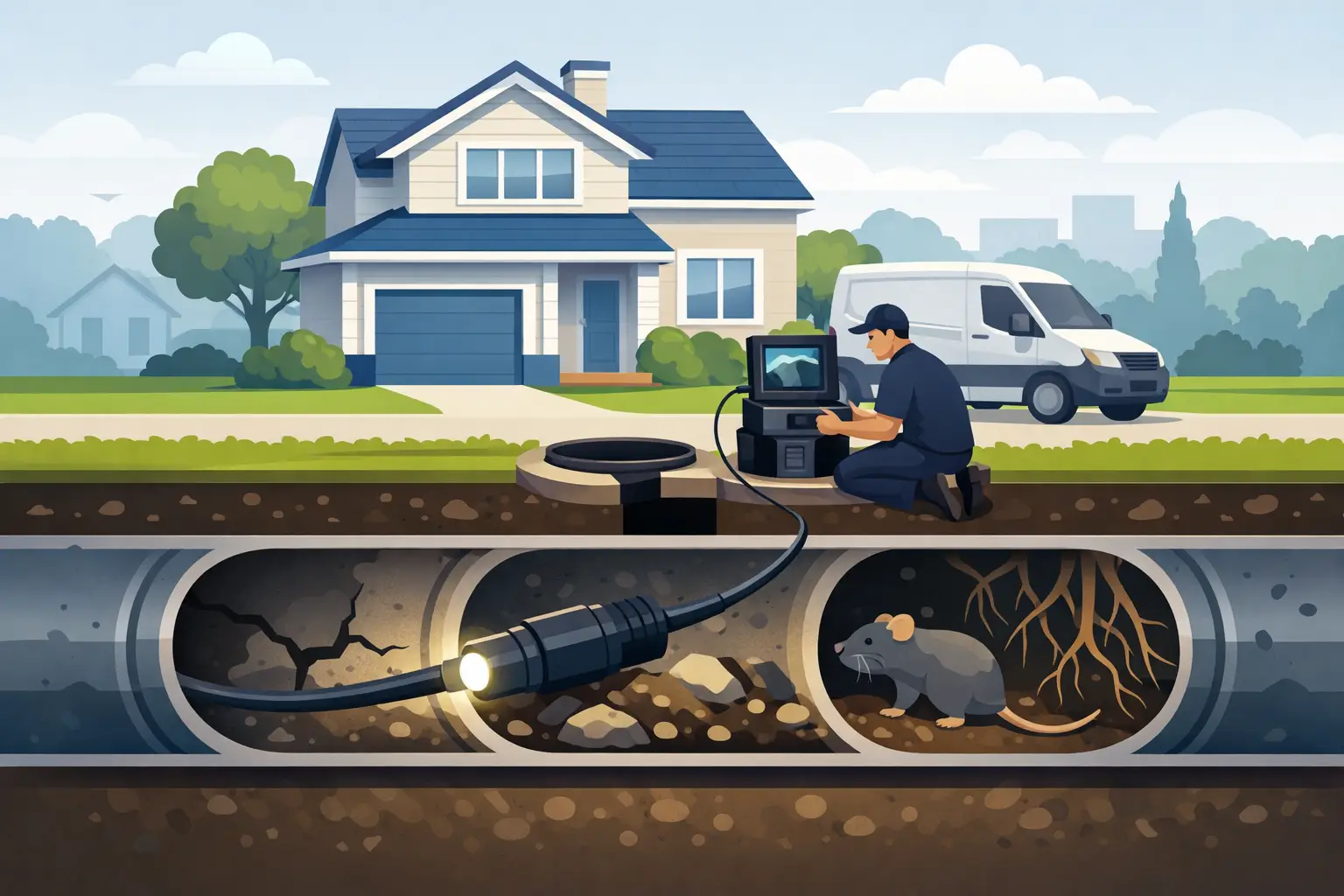
A sewer line can be working perfectly during a showing and still be one of the most expensive unknowns beneath a property. A Westerville sewer scope inspection gives buyers, homeowners, and investors a direct look inside the buried drain line before a hidden blockage, crack, root intrusion, or collapsed section turns into an urgent repair.
The main sewer line is out of sight, but it carries wastewater from the property to the public sewer or septic system every day. When that line fails, the consequences can include recurring backups, slow drains, sewage exposure, damaged finishes, excavation, and a repair budget that changes the economics of a purchase. A camera scope does not eliminate every uncertainty, but it replaces assumptions with evidence.
What a Sewer Scope Inspection Can Reveal
A sewer scope inspection uses a specialized waterproof camera attached to a flexible cable. The camera is typically inserted through an accessible cleanout and guided through the property’s main drain line. As it travels, the inspector watches and records the interior condition of the pipe, looking for visible defects and identifying the pipe material, routing, and approximate problem location when conditions allow.
The findings can be especially valuable in Central Ohio, where homes range from older properties with aging clay, cast iron, or Orangeburg lines to newer construction where installation defects or construction debris may still be concerns. Age alone does not prove a sewer problem. A well-maintained older line may have years of service remaining, while a newer line can develop issues from settlement, poor connections, or root intrusion. The camera provides the information needed to judge the actual condition rather than relying on a property’s age.
Common findings include root intrusion, cracks, offset joints, standing water, bellies in the line, corrosion, deteriorated pipe walls, heavy scale buildup, construction debris, and partial or complete blockages. The camera may also reveal a line that has separated, shifted, or been crushed.
Root intrusion deserves particular attention. Tree and shrub roots naturally seek moisture and can enter small openings at pipe joints or cracks. Once inside, roots can expand and catch waste material, causing repeated slow drainage or backups. Cleaning the line may restore flow, but it does not necessarily repair the opening that allowed roots in. The inspection helps distinguish a temporary maintenance need from a defect that may require repair or replacement.
Why a Standard Home Inspection Is Not Enough
A full property inspection evaluates many visible and accessible systems, including plumbing fixtures, drainage performance at fixtures, and signs of leaks or moisture damage. But a standard inspection cannot see through buried sewer pipe. If toilets flush and sinks drain during the inspection, that is useful information, but it is not confirmation that the underground line is free of damage.
A sewer camera scope is a separate, specialized service because it examines an area that is otherwise inaccessible. It is particularly worthwhile when buying an older home, purchasing a property with mature trees, reviewing a flipped house, evaluating an investment property, or dealing with a home that has a history of slow drains or sewer backups.
It can also make sense for newer homes. New construction does not automatically mean the sewer line is defect-free. A scope can identify leftover construction material, displaced connections, or damage that occurred during installation or later site work. For buyers nearing the end of a builder warranty, documenting the condition of the sewer line before coverage expires can be a practical step.
When to Schedule a Westerville Sewer Scope Inspection
For a buyer, the best time is during the inspection contingency period. A sewer issue discovered early gives you time to obtain repair estimates, request repairs or concessions, reassess the purchase, or move forward with a clear understanding of the risk. Waiting until after closing can remove much of that flexibility.
For a seller, a pre-listing sewer scope can prevent a late-stage surprise. If a concern is found, you can choose whether to repair it, obtain professional estimates, or disclose the condition accurately. That preparation can reduce transaction delays and give buyers more confidence in the property.
Current homeowners should consider a scope when they experience repeated drain backups, multiple slow fixtures, gurgling toilets, sewer odors, unexplained wet areas in the yard, or a sudden increase in plumbing service calls. Those signs do not always point to a damaged sewer line. A simple clog may be the cause. Still, recurring symptoms deserve a clear diagnosis rather than repeated short-term clearing.
Investors and commercial property stakeholders often benefit from a scope before acquisition, renovation, or resale. A damaged sewer line can affect project timelines, tenant operations, and renovation budgets. Knowing the condition before committing to a property supports better planning and more defensible decisions.
What the Inspection Process Looks Like
The process begins by locating an appropriate access point, usually an exterior or interior sewer cleanout. Access matters. If no usable cleanout is available, a plumber may need to provide access before a camera can be inserted. The camera is then advanced through the line while the inspector evaluates what is visible in real time.
A quality inspection is more than placing a camera in a pipe. The goal is to document meaningful conditions, identify where they occur, and explain what the findings may mean for the property. When a defect is visible, the inspector can note its approximate distance from the access point. This information helps a qualified sewer contractor locate the affected area and develop a repair recommendation.
At Flinn Inspection Group, sewer camera scopes can be coordinated with a broader property inspection so clients can evaluate major systems without managing multiple inspection appointments. That all-in-one approach is especially helpful during fast-moving real estate transactions, where clear information and timely reporting matter.
Understanding the Results Without Overreacting
Not every sewer scope finding requires excavation or full line replacement. The right next step depends on the type, severity, and location of the defect, as well as the pipe material and the property’s plans.
For example, light scale buildup in cast iron pipe may call for cleaning and monitoring. Small root intrusion may be managed through professional cleaning, though the source of entry should still be considered. A localized cracked section may be repairable without replacing the entire line. In contrast, a collapsed pipe, extensive deterioration, severe offsets, or repeated standing water may justify a more significant repair strategy.
Camera footage is also subject to practical limitations. Heavy blockage, standing water, or debris can prevent the camera from traveling the full length of the line. Some lines have difficult bends, inaccessible cleanouts, or configurations that limit visibility. If the scope cannot reach the public connection or septic tank, the report should clearly state the limitation rather than treating an incomplete view as a clean result.
A sewer scope is an inspection, not a repair diagnosis from a plumbing contractor. It can identify visible conditions that warrant further evaluation, but a licensed sewer professional should determine the final repair method, cost, permits, and feasibility. This distinction protects buyers and homeowners from both underreacting to serious defects and overspending on repairs that may not be necessary.
Questions to Ask After a Sewer Scope
If the inspection identifies a concern, ask whether the camera reached the full line, what pipe material was observed, where the defect appears to be located, and whether the condition is likely affecting current flow. Request that the repair contractor review the camera findings before quoting work. A quote based only on a verbal description may not account for the exact location, depth, access conditions, or extent of the issue.
For buyers, the key question is not simply, “Is the sewer line perfect?” Few aging properties are perfect. The better question is whether the condition presents a near-term repair risk that should affect the purchase terms, budget, or decision to proceed. A clear report gives your real estate team and repair professionals a stronger basis for answering that question.
Buried systems should not be a blind spot in a major real estate decision. A sewer scope gives you the evidence to protect your investment, plan responsibly, and move forward with confidence based on what is actually beneath the property.