Mold (Air Quality) Inspection – Understanding Indoor Mold Conditions
At Flinn Inspection Group, our Mold (Air Quality) Inspection is designed to help identify visible evidence of suspected mold growth, moisture conditions that may contribute to fungal growth, and airborne mold spores present at the time of testing. When appropriate, air samples are collected and submitted to an independent laboratory for analysis to provide additional information regarding the types and concentrations of fungal spores detected.
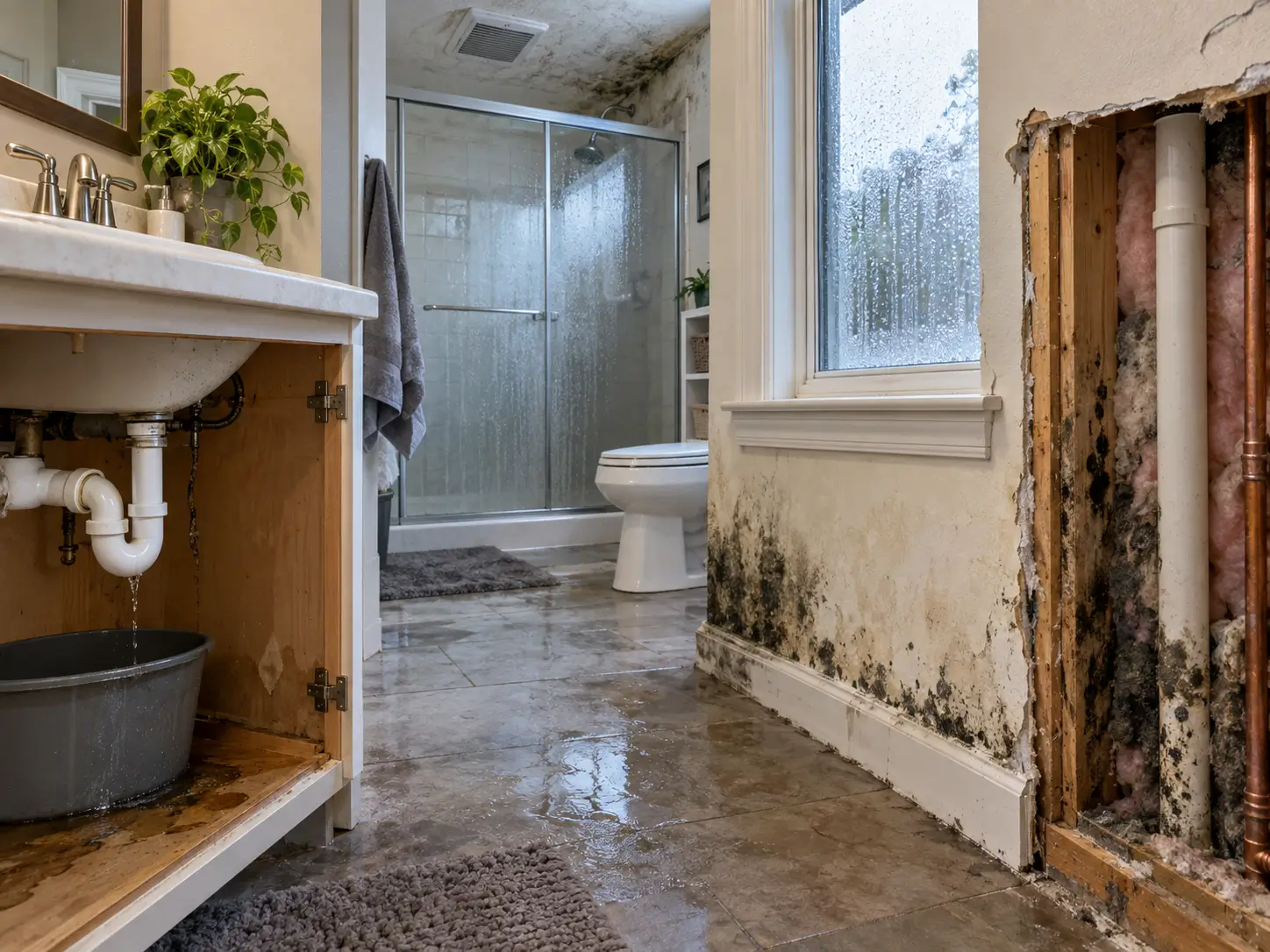
Mold and Moisture Conditions
Mold growth is commonly associated with elevated moisture, water intrusion, condensation, plumbing leaks, inadequate ventilation, and other damp conditions. Growth may occur in visible areas or in concealed locations that are not accessible during a visual, non-invasive inspection.
Our inspection may include evaluation of accessible areas for visible suspected mold growth, moisture staining, elevated moisture levels, musty odors, ventilation concerns, and other conditions that may contribute to fungal growth. Air sampling can provide additional information regarding airborne mold spores present within the home; however, sampling does not determine the exact location of concealed mold growth or guarantee that all mold conditions will be identified.
Laboratory results should be considered together with the visual inspection, moisture observations, property conditions, and any additional evaluation that may be recommended. Where significant mold growth, persistent moisture, or concealed conditions are suspected, further evaluation by a qualified mold remediation or environmental professional may be recommended.
Our Comprehensive Mold (Air Quality) Inspection Process:
Flinn Inspection Group employs a precise and scientific approach to evaluate your indoor air for mold spores:

Accurate Spore Counts & Identification:
The lab provides a detailed report including:
-
Total Spore Counts:
Quantifying the concentration of mold spores in your indoor air.
-
Mold Types (Genus Level):
Identifying the specific types (genera) of mold present, which can sometimes provide clues about the source or potential health impacts.
-
Comparison to Baseline:
Comparing indoor spore counts and types to outdoor samples to determine if indoor levels are elevated or abnormal.
What Happens After the Inspection?
If elevated mold spore levels are detected, you’ll receive a clear, detailed report of the findings. As inspectors, our role is to report the results so you can make informed decisions. In many cases, mold concerns can be discussed with the seller and your real estate agent to determine how to proceed. If needed, we can also recommend qualified mold remediation professionals for further evaluation and guidance—either during the transaction or after you move in.
Frequently Asked Questions (FAQs) about Mold (Air Quality) Inspection
What is a Mold (Air Quality) Inspection?
A Mold (Air Quality) Inspection involves collecting air samples from your home to detect and quantify airborne mold spores. It’s designed to identify mold issues, including hidden growth, and help pinpoint the underlying moisture source, even if there’s no visible mold.
Why is air sampling necessary if I don’t see any mold?
Mold often grows in hidden areas (behind walls, under floors, in attics or crawlspaces) where moisture collects from leaks or high humidity. Even if you don’t see it, these hidden colonies can release microscopic spores into the air you breathe. Air sampling is the most effective way to detect these invisible threats.
What are common signs that I might need a Mold Inspection?
You should consider a mold inspection if you experience:
- A persistent musty or earthy odor, even without visible mold.
- Unexplained health symptoms (allergies, respiratory issues, headaches) that improve when you leave the house.
- Recent or past water damage (e.g., burst pipe, roof leak, flood) that was not fully dried or remediated.
- Visible signs of water stains on walls or ceilings without an obvious current leak.
How does Flinn Inspection Group collect air samples?
We use specialized air pumps and collection cartridges (spore traps). Air is drawn through the cartridge, trapping airborne particles, including mold spores. We collect samples from areas of concern, and importantly, an outdoor baseline sample for comparison.
What happens to the samples after they are collected?
All collected air samples are immediately sealed and sent to a reputable, independent third-party laboratory for microscopic analysis. The lab identifies and counts the different types of mold spores present.
What kind of results will I receive in the lab report?
The lab report will provide:
- A quantitative count of mold spores in your indoor air samples.
- Identification of the genus (type) of mold spores present.
- A comparison of indoor spore counts and types to the outdoor baseline samples to help determine if indoor levels are elevated or abnormal.
If mold is detected, what should I do next?
If the report indicates elevated mold levels, we recommend consulting with a qualified mold remediation specialist. As inspectors, our role is to provide accurate testing results. You should also consider working with your real estate agent and, if applicable, the sellers to determine how to address the issue and decide on next steps.
Is it possible to have a completely mold-free home?
Mold spores exist naturally in both indoor and outdoor air, so a completely mold-free environment isn’t realistic. As inspectors, we provide testing and reporting on current mold spore levels to help you understand the situation. Addressing mold growth and moisture issues is best handled by qualified remediation professionals to restore healthy indoor air quality.