by Flinn Inspection Group
Share
by Flinn Inspection Group
Share
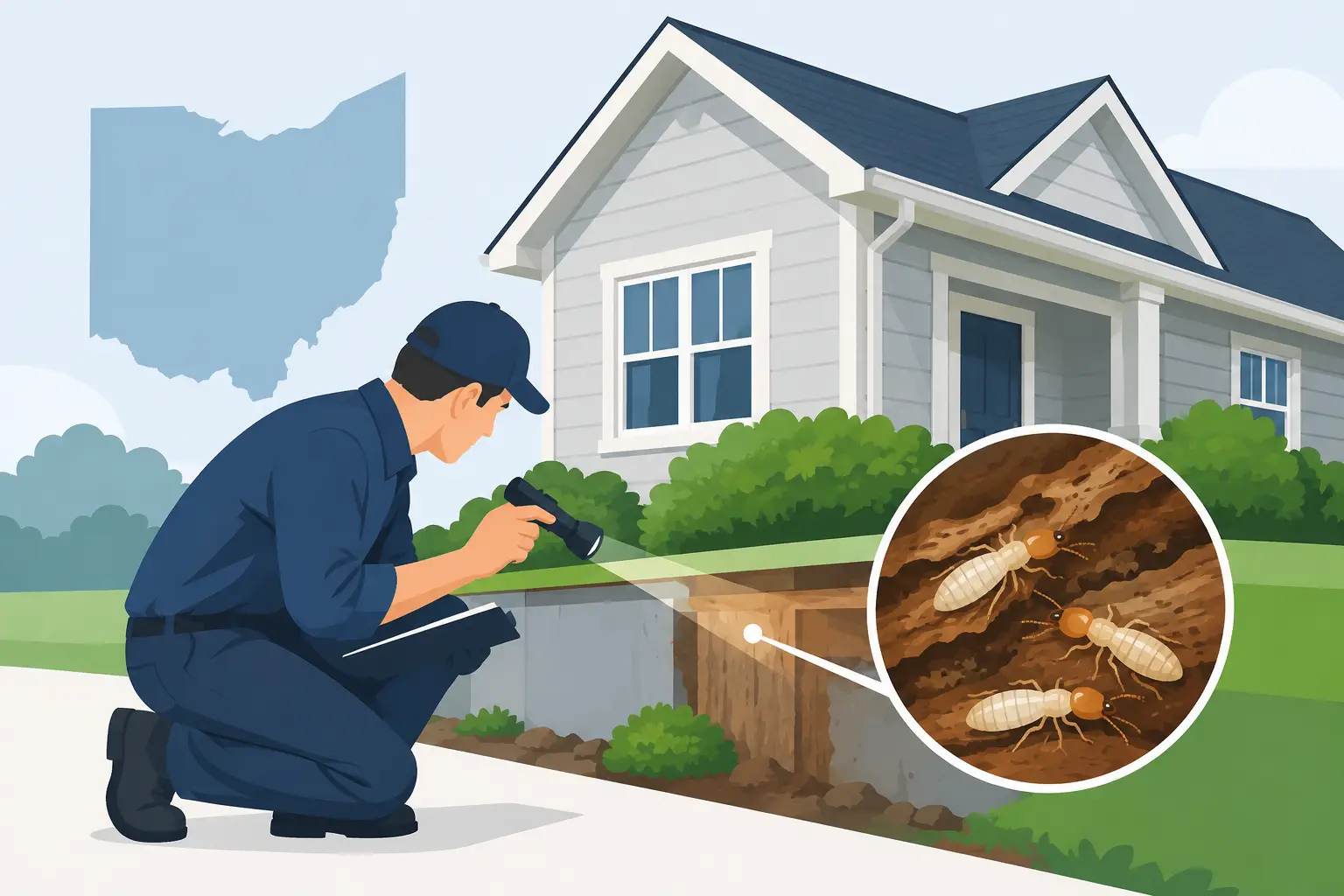
A termite inspection can feel like a small line item in a much larger real estate transaction. It is not. A well-executed termite inspection service review can reveal evidence of wood-destroying insects, moisture conditions that invite activity, and damage that may affect your repair plans or negotiating position. For buyers, owners, and investors across Central Ohio, the quality of the inspection matters as much as the inspection itself.
Termites work out of sight. They may travel through soil, foundation gaps, utility penetrations, crawl spaces, and concealed framing long before a homeowner notices a problem. By the time paint bubbles, flooring softens, or a wall shows visible damage, the underlying issue may be more extensive than it appears.
What a Termite Inspection Should Actually Cover
A professional termite inspection is a visual evaluation for wood-destroying organisms and conditions that support them. Depending on the property and scope, the inspector looks for evidence of subterranean termites, carpenter ants, carpenter bees, and wood-boring beetles. The inspection also considers the moisture and construction details that can make a structure more vulnerable.
The exterior inspection should include accessible foundation walls, porches, decks, attached garages, mulch lines, siding clearances, utility entry points, and visible structural wood. Indoors, an inspector should review accessible basement areas, crawl spaces, garages, utility rooms, finished areas with visible concerns, and exposed framing where available.
The most useful inspection does more than state whether insects were seen that day. It identifies evidence such as mud tubes, damaged or hollow-sounding wood, insect exit holes, frass, discarded wings, and previous treatment indicators. It should also call out conditions that deserve correction, including wood-to-soil contact, standing water, poor drainage, leaking plumbing, excess moisture, and siding installed too close to grade.
A termite inspection is not destructive testing. Inspectors do not remove drywall, lift finished flooring, dismantle built-in components, or excavate around the foundation. That limitation should be clear in any service review. Hidden damage can exist in inaccessible areas, which is why a thorough report needs to explain what was visible, what was not, and when additional evaluation is appropriate.
What Separates a Good Termite Inspection Provider
A strong provider combines careful fieldwork with clear communication. The report should be understandable to a buyer deciding whether to move forward, a seller responding to repair requests, or an investor evaluating risk and projected maintenance costs.
Clear scope and proper credentials
Ask whether the company performs Wood-Destroying Insect inspections and whether the inspector has the qualifications required for the work. A general home inspection and a termite inspection can complement each other, but they are not automatically the same service. Your provider should explain exactly what is included and whether a separate WDI report will be issued.
In a real estate transaction, documentation matters. Lenders, agents, treatment companies, and closing teams may need a clearly completed report that identifies findings, conditions, and recommendations. Vague language creates delays. Specific observations support better decisions.
Accessible areas receive real attention
A rushed walk around the exterior is not a meaningful termite inspection. The inspector should take the time to evaluate accessible high-risk areas, especially crawl spaces, basement rim joists, sill plates, deck connections, and locations where grade or landscaping meets siding.
This does not mean every property takes the same amount of time. A small condominium with limited exposed structure may require a different approach than an older home with a crawl space, multiple additions, and extensive wood features. The key is that the inspection matches the property rather than following a shortcut.
The report distinguishes activity from risk
Not every moisture issue means termites are present, and not every damaged board proves active infestation. A credible report separates observed evidence from contributing conditions and from areas that need further review.
For example, mulch against wood siding may be a condition conducive to termite activity, even if no mud tubes are visible. A damaged porch post may need evaluation to determine whether rot, insects, or both are involved. This distinction helps you prioritize repairs without overstating the findings.
Recommendations are practical, not alarmist
The right next step depends on what the inspection reveals. Active termite evidence typically calls for evaluation and treatment by a qualified pest management professional. Moisture and drainage issues may require repairs by a plumber, landscaper, roofer, or contractor. Structural damage may warrant assessment by a qualified contractor or engineer when the extent is uncertain.
A reliable inspection company will not turn every condition into an emergency. It will explain the risk, document the evidence, and help you understand what should happen next.
Questions to Ask Before Scheduling
Before you book a termite inspection, ask whether the service includes a formal Wood-Destroying Insect report, what accessible areas are inspected, and how quickly you will receive the results. In a competitive Columbus-area transaction, timing can be critical. Same-day reporting may help buyers and agents respond quickly when inspections are scheduled within a short due diligence window.
You should also ask how the inspector handles inaccessible areas. A blocked crawl-space entry, stored belongings against the foundation, finished basement walls, or heavy vegetation can limit what can be observed. A professional will document those limitations rather than imply that unseen areas were fully evaluated.
Finally, clarify whether the company provides treatment. Inspection companies and pest control companies have different roles. Some clients prefer independent findings before deciding which treatment provider to use. Others value coordination. Neither approach is automatically better, but the arrangement should be transparent.
Why Termite Risk Is Not Just a “Warm Climate” Concern
Central Ohio properties are not exempt from subterranean termite activity. Termites need moisture, food sources, and concealed travel paths – conditions that can occur around homes of any age. Older properties may have long-standing drainage concerns, aging wood components, or additions with complicated connections. Newer homes can still develop risk where grading settles, downspouts discharge too close to the foundation, or landscaping bridges the gap between soil and siding.
The issue is also seasonal in how it is noticed. Swarmers and discarded wings may be more visible during certain periods, but an active colony does not disappear because the weather changes. In winter, termites can remain active below the frost line or within protected areas of a structure.
That is why buyers should not skip the inspection simply because a home looks clean, was recently renovated, or has no obvious exterior damage. Fresh paint can improve appearance, but it cannot verify the condition behind a finished wall or beneath a porch surface.
How Termite Findings Affect a Real Estate Deal
A positive finding does not automatically mean a buyer should walk away. The decision depends on whether there is evidence of active infestation, the apparent extent of damage, the cost and urgency of treatment, and whether repairs are needed. A report showing old treatment evidence and no active signs calls for a different conversation than a report documenting live activity and visibly compromised structural wood.
For buyers, the goal is clarity before closing. You may request treatment, further evaluation, repair documentation, or a credit, depending on the contract and the findings. For sellers, addressing known moisture and wood-contact conditions before listing can reduce last-minute negotiation pressure.
Investors should look beyond immediate treatment cost. Repeated moisture intrusion, poor grading, inaccessible crawl spaces, and deteriorated exterior wood can increase future maintenance exposure. A termite inspection is most valuable when it is considered alongside the full property inspection, sewer scope, radon testing, and other services relevant to the building.
What the Inspector Can and Cannot See
Termite inspections are visual inspections of accessible areas. Inspectors do not remove finished walls, tear out insulation, move heavy furniture, excavate soil, or dismantle decks and finished components. A report may identify inaccessible areas and recommend further evaluation if the available evidence raises concern.
This limitation is not a weakness in the process. It is an honest part of evaluating an existing building. Many termite pathways occur inside walls, behind finishes, or beneath slabs. A thorough inspection reduces uncertainty by examining every accessible area, documenting visible conditions, and identifying where hidden damage could be possible.
Advanced tools can support a broader property assessment, particularly when moisture or building-envelope concerns are present. However, no tool can see through every material or replace a careful visual evaluation of exposed framing, foundation details, and exterior conditions.
How to Prepare for the Inspection
Access makes a real difference. Clear a path to the basement, crawl space entrance, garage walls, utility areas, and perimeter of the home where possible. Move stored items away from foundation walls and exposed framing. If there is a locked crawl space, shed, or utility room, make sure access is available.
It also helps to share what you know. Prior termite treatments, pest-control contracts, repair invoices, water intrusion history, and recent renovations can provide useful context. A prior treatment does not mean there is a current problem, but it gives the inspector a more complete history to consider.
Do not cover suspected evidence with paint, caulk, mulch, or a quick repair before the inspection. A clear view allows for a more accurate assessment and better documentation.
Getting More Value From the Inspection
Be present if possible, especially near the end of the appointment when the inspector can explain significant findings. Bring questions about any prior treatment paperwork, repairs, water issues, or areas where you have noticed insects. If the property has a crawl space or finished basement, ask what was accessible and what conditions were observed.
Flinn Inspection Group helps Central Ohio clients coordinate termite inspections with comprehensive property evaluations, giving buyers and owners a clearer picture of the systems and conditions that protect their investment. Advanced diagnostics and a detailed same-day report can support faster, more confident decisions when timing matters.
The best termite inspection does not create fear. It gives you evidence, explains the limits of what could be seen, and points you toward the right next step. That is the kind of information that helps protect a property long after the closing documents are signed.