by Flinn Inspection Group
Share
by Flinn Inspection Group
Share
A clear well water contamination example can change the course of a real estate transaction. A private well may look perfectly maintained, produce clear water, and still contain contaminants that affect health, financing, or the cost of ownership. For Central Ohio buyers and homeowners, the lesson is straightforward: a well is not a municipal water connection. It is a private water system that needs to be evaluated on its own.
Consider a buyer purchasing a rural home outside Columbus. The property has a drilled well, a modern pressure tank, and no visible water concerns during the showing. The seller reports that the family has used the well for years without a problem. During the inspection period, however, laboratory testing finds coliform bacteria and elevated nitrate levels. The water may still look, smell, and taste normal, but the result calls for action before the buyer can confidently rely on it.
That single result does not automatically mean the well is beyond repair. It does mean the buyer needs answers about the source, the correction, and the water quality after repairs. This is why water testing belongs in a thorough property due-diligence plan, not on a last-minute checklist.
The Well Water Contamination Example: Bacteria and Nitrates
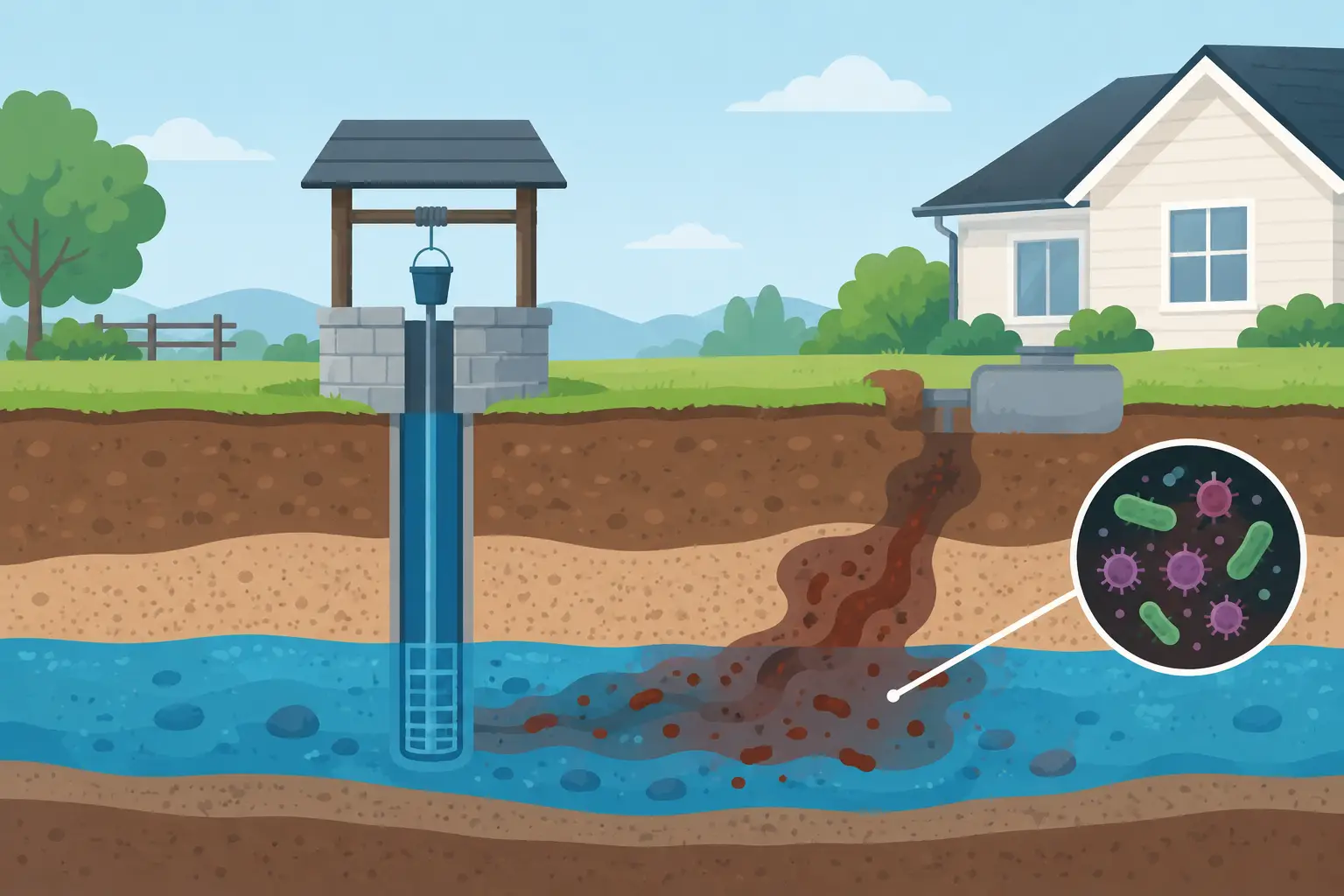
Coliform bacteria are commonly used as an indicator that a well or its surrounding system may be vulnerable to contamination. Their presence can result from a damaged well cap, a cracked casing, poor drainage around the wellhead, surface runoff, a nearby septic issue, or improper work performed on the well. Some bacteria findings are resolved by disinfecting the system and correcting an entry point. Others point to a larger issue that requires further investigation.
Nitrates present a different concern. They can enter groundwater through fertilizer use, animal waste, septic-system discharge, or other land-use conditions. Nitrate levels deserve particular attention in homes with infants, pregnant occupants, or anyone relying on the well as their primary drinking-water source. A treatment system may be part of the solution, but treatment should not replace finding out why the contaminant is present.
In this example, a professional response may include evaluating the condition and location of the wellhead, reviewing the septic system and drainage patterns, disinfecting the well when appropriate, and retesting through a qualified laboratory. If a buyer is still within the inspection contingency period, those findings also create an opportunity to request repairs, negotiate a credit, or make a fully informed decision about moving forward.
Why Clear Water Is Not Proof of Safe Water
The most common mistake with private wells is assuming that appearance tells the whole story. It does not. Many contaminants have no noticeable color, odor, or taste. Conversely, water that smells like sulfur or leaves orange staining may be unpleasant but can involve a different issue than bacteria or nitrate contamination.
Water quality testing identifies conditions that cannot be confirmed through a visual home inspection. A property inspector can observe the visible components of the well system, such as the well cap, exposed casing, pressure tank, plumbing connections, and site drainage. But only laboratory analysis can identify many water-quality concerns.
The testing package should fit the property and the transaction. A standard real estate or FHA-related water-quality test may focus on bacteriological contamination, nitrates or nitrites, and other required parameters. Depending on the location, property history, nearby agricultural activity, plumbing materials, or homeowner concerns, additional testing for lead, arsenic, iron, manganese, volatile organic compounds, or other contaminants may be appropriate.
There is no single test panel that fits every property. A home near active farmland may warrant a different conversation than a home with an older well near a septic system. The goal is not to test randomly. It is to test intelligently based on the well, the site, and the people who will depend on the water.
What Could Cause the Problem?
A contaminated result should be treated as evidence, not a diagnosis by itself. The same laboratory result can have several possible causes, and a professional investigation should avoid jumping to conclusions.
For example, bacteria may enter a well after a missing or loose sanitary cap allows insects, rainwater, or debris into the casing. Water pooling around the wellhead can increase the risk of surface contamination finding a path downward. A failed or improperly located septic system can also affect groundwater conditions. In some cases, recent flooding, construction, or well service work is part of the story.
Well age matters, but it is not the only factor. A newer well can develop a problem if the cap is damaged or the surrounding grade directs runoff toward it. An older well may be reliable for decades if it has been maintained and protected. The condition of the system, site conditions, and test results matter more than assumptions based on age alone.
The Right Next Steps After a Failed Test
When water results identify a concern, speed and documentation matter. Buyers should obtain the full laboratory report rather than relying on a verbal explanation. The report should identify the sample location, collection date, tested parameters, method, and results. This information helps determine whether a retest, a well professional, a septic evaluation, or a water-treatment specialist is the logical next step.
For a bacteria result, correction may include repairing the well cap or casing, addressing drainage, disinfecting the system, and retesting after the appropriate waiting period. For nitrate concerns, the response may require a closer look at local sources, well construction, septic performance, and treatment options. A reverse-osmosis system may help at a drinking-water tap in some situations, while other properties may need broader treatment or source correction.
Do not accept a treatment quote as the entire answer. Treatment can be valuable, but buyers should understand whether it addresses the source of contamination, how much maintenance it requires, and whether the system treats all household water or only a selected tap. Filters, media, membranes, and ultraviolet systems all have limitations and service requirements.
Inspection Timing Can Protect Your Negotiating Position
Water testing takes time. Sample collection, laboratory processing, corrective work, and retesting can extend beyond a typical inspection window if testing is delayed. Buyers should discuss well water testing as early as possible after going under contract, especially if the home will be financed through a loan program with specific water-quality requirements.
Sellers benefit from early testing as well. If an issue is identified before listing, they have more control over the repair process and can provide documentation to future buyers. Investors can use the same approach to avoid inheriting an unplanned water-system expense after closing.
At Flinn Inspection Group, a well water inspection can be coordinated with the broader property inspection process so clients are not left managing separate concerns in isolation. The condition of the home, the well equipment, drainage, septic components, and water-quality results often need to be considered together.
A Private Well Is Part of the Property, Not an Afterthought
A private well supports daily life, from drinking and cooking to bathing, laundry, and heating equipment. That makes it a major property system, even when most of it is out of sight. A small issue at the wellhead can become a health concern, a financing delay, or a costly repair if it is ignored.
The most useful outcome of testing is not simply a pass or fail result. It is clarity. A clean report gives buyers greater confidence in the system they are acquiring. A concerning report gives them a chance to investigate, correct the issue, and decide with their eyes open.
Before closing on a property with a private well, give the water the same attention you would give the roof, foundation, electrical panel, or septic system. The right test at the right time can protect both the people in the home and the investment behind it.