by Flinn Inspections
Share
by Flinn Inspections
Share
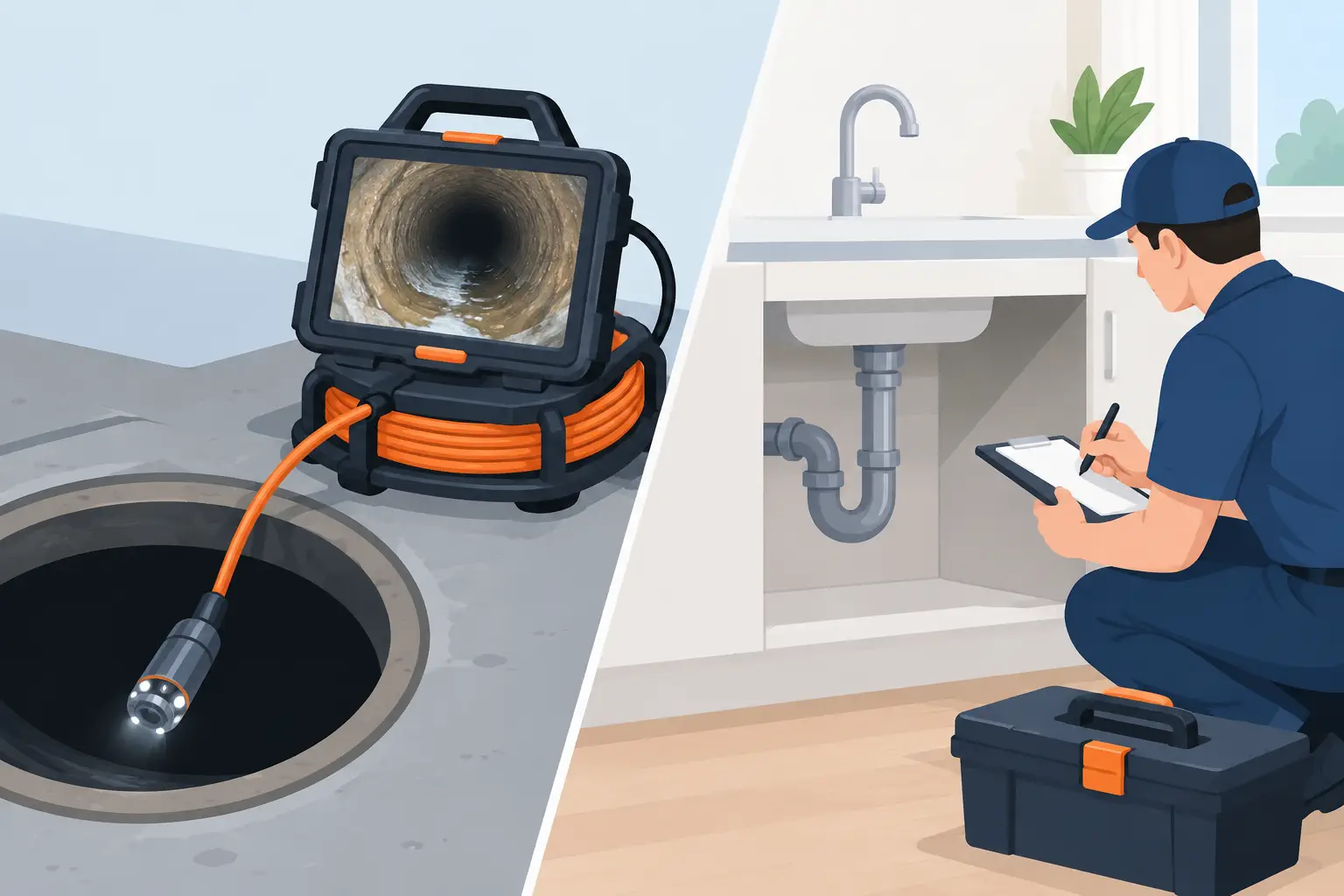
A home can have clean fixtures, good water pressure, and no visible leaks – while a costly problem is developing underground. That is why understanding sewer scope vs plumbing inspection matters before a purchase, during routine maintenance, or when a drain issue starts raising questions. These services assess different parts of the plumbing system, and neither should be mistaken for a replacement for the other.
For Central Ohio buyers and property owners, the distinction can affect negotiations, repair planning, and confidence in a major investment. A standard plumbing inspection looks at accessible supply and drain components inside and around the building. A sewer scope uses a specialized camera to inspect the buried line carrying wastewater from the property to a public sewer or septic system.
Sewer Scope vs Plumbing Inspection: What Is the Difference?
The simplest difference is location. A plumbing inspection evaluates the visible and accessible portions of a property’s plumbing system. A sewer scope examines the private sewer lateral, which is the underground pipe running from the home to the municipal connection or septic tank.
During a plumbing inspection, an inspector typically evaluates fixtures, faucets, toilets, drains, exposed water supply lines, shutoff valves, water heaters, visible drain piping, and signs of active leakage or past water damage. The goal is to identify safety concerns, functional defects, improper installations, and maintenance issues that can affect the building.
A sewer camera scope is more targeted. A small camera is inserted through an accessible cleanout or, in some cases, another suitable entry point. As the camera travels through the line, it records the condition of the pipe interior. This can reveal defects that cannot be seen from a basement, bathroom, or utility room.
A plumbing inspection may identify slow drainage at a sink or evidence of a prior backup. It generally cannot confirm whether the buried sewer line has root intrusion, a separated joint, a crushed section, or a sag that holds waste and water. That is the specific job of the sewer scope.
What a Plumbing Inspection Can Tell You
A comprehensive property inspection includes a practical assessment of the plumbing system based on what is visible, safely accessible, and operating at the time of the inspection. This is especially valuable because plumbing failures can create immediate water damage, mold conditions, and expensive disruption.
The inspection may identify leaking supply connections, corroded piping, poorly supported drain lines, aging water heaters, missing safety features, low pressure concerns, loose toilets, slow fixtures, or improper drainage at sinks and tubs. An inspector also looks for moisture staining, material deterioration, and evidence that a prior repair may not have addressed the underlying issue.
This service gives buyers a broad view of plumbing condition throughout the home. It also helps current owners prioritize repairs before a small leak turns into damaged flooring, drywall, or framing.
Still, a standard inspection has clear boundaries. Walls, floors, ceilings, and underground piping are not opened or excavated. A drain may appear to work during a brief functional test even if a partial blockage or damaged section exists farther down the sewer line. Plumbing inspection findings can point to a concern, but they do not always explain the full condition of the buried lateral.
What a Sewer Camera Scope Can Find
A sewer scope provides direct visual information about a pipe that is otherwise hidden beneath the yard, driveway, foundation, or street-side connection. The footage can show whether wastewater has a clear, stable path out of the property.
Common sewer line conditions found with a camera include root intrusion, cracked or fractured pipe, offset joints, deteriorated cast iron, separated connections, construction debris, grease buildup, bellies or low areas, and blockages. The scope may also identify pipe materials and transitions between materials, which can be useful when planning future maintenance or replacement.
Root intrusion is a frequent concern in established neighborhoods. Tree roots naturally seek moisture, and even a small opening at a pipe joint can invite growth into the line. Over time, roots can restrict flow and contribute to recurring backups. A line may still drain on inspection day, but visible root growth can signal that cleaning, repair, or further evaluation should be considered.
Older homes deserve particular attention. Depending on the property’s age and repair history, the sewer lateral may include clay tile, cast iron, Orangeburg, or multiple pipe materials joined together over decades. Each material has different failure patterns. Clay pipe joints can shift and admit roots. Cast iron can corrode internally. Orangeburg can deform or deteriorate. A camera scope helps replace assumptions with evidence.
When You Need One Service – and When You Need Both
A plumbing inspection is appropriate for virtually every home inspection because it addresses the operational plumbing system inside the property. It is part of understanding how the building functions on the day you make a decision.
A sewer scope is strongly recommended when buying an older home, a home with large mature trees, or a property with any sign of slow drains, sewer odors, recurring clogs, prior backups, or recent drain-cleaning work. It is also a smart choice when a seller cannot document the age, material, or repair history of the sewer line.
Newer homes can benefit from a sewer scope as well. Construction debris, improper slope, damaged piping, or installation defects are not limited to older properties. For new construction buyers, identifying an issue before closing or before a builder warranty period ends can be far easier than addressing it after the home is occupied.
For many buyers, the right answer is both services. The plumbing inspection evaluates the fixtures and accessible distribution and drain systems. The sewer scope evaluates the buried discharge line. Together, they provide a more complete picture of a system that can be expensive and disruptive to repair.
What a Sewer Scope Does Not Cover
A sewer camera is a powerful diagnostic tool, but it is not a guarantee that a line will never fail. Conditions can change after the inspection due to shifting soil, new root growth, improper use, or damage from later excavation. Water may also obscure a portion of the line, and a camera cannot always pass a severe blockage or collapsed section.
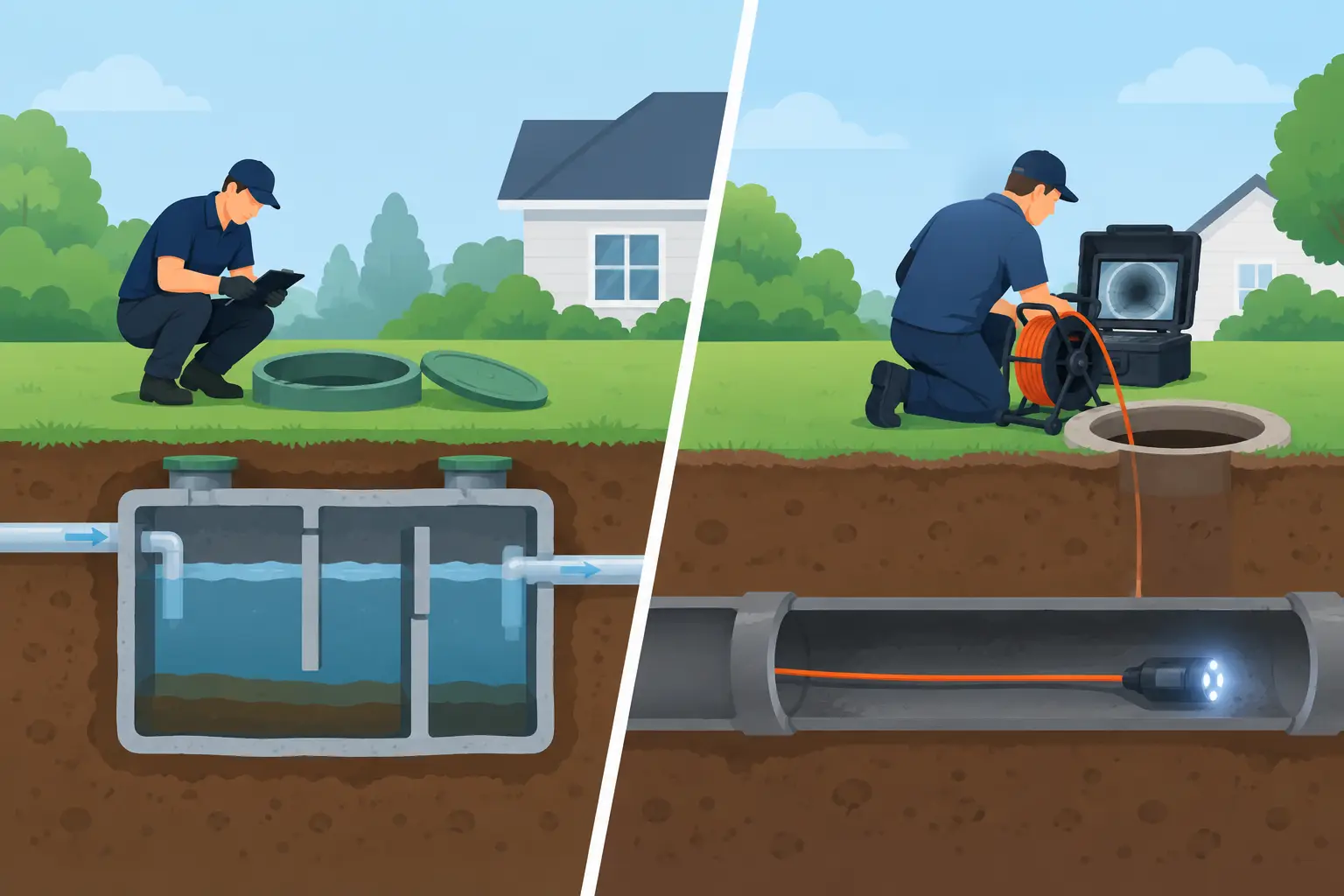
The scope is also not the same as a septic inspection. If a property uses a septic system, the tank, baffles, pump components, absorption field, and system performance require a separate evaluation. Likewise, a sewer scope does not replace testing private well water or evaluating interior plumbing fixtures.
A qualified inspector should document material observations, notable defects, the approximate extent of the camera run when possible, and recommendations for further review by a licensed plumbing or sewer contractor when repairs are indicated. Clear reporting matters because repair options can range from routine cleaning to localized repair or full replacement.
How Findings Affect a Real Estate Transaction
Sewer and plumbing findings do not automatically mean a buyer should walk away. They provide information needed to make a measured decision. A loose fixture connection or aging water heater may be a manageable repair. Significant root intrusion, a collapsed lateral, or a pipe belly beneath a driveway can require a much larger budget and a more detailed contractor evaluation.
When concerns are identified before closing, buyers can seek repair, credit, pricing adjustments, or additional specialist review based on the terms of their transaction. Investors can better estimate renovation costs and schedule work before tenants or occupants are affected. Homeowners can plan maintenance before a backup becomes an emergency.
The key is to avoid treating a clean-looking kitchen and bathroom as proof that the entire drainage system is sound. Fixtures tell part of the story. The buried line tells another.
A More Complete Way to Protect the Property
If you are purchasing or maintaining a home in Powell, Columbus, Dublin, or surrounding Central Ohio communities, consider the age of the property, the presence of mature landscaping, and the history available for the sewer line. Those details help determine whether a camera scope should be part of your inspection plan.
Flinn Inspection Group helps clients coordinate core home inspection services and specialized testing so decisions can be based on documented conditions, not guesswork. When the plumbing you can see and the sewer line you cannot see are both evaluated, you are in a stronger position to protect the property, the budget, and the people who depend on it.