by Flinn Inspection Group
Share
by Flinn Inspection Group
Share
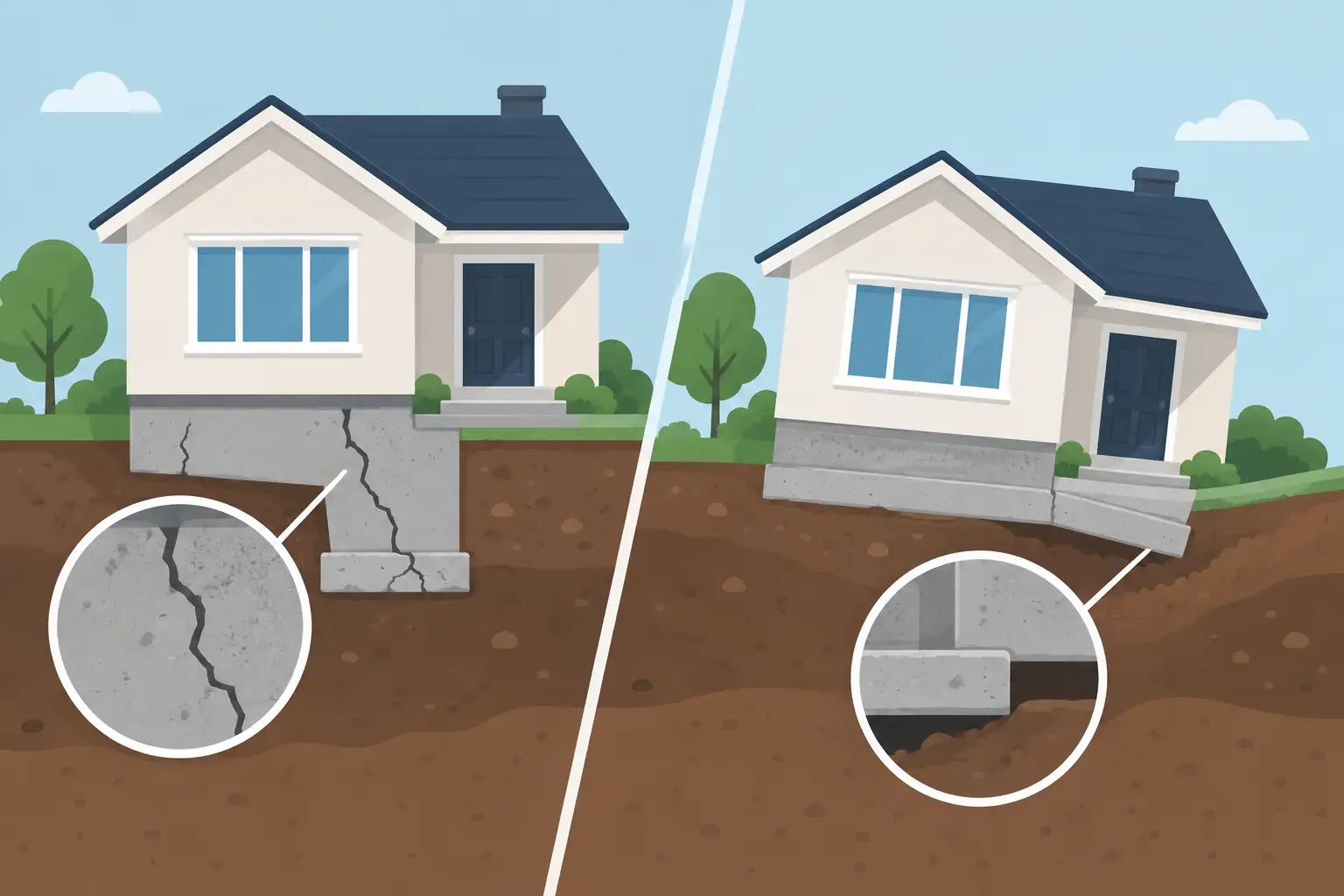
A thin crack in a basement wall can create immediate concern during a showing, a warranty walkthrough, or a routine walk through your own home. But foundation cracks versus settlement is not a simple either-or question. A crack is a visible condition. Settlement is movement of the structure or soil supporting it. Sometimes they are connected. Sometimes a crack is a normal result of concrete curing, temperature changes, or minor material movement with no evidence of a serious structural issue.
The right response is not to ignore every crack or assume every crack requires a major repair. It is to understand the pattern, location, width, direction, and related conditions. That context helps buyers, owners, and investors make decisions based on evidence rather than alarm.
Foundation Cracks Versus Settlement: The Core Difference
Concrete is strong under compression, but it is not flexible. As new concrete cures, it naturally shrinks. Seasonal temperature changes, moisture changes in surrounding soil, and normal building movement can also place stress on a foundation. Small cracks can result without indicating ongoing settlement.
Settlement occurs when the soil beneath or around a foundation shifts, compresses, washes away, dries out, or otherwise loses its ability to support the structure evenly. The key concern is usually differential settlement. This means one area of the home moves more than another, which can place stress on foundation walls, framing, floors, doors, windows, and finishes.
A foundation crack may be evidence of settlement, but it is not proof by itself. A hairline vertical crack in a poured concrete wall has a different significance than a widening diagonal crack that continues through masonry, drywall, and window openings. A qualified inspection evaluates the entire pattern, not one isolated mark.
What Common Crack Patterns Can Tell You
Crack direction and location offer useful clues, although no single pattern can diagnose a foundation without considering the building as a whole.
Vertical cracks in poured concrete
Vertical cracks are common in poured concrete foundations. Many are related to curing shrinkage or minor movement and may be primarily a moisture-entry concern. If a vertical crack is narrow, stable, and not accompanied by offset surfaces, sticking doors, or floor movement, it may not point to significant settlement.
That said, a vertical crack should still be monitored. If it widens over time, allows water intrusion, or appears with other movement indicators, it deserves further evaluation.
Diagonal or stair-step cracks
Diagonal cracks can develop when one section of the structure moves differently than another. In brick or block foundations, this often appears as a stair-step crack following mortar joints. In finished areas, you may see diagonal drywall cracks extending from the corners of doors or windows.
These cracks can be associated with differential settlement, but the severity depends on whether the crack is active, widening, displaced, or paired with other signs. Older homes may have historic cracks that have remained unchanged for years. New or progressing cracks require more attention.
Horizontal cracks and wall displacement
Horizontal cracking in a basement wall is generally more concerning than a typical vertical shrinkage crack. It may indicate lateral pressure from saturated soil, poor drainage, frost-related movement, or expansive soil conditions. A wall that is bowed, leaning, bulging, or visibly displaced should not be treated as a cosmetic issue.
This condition may be related to soil pressure rather than settlement below the foundation, but it is still a structural concern. Prompt assessment helps prevent a manageable repair from becoming a more extensive stabilization project.
Cracks in slabs, floors, and exterior masonry
Concrete slabs commonly crack because concrete shrinks and moves. A crack in a garage floor or basement slab may be ordinary, especially when the sides remain level. However, cracks with vertical displacement, noticeable separation, or moisture entry can indicate movement below the slab.
Exterior brick veneer can also provide clues. Cracks around windows, separation at trim, or uneven mortar joints may reflect settlement, moisture-driven movement, or framing changes. The foundation, drainage, roof runoff, interior finishes, and doors should all be considered together.
Signs That Make Settlement More Likely
No property owner should have to guess based on one crack alone. Settlement becomes more likely when multiple conditions appear in the same area of a property. Watch for these related signs:
- Doors or windows that suddenly stick, separate from trim, or no longer latch properly
- Sloping or uneven floors, especially when the change is noticeable from room to room
- Cracks that widen, reopen after repair, or show offset from one side to the other
- Gaps between walls and ceilings, cabinets and walls, or exterior trim and masonry
- Bowed foundation walls, displaced block, or cracks that allow recurring water entry
Age matters. A century home in Columbus may have minor irregularities from long-term movement that are not actively worsening. A newer home in Powell or Dublin with fresh, expanding cracks and multiple alignment issues may call for a more urgent review. The question is not whether a building is perfectly still. The question is whether movement is active, uneven, or affecting performance and safety.
Why Water and Soil Conditions Matter in Central Ohio
Water management is one of the most influential factors in foundation performance. Roof runoff that discharges beside the foundation can saturate soil and increase pressure against basement walls. Poor grading can direct surface water toward the home. Leaking plumbing, clogged drains, or damaged underground drainage can create localized soil changes that are easy to miss.
Central Ohio also experiences seasonal moisture swings and freeze-thaw cycles. Soil can expand when wet, contract during dry periods, and shift as water freezes and thaws. These conditions do not guarantee foundation trouble, but they make proper grading, functional gutters, and effective downspout extensions essential maintenance items.
Large trees close to a structure can be another variable. Their roots do not automatically cause foundation damage, but they can influence soil moisture levels, particularly during prolonged dry weather. The appropriate solution depends on the foundation type, soil conditions, drainage patterns, tree location, and evidence of actual movement. Removing a tree without a clear diagnosis is not always the answer.
How a Thorough Inspection Evaluates the Evidence
A professional property inspection is designed to identify visible conditions and explain their likely significance within the scope of the inspection. This includes reviewing accessible foundation walls, floors, exterior grading, roof drainage, structural components, visible cracks, moisture indicators, and operation of representative doors and windows.
At Flinn Inspection Group, we inspect every square foot we can safely access and document conditions clearly so clients can understand what they are seeing. Thermal imaging can help identify temperature differences that may be consistent with moisture concerns in accessible areas, while a careful visual inspection connects those findings to drainage, wall conditions, and the rest of the structure.
An inspection does not replace a structural engineering analysis, and it should not pretend to. When visible conditions suggest active structural movement, significant wall displacement, or a need to determine repair design, referral to a qualified structural engineer or foundation specialist is appropriate. That additional evaluation can establish cause, urgency, and repair options before a buyer accepts a major expense or an owner authorizes work.
What Buyers and Owners Should Do Next
For buyers, foundation concerns should be addressed during the inspection period, not after closing. Ask for clear documentation of the crack location, pattern, associated symptoms, and recommended next step. If further evaluation is advised, obtain it before the end of your due diligence whenever possible. Repair estimates can vary widely because drainage correction, crack sealing, wall reinforcement, piering, excavation, and interior repairs solve very different problems.
For current owners, take dated photos and measure cracks periodically rather than relying on memory. Keep gutters clear, extend downspouts away from the foundation, correct grading that drains toward the house, and address plumbing leaks promptly. Do not simply patch recurring cracks without investigating why they return.
A foundation does not need to be flawless to be serviceable, especially in an older property. What matters is knowing whether a crack is stable and manageable or part of a larger movement pattern. Clear evidence, timely maintenance, and the right expert guidance protect both the property and the decisions built around it.