by Flinn Inspections
Share
by Flinn Inspections
Share

A beautiful 1920s bungalow or mid-century ranch can offer character that new construction cannot match. It can also hide aging supply lines behind finished walls, a deteriorating sewer lateral beneath the yard, or materials that require careful handling during renovation. The best tests for older homes look beyond a standard visual inspection to identify risks that can affect your safety, budget, and plans for the property.
A full home inspection remains the starting point. From there, the right specialty tests depend on the home’s age, construction, utilities, location, visible conditions, and whether you plan to renovate. The goal is not to test everything without reason. It is to investigate the systems and materials most likely to create a costly surprise.
Start With a Comprehensive Home Inspection
Before ordering specialty services, schedule a thorough whole-home inspection. An older home deserves more than a quick walk-through. The inspector should assess the roof, structure, foundation, exterior, attic, electrical system, plumbing, HVAC equipment, interior surfaces, and readily accessible components.
This inspection establishes where additional testing is warranted. For example, an older electrical panel may need evaluation by a licensed electrician, recurring moisture stains may justify mold or air-quality testing, and slow fixtures or mature trees near the sewer route may make a sewer scope a priority.
Advanced tools add useful context. Thermal imaging can help identify temperature differences associated with missing insulation, moisture intrusion, or electrical concerns. Gas leak detection can help identify potential fuel-gas leaks at accessible connections and appliances. These tools do not replace visual expertise or invasive evaluation when needed, but they can reveal conditions that deserve a closer look.
Best Tests for Older Homes: Prioritize These Risks
Sewer Camera Scope
For many older homes, a sewer camera scope is one of the highest-value tests available. The sewer lateral, which carries waste from the home to the public sewer or septic system, is usually outside the scope of a standard home inspection because it is buried and not visible.
Older properties may have clay tile, cast-iron, Orangeburg, or other aging sewer materials. Roots can enter joints, pipes can crack or separate, and sections can sag or collapse. A camera scope can document the condition of the accessible line and identify blockages, root intrusion, standing water, or defects that may require repair.
Do not assume a functioning toilet means the sewer line is sound. A damaged line can still drain during a showing, then back up after the home is occupied. In Central Ohio, mature trees and older neighborhood infrastructure make this test especially worthwhile for many buyers.
Radon Testing
Radon is a naturally occurring radioactive gas that can enter through foundation openings, sump systems, crawlspaces, and other pathways. It is colorless and odorless, so you cannot identify it by sight or smell. Long-term exposure is a serious health concern.
Every home should be tested for radon, regardless of age, but older homes can have more air pathways at foundation penetrations and gaps around utility entries. A home that has never tested high can also produce a different result after changes to ventilation, weather conditions, or the home’s use.
A qualified radon test provides a measured result rather than guesswork. If levels are elevated, a mitigation professional can recommend an appropriate system. Testing is simple compared with the consequences of overlooking an invisible condition.
Lead-Based Paint Testing
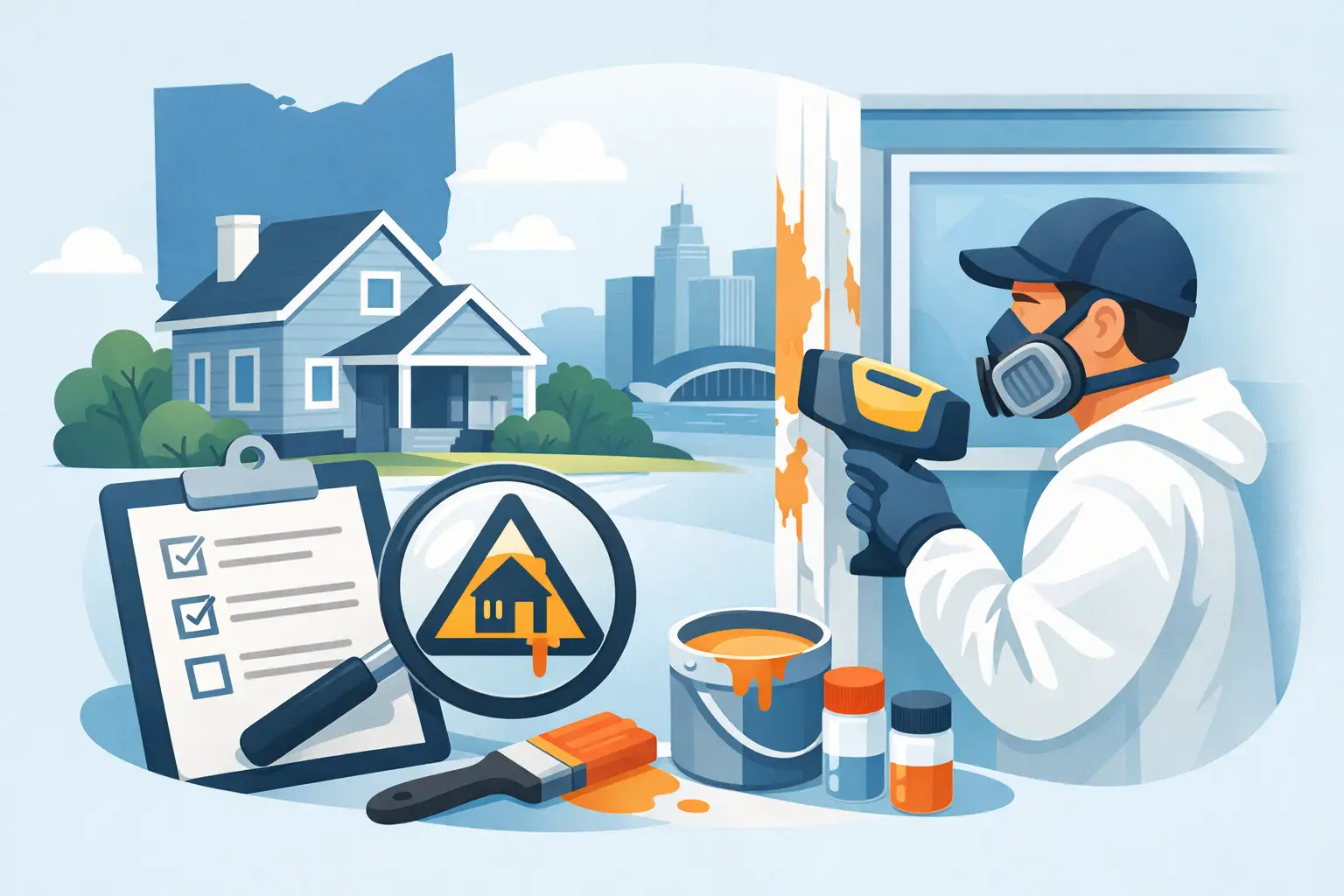
If a home was built before 1978, lead-based paint should be part of the conversation. Lead paint is most dangerous when it is deteriorating, creating dust, or disturbed during sanding, demolition, window replacement, or other renovation work. Young children and pregnant women are particularly vulnerable to lead exposure.
Testing can help establish whether lead-based paint is present on painted surfaces. This is especially valuable when buyers plan remodeling, have children in the household, or notice peeling paint around windows, doors, porches, trim, or stairways.
A positive test does not automatically mean the home is unsafe or unbuyable. Many older homes contain lead-based paint that can be safely managed when it is intact. The key is knowing it is there before a renovation crew turns a contained material into contaminated dust.
Asbestos Testing
Asbestos was used in many building products for fire resistance and durability. Depending on the home’s age and updates, it may be found in pipe insulation, duct wrap, textured coatings, vinyl flooring and mastic, ceiling materials, siding, roofing, or insulation.
Asbestos-containing materials are not necessarily hazardous when they are intact and undisturbed. The concern increases when materials are damaged or renovation will cut, scrape, drill, sand, or remove them. Because visual identification is unreliable, laboratory testing of a properly collected sample is the responsible way to confirm a concern.
If you are buying an older Columbus-area property with an unfinished basement, older floor tile, aging mechanical insulation, or planned demolition, asbestos testing can protect both the renovation schedule and the people working in the home.
Mold and Indoor Air Quality Testing
Mold testing is not a substitute for finding and correcting moisture. A musty basement, visible fungal growth, repeated condensation, roof leaks, plumbing leaks, or water intrusion should first trigger a careful moisture investigation.
Air or surface sampling may be appropriate when there is a documented history of water damage, occupants have health concerns, visible evidence needs clarification, or a buyer needs baseline information before closing. Thermal imaging and moisture readings can help locate suspect areas, including concealed leaks behind walls or below finished flooring.
The trade-off is that mold tests capture conditions at a particular time, and indoor spore levels can vary. Results are most useful when interpreted alongside the home’s moisture conditions, ventilation, visible materials, and inspection findings. A clean report does not repair a leaking foundation, and a high result does not identify the source without further investigation.
Water Quality Testing for Private Wells
Homes served by private wells require water testing because the homeowner, not a municipal utility, is responsible for water quality. Standard testing often evaluates bacteria, nitrates or nitrites, and other parameters required by the loan type or recommended for the area. FHA transactions may carry specific water-quality requirements.
The appropriate panel depends on the well, local conditions, property history, and lender requirements. A home inspection can assess visible well components and the pressure system, but laboratory analysis is necessary to determine what is in the water.
Even when a well has produced acceptable results in the past, test the water during your due-diligence period. Conditions can change after flooding, nearby construction, septic issues, or changes to the well equipment.
Tests That Depend on the Home’s Specific Clues
Not every older home needs every specialty service. A septic inspection is essential where the property is not connected to public sewer. A fireplace inspection is prudent when an older wood-burning fireplace or chimney will be used. Pool inspections can protect buyers from inheriting failing equipment, concealed leaks, or safety issues. Termite inspections are valuable where wood-destroying insects are a concern, particularly when there is visible wood damage, moisture around the foundation, or a prior treatment history.
Electrical and structural concerns may also call for further evaluation by the appropriate licensed professional. Knob-and-tube wiring, aluminum branch-circuit wiring, Federal Pacific or Zinsco panels, significant foundation movement, or unsafe chimney conditions are not issues to price casually from a listing photo. The inspection report should give you clear next steps and a realistic basis for requesting repairs, negotiating credits, or planning post-closing work.
When to Schedule Specialty Testing
For buyers, schedule appropriate tests during the inspection contingency period, not after closing. This preserves time to review findings, obtain repair estimates if needed, and make decisions with facts in hand. Ask whether all services can be coordinated with the home inspection so the process stays efficient and the findings can be evaluated together.
Current homeowners should also consider testing before a major renovation, after water damage, when selling an older property, or when a system begins showing warning signs. Waiting until a sewer backs up, a renovation stops, or an occupant becomes ill removes options and raises costs.
Older homes reward informed ownership. Choose tests based on the property in front of you, use qualified professionals, and insist on clear reporting. A careful inspection plan gives you the information to preserve what makes an older home special while protecting the investment behind its walls.