by Flinn Inspections
Share
by Flinn Inspections
Share
A cracked basement floor tile, aging pipe wrap, or a planned kitchen remodel can raise a question with real consequences: when is asbestos testing needed? The answer is not simply “whenever a home is old.” Testing becomes necessary when suspect materials may be disturbed, when a transaction requires clarity, or when visible damage could release fibers into the air. The goal is to make a sound decision before work begins, not to create unnecessary concern.
When Is Asbestos Testing Needed Before Work Begins?
Asbestos testing is most often needed before renovation, repair, demolition, or removal work that could cut, drill, sand, scrape, break, or otherwise disturb building materials. Asbestos fibers are a health concern when they become airborne and are inhaled. A material that remains intact and undisturbed may not require immediate removal, but that condition can change quickly once a contractor opens a wall or pulls up flooring.
Properties built before 1980 deserve particular attention because asbestos was commonly used in many residential and commercial materials. However, age alone cannot confirm whether asbestos is present. Some newer materials may also contain asbestos, and many older materials do not. Laboratory analysis of a properly collected sample is the reliable way to identify it.
Testing should be arranged before work starts, not after demolition dust has already been created. This protects occupants, gives contractors clear direction, and helps prevent an avoidable work stoppage halfway through a project.
Renovation, Repair, and Demolition Are Common Triggers
If your project affects a suspect material, testing is the prudent next step. This applies to large renovations, such as a full bathroom or kitchen update, but also to smaller jobs that can create dust. Replacing a damaged section of pipe insulation, removing old vinyl flooring, installing recessed lighting, or opening a wall for electrical work can all disturb materials that deserve review.
Testing is especially appropriate when the scope of work involves any of the following:
- Removing old floor tile, sheet flooring, mastic, or adhesive
- Repairing or replacing insulation around pipes, boilers, ducts, or furnaces
- Demolishing plaster walls, ceiling texture, drywall joint compound, or cement board
- Replacing aging roofing, siding, soffits, or exterior cement products
- Cleaning up deteriorated materials after water damage, fire damage, or a fallen ceiling
Contractors should not have to guess what is behind a wall, under a floor, or wrapped around mechanical equipment. A test result allows the project team to plan the right containment, removal, disposal, and cleanup procedures if asbestos is confirmed.
Signs That Make Asbestos Testing a Smart Choice
Testing is not limited to planned construction. It can also make sense when a material is visibly damaged, friable, or deteriorating. Friable means a material can be crumbled or reduced to powder by hand pressure when dry. Damaged pipe insulation, crumbling ceiling material, broken floor tile, and deteriorated wrapping around older ductwork are examples that call for professional evaluation.
Water intrusion is another reason to act. A roof leak, plumbing leak, or flooded basement can damage materials that were previously stable. Once materials begin to break down, fibers may be more likely to become airborne. Do not sweep, vacuum with a standard household vacuum, sand, or pull apart suspect materials to see what they are made of. Those actions can make the situation worse.
An inspection may identify materials that appear consistent with asbestos-containing products, but visual observation alone cannot confirm asbestos. Testing is needed when a definitive answer will affect safety, project planning, cost, or a real estate decision.
Testing During a Home Purchase or Commercial Transaction
A standard property inspection can identify visible conditions and point out materials that warrant further evaluation. It does not generally include laboratory asbestos sampling unless that service is specifically ordered. For a buyer, asbestos testing may be worthwhile when an older property has damaged insulation, aging floor coverings, deteriorated ceiling texture, or evidence of prior remodeling that left questionable materials exposed.
The right decision depends on the property and your plans for it. A buyer who intends to leave intact floor tile in place may choose to document the condition and plan around it. A buyer planning an immediate renovation should seek answers before closing or before contractors are scheduled. The same applies to investors evaluating rehabilitation costs and commercial owners preparing tenant improvements.
Testing can also clarify negotiations. A confirmed result does not automatically mean a property is unsafe or that a sale should end. It does mean the parties can estimate qualified abatement or management costs with better information instead of relying on assumptions.
Materials Often Tested for Asbestos
Asbestos was valued for heat resistance, durability, and insulating properties, which is why it appears in a wide range of products. In homes and commercial buildings, common suspect materials include resilient floor tile and backing, black flooring mastic, pipe and duct insulation, boiler insulation, textured ceiling finishes, plaster, drywall joint compound, cement siding, roofing materials, and some fireproofing products.
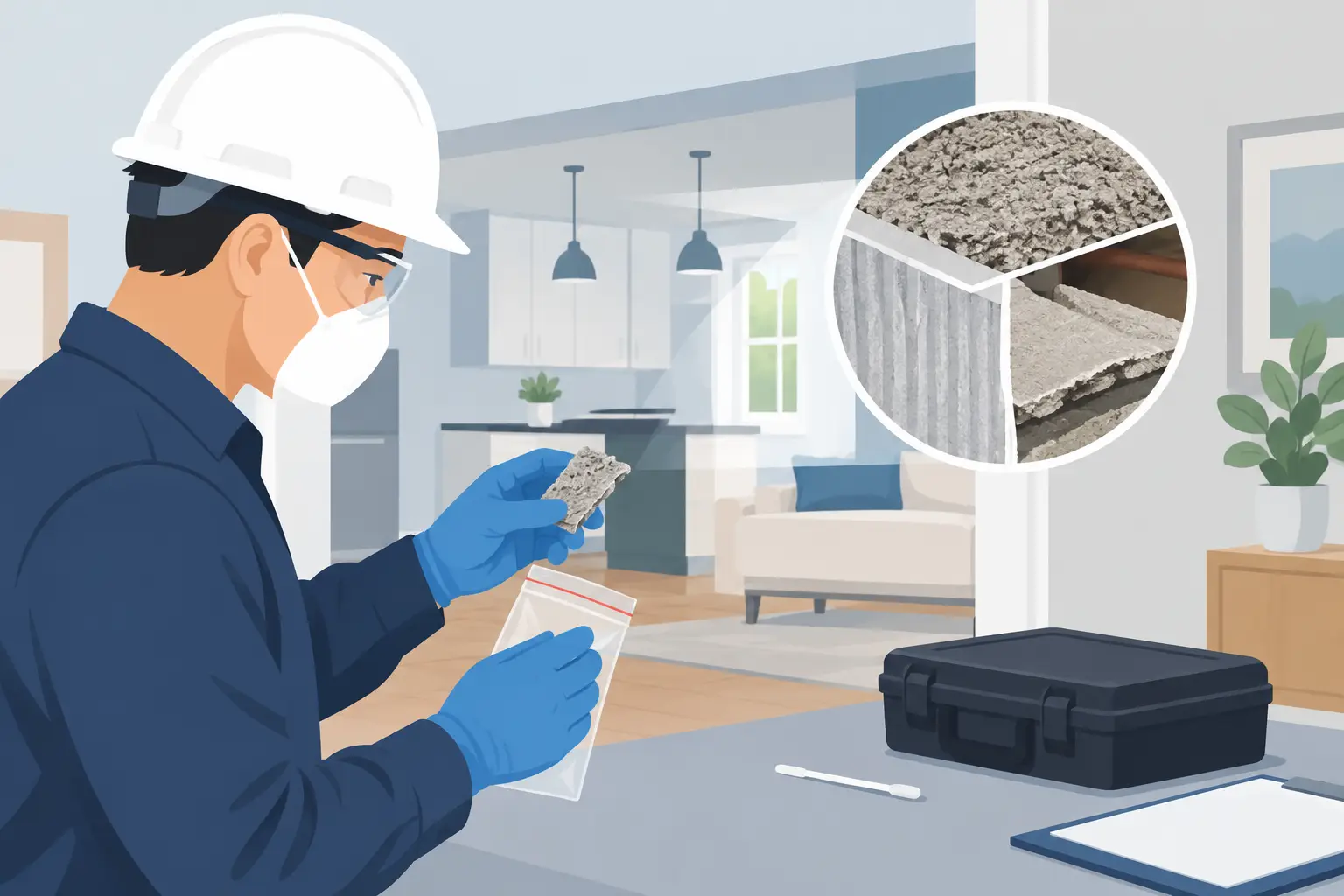
This is not a complete list, and appearance can be misleading. Two materials that look nearly identical may have different compositions. That is why a professional collects representative samples using appropriate precautions and sends them to an accredited laboratory for analysis.
It is also important to distinguish between a material assessment and air testing. Bulk material testing answers whether a specific product contains asbestos. Air sampling measures airborne fibers under particular conditions. If a suspect material is damaged or a disturbance may have occurred, a qualified professional can determine whether air testing is appropriate in addition to material sampling.
What Professional Asbestos Testing Looks Like
A proper assessment begins with the building, the material, and the planned work. The inspector considers the property’s age, the material’s condition, its location, and whether it will be disturbed. Samples are collected carefully, documented, and submitted for laboratory analysis.
The report should clearly identify the sampled material, location, laboratory result, and recommended next steps. If results are negative, you can move forward with greater confidence. If asbestos is confirmed, the next step depends on the material’s condition and the work planned. Intact material may sometimes be managed in place, while damaged material or material in a renovation area may need professional abatement.
Do not treat a positive result as a do-it-yourself removal project. Regulations, licensing requirements, and disposal rules can apply, particularly for larger projects and commercial properties. A qualified asbestos professional can explain the appropriate path for your situation.
Protect the Project Before It Becomes a Problem
The cost of testing is usually small compared with the cost of stopping a renovation, changing contractors, or addressing dust after unplanned disturbance. It also gives homeowners and buyers a clear record of what was found and where. That documentation is valuable when planning future repairs, discussing a property with contractors, or evaluating a purchase.
For Central Ohio buyers, homeowners, and investors, a coordinated inspection approach can save time when several concerns are present at once. Flinn Inspection Group can help identify conditions that warrant asbestos testing alongside broader property, air quality, and system evaluations, so decisions are based on the full condition of the building.
Before the first wall is opened or the first tile is removed, pause and assess the material in front of you. A timely asbestos test replaces uncertainty with a practical plan to protect the people in the property and the investment behind it.