by Flinn Inspections
Share
by Flinn Inspections
Share
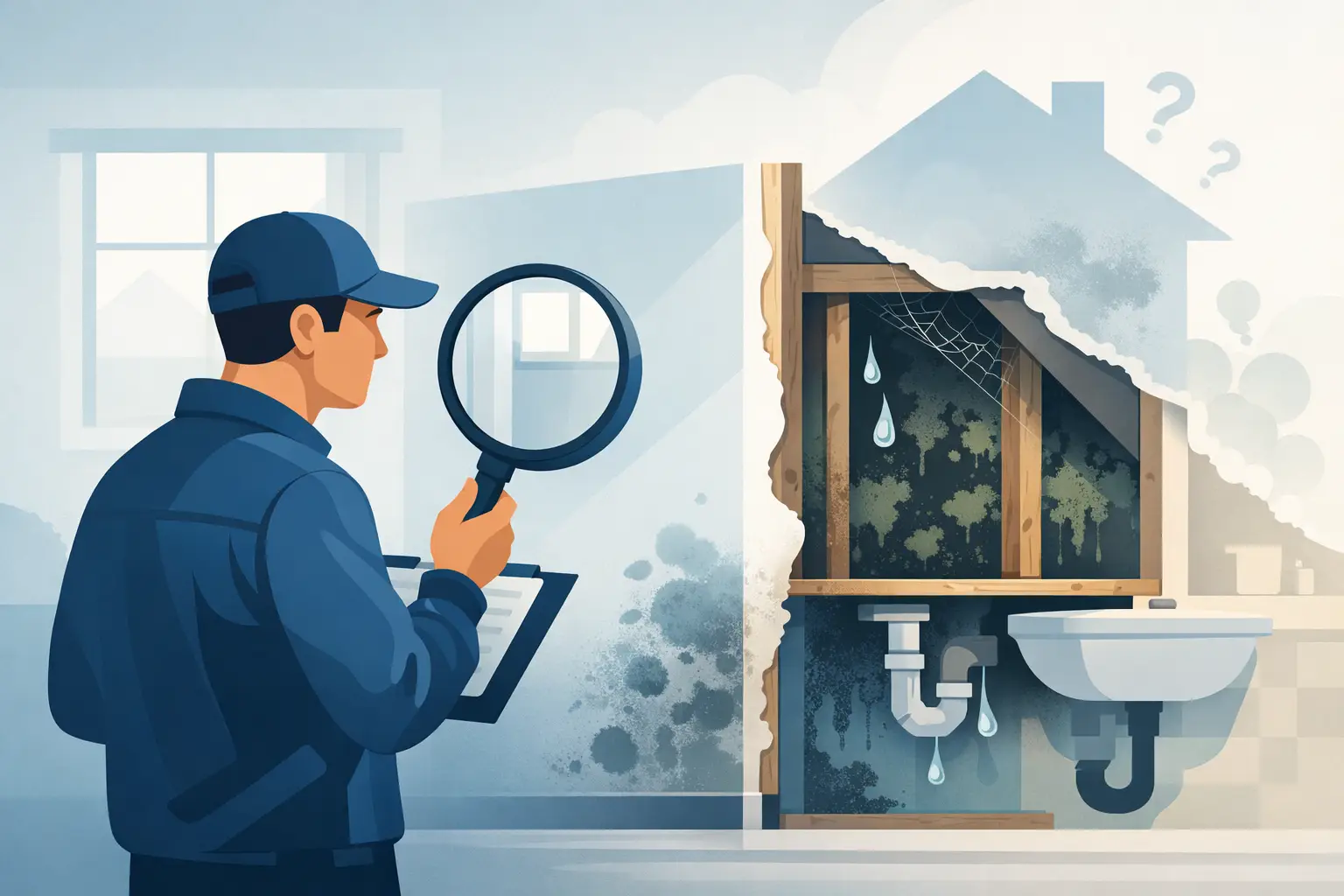
A drain can look perfectly normal during a showing and still hide a costly problem underground. That is why the choice between a septic inspection versus sewer scope matters before you close, list a property, or take on a major maintenance decision. These services investigate two different wastewater systems. Ordering the right one gives you a clearer view of a property expense that a standard home inspection cannot fully verify.
For Central Ohio buyers, the first question is simple: Where does the home’s wastewater go? A property connected to a public sewer line needs a sewer scope. A property with an on-site septic system needs a septic inspection. In some cases, especially with older or rural properties, records and site conditions may call for a closer review before deciding which service is appropriate.
Septic Inspection Versus Sewer Scope: The Core Difference
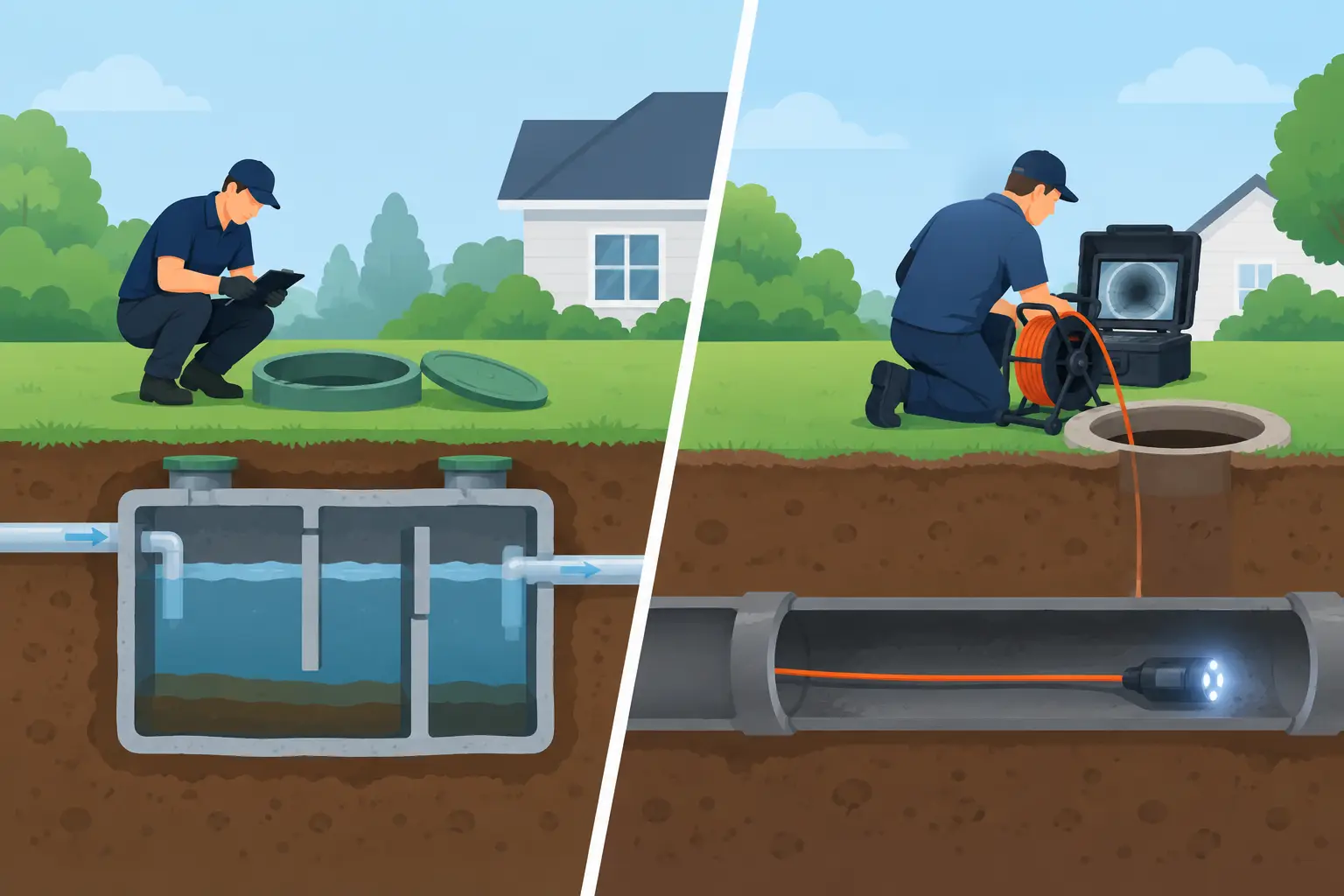
A sewer scope is a camera inspection of the private sewer lateral – the underground pipe that carries wastewater from the home to the public sewer connection. A technician inserts a specialized camera through an accessible cleanout or another suitable entry point and reviews the inside of the line. The goal is to identify defects or restrictions that could affect drainage.
A septic inspection evaluates an on-site wastewater treatment system. Rather than sending waste to a municipal sewer, the home uses a septic tank and a soil absorption area, commonly called a leach field or drain field. The inspection focuses on accessible system components, their apparent condition, and signs that the system may not be functioning as intended.
They are not interchangeable services. A sewer camera cannot tell you whether a septic tank, distribution box, or drain field is performing properly. Likewise, a septic inspection is not a substitute for camera-evaluating a long sewer lateral connected to city service.
What a Sewer Scope Can Reveal
A sewer scope provides visual evidence from inside a buried pipe. This matters because a standard home inspection can test plumbing fixtures and observe drainage at the house, but it cannot see the full condition of the underground lateral.
During a camera scope, an inspector may identify root intrusion, cracks, separated or offset pipe joints, corrosion, heavy scale buildup, grease accumulation, construction debris, standing water, or a pipe belly where the line has sagged. The inspection can also reveal material types that deserve attention, including older clay tile, cast iron, or Orangeburg piping.
A line can still drain during the inspection and have meaningful defects. Roots may be entering at a joint without causing a complete blockage yet. A deteriorating cast-iron line may pass water today while showing internal scaling or corrosion that restricts flow over time. That distinction is valuable during a real estate transaction because it allows buyers and sellers to address the actual condition, not guess based on whether a sink happens to drain.
A sewer scope does have limits. Camera access depends on having a suitable entry point, and obstructions may prevent the camera from reaching the public connection. A camera also does not repair a line, confirm its precise depth, or guarantee that a future blockage will never occur. It does, however, provide a far more informed starting point than assuming an underground line is fine because no backup is currently visible.
When a Sewer Scope Is a Smart Choice
A sewer scope is strongly worth considering when a property is connected to public sewer, particularly if the home is older, has mature trees near the sewer route, has a history of slow drains or backups, or uses older piping materials. It is also a practical safeguard for renovated homes. New finishes can conceal old underground infrastructure, and a recently remodeled kitchen does not change the condition of the sewer lateral beneath the yard.
In established Columbus-area neighborhoods, aging clay and cast-iron sewer lines can be a real consideration. A camera scope may identify concerns early enough for buyers to request further evaluation, negotiate repairs, or make a purchase decision with better information.
What a Septic Inspection Can Evaluate
A septic inspection looks at the overall on-site system rather than just one pipe. Depending on access, local requirements, and the condition of the property, the evaluation may include locating the tank, opening accessible lids, reviewing tank levels, observing inlet and outlet baffles, examining visible components, and checking for evidence of leakage, backup, or improper drainage.
The inspection may also involve reviewing the distribution box and observing the drain field area for warning signs such as saturated soil, sewage odors, unusually lush patches of grass, surfacing wastewater, or drainage issues. Available permits, maintenance records, pumping history, and system diagrams can add essential context. A properly documented maintenance history is useful, but it should not replace an on-site evaluation.
Unlike a sewer lateral, a septic system depends on multiple components working together. The tank separates solids from wastewater. The drain field disperses treated effluent into soil. If the tank has not been pumped on schedule, solids can move into downstream components. If the soil absorption area is failing, the home may experience slow drainage, odors, wet ground, or sewage backup.
A septic inspection should be approached with clear expectations. The drain field is underground and cannot be fully viewed from the surface. Weather, soil conditions, recent pumping, occupancy levels, and limited access can affect what is observable on inspection day. When findings point to a concern, additional evaluation by a qualified septic contractor or local authority may be necessary.
When a Septic Inspection Is the Right Call
Order a septic inspection when the property relies on an on-site septic system, whether you are buying a country home, evaluating an investment property, or checking a residence before listing it. Do not assume that a septic system is acceptable because the toilets flush during a walkthrough. A system can operate under light use and still have limited remaining capacity or deferred maintenance.
It is especially wise to investigate when records are incomplete, the home has been vacant, an addition may have increased the number of bedrooms, or there are visible signs of drainage trouble. A septic system is sized and permitted for a specific use. Changes in occupancy or home layout can create questions worth resolving before closing.
How to Determine Which Service You Need
Start with the property’s utility information, seller disclosures, and county records when available. If wastewater leaves the home through a private lateral and connects to a municipal system, schedule a sewer scope. If the home has a septic tank and drain field, schedule a septic inspection.
Do not rely solely on whether the property sits in a city or rural area. Parts of Central Ohio include a mix of public sewer, private septic, and properties with unusual histories. A home near a developed area can still use septic, while a home outside a city center may be connected to public sewer.
There are also situations where you may need more than one assessment. A property could have an abandoned septic system, a private line leading to a shared system, or a connection history that needs confirmation. If documentation is unclear, ask for records and discuss the site conditions with your inspection professional before assuming the system type.
Why Timing Matters Before Closing
Underground wastewater repairs can be disruptive. A sewer line replacement may require excavation, landscaping restoration, concrete removal, or coordination with utility entities. Septic repairs can involve pumping, component replacement, soil evaluation, or drain field work. Costs vary widely based on access, depth, permits, soil conditions, and the nature of the defect.
The point of an inspection is not to create unnecessary alarm. It is to replace uncertainty with usable information while you still have options. A clear report can support a repair request, a price discussion, a specialist evaluation, or a decision to proceed with a realistic maintenance plan.
At Flinn Inspection Group, the goal is to help clients protect the property investment in front of them with coordinated, thorough information. When your home inspection and specialized wastewater evaluation are scheduled around the same due-diligence period, you can make decisions faster without overlooking a system that operates out of sight.
Before your inspection window closes, confirm where the wastewater goes, gather any service records, and choose the evaluation that matches the property. A few hours spent checking the right underground system can prevent a much larger surprise after the keys are in your hand.