by Flinn Inspection Group
Share
by Flinn Inspection Group
Share
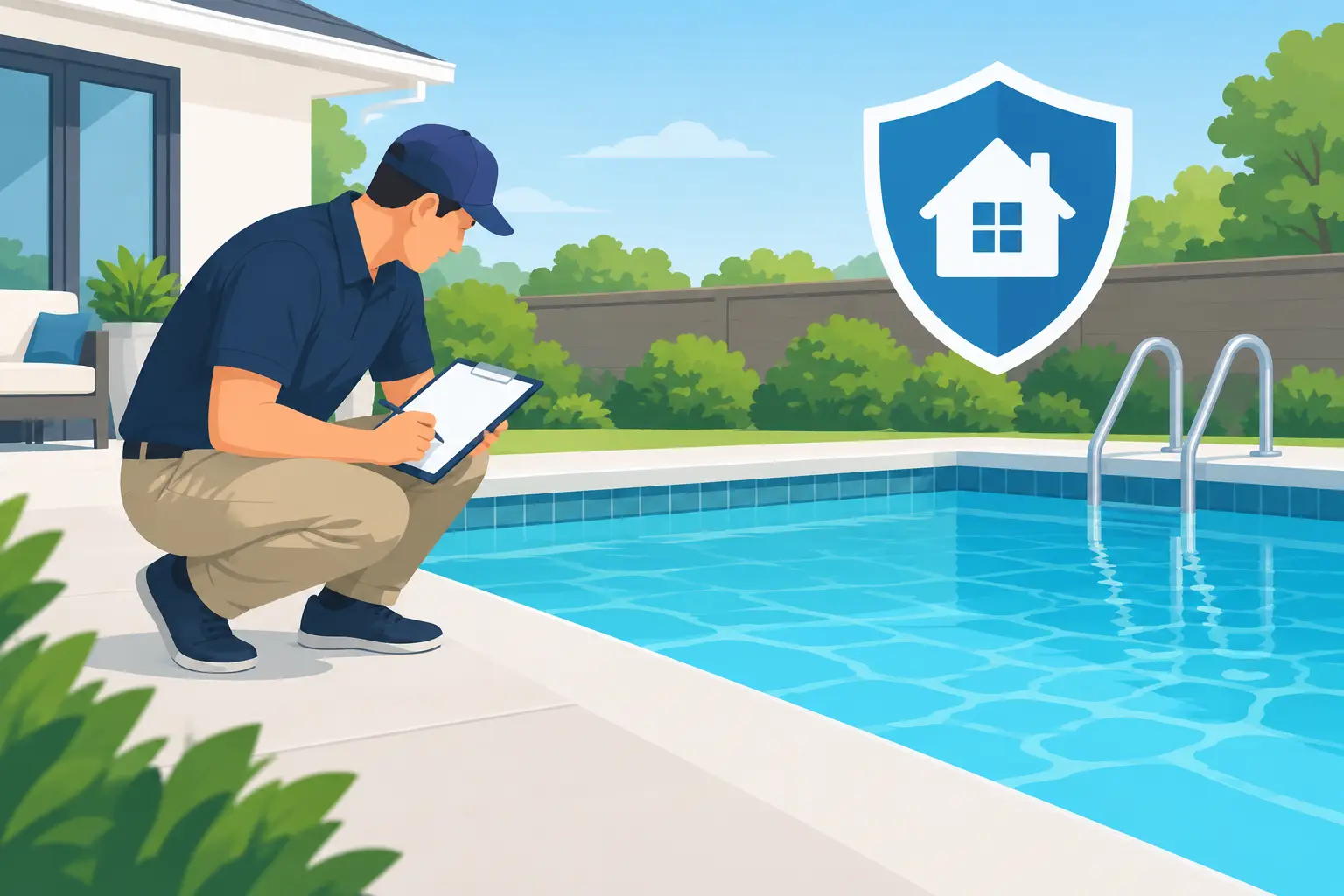
A backyard pool can be the feature that sells a property – or the system that changes the entire conversation after an offer is accepted. Pool inspections give buyers, owners, and investors a clear view of the pool’s visible condition, operating components, and safety concerns before a small issue becomes an expensive surprise.
For Central Ohio properties, that clarity matters. Freeze-thaw cycles, long winter shutdowns, aging equipment, deferred maintenance, and changing safety expectations can all affect a pool’s performance and condition. A pool may look clean and inviting on a showing day while hiding leaks, deteriorated components, improper bonding, or equipment that is nearing the end of its service life.
What Pool Inspections Are Designed to Find
A professional pool inspection is a focused visual and operational evaluation of accessible pool components. The purpose is not to predict every future repair or guarantee that a pool will perform indefinitely. It is to identify material defects, safety issues, visible deterioration, and conditions that deserve repair, monitoring, or further review by a qualified pool contractor.
The inspection starts with the pool structure and surrounding surfaces. We look for visible cracking, damaged coping, loose or uneven decking, deteriorated tile, and signs that the pool shell may be moving or losing water. Not every crack means a structural failure. Some surface cracks are cosmetic, while others can indicate movement, water intrusion, or a problem that warrants a specialist’s assessment. The difference matters when you are deciding whether to negotiate, budget for repairs, or move forward confidently.
Equipment is equally important. Pumps, filters, heaters, chlorinators, valves, skimmers, drains, return fittings, timers, and accessible plumbing connections all play a role in how the system operates. A noisy pump, leaking fitting, corroded heater connection, or damaged filter housing can signal immediate repair needs. Even when equipment is operating at the time of inspection, its visible condition can help you anticipate near-term maintenance costs.
Safety Is More Than a Fence Around the Water
Pool safety is one of the most important parts of the inspection. Drowning hazards are not limited to an unfenced pool. Gates that do not self-close or self-latch, missing barrier components, damaged covers, unsafe access points, and improperly maintained drains can create serious risk for children, guests, tenants, and pets.
We evaluate visible and accessible safety features, including barriers, gates, latches, handrails, ladders, steps, diving equipment where present, and suction outlets. Electrical safety also deserves close attention. Pool equipment operates near water, so damaged wiring, missing or improperly protected electrical components, and questionable bonding or grounding conditions should never be dismissed as minor details.
An inspection is not a code certification or a substitute for review by the local authority having jurisdiction. Requirements can vary by municipality, the age of the pool, and whether the property is owner-occupied, rented, or commercial. Still, identifying visible safety concerns early gives you the opportunity to ask the right questions and address risks before people begin using the pool.
Why visible conditions can still be costly
A pool inspection cannot see behind every wall, beneath every deck surface, or inside buried plumbing lines. That limitation is normal. Yet visible clues often tell a meaningful story. Staining near equipment may point to ongoing leaks. Repeated patching can suggest a history of surface deterioration. Soft or settling deck areas may warrant further investigation before they become a trip hazard or a more involved repair.
A thorough report turns those observations into practical information. Instead of hearing that a pool is simply “old,” you should understand what appears worn, what is unsafe, what is functioning, and what should be evaluated or repaired by the appropriate specialist.
What Happens During a Pool Inspection
The exact scope depends on the pool type, the season, access to equipment, and whether the system can be safely operated. In general, an inspector will assess accessible portions of the pool and its related components, observe the equipment’s operation when conditions allow, and document material findings with clear descriptions and photographs.
For an in-ground pool, the inspection may include the visible shell or liner, coping, decking, skimmers, drains, return lines, lights, ladders, handrails, and equipment pad. For an above-ground pool, attention shifts to the liner, wall condition, support structure, ladder, deck interface, circulation equipment, and safety barriers.
If the pool is open and operational, running the equipment provides much more useful information than a visual-only review. The inspector may observe pump operation, check for visible leaks, assess water movement, review filter and heater condition, and identify accessible electrical or safety concerns. If the pool is winterized, covered, empty, or inaccessible, the inspection will be limited by those conditions. That does not make the inspection unhelpful, but it does mean a follow-up evaluation may be appropriate after opening.
When Should You Schedule a Pool Inspection?
For homebuyers, the best time is during the inspection contingency period, ideally alongside the full home inspection. Pool systems are expensive, and a standard home inspection may identify the presence of a pool without providing the focused evaluation needed to understand its condition. Adding the service early gives you time to request repairs, obtain contractor estimates, adjust expectations, or make an informed decision before deadlines arrive.
Current homeowners benefit from pool inspections before opening season, before listing the property, or after purchasing a home with a pool that was not fully operational at closing. An inspection before listing can prevent a last-minute issue from delaying a sale. An inspection before the season begins can help prioritize repairs before your first planned gathering turns into an equipment emergency.
Investors and commercial property stakeholders should treat pool condition as both a capital expense and a liability question. A community, hotel, apartment, or rental-property pool may have more demanding maintenance and safety considerations than a private residential pool. The right inspection scope depends on the property and intended use, but delaying evaluation can expose an owner to avoidable repair costs and operational risk.
Common Pool Problems That Should Not Be Ignored
Some pool concerns deserve prompt attention because they affect safety, water loss, or the ability to operate the system properly. Others may be manageable maintenance items. The key is not to assume that every defect is catastrophic or that every visible issue is harmless.
Pay close attention to these conditions:
- Active water leaks at pumps, filters, heaters, valves, or visible plumbing connections.
- Cracked, loose, or uneven decking that creates a trip hazard or suggests movement beneath the surface.
- Missing, damaged, or unsecured drain covers and suction components.
- Electrical concerns near the pool, including damaged covers, exposed wiring, or improper-looking equipment connections.
- Gates, latches, barriers, rails, steps, ladders, or covers that do not provide reliable safety protection.
- Equipment that is heavily corroded, unusually noisy, leaking, or unable to operate as intended.
A repair recommendation is not automatically a reason to walk away from a property. A failing pump may be a straightforward replacement. A cracked deck, recurring water loss, or a questionable electrical condition may require a broader evaluation and a larger budget. The inspection helps separate routine ownership costs from concerns that deserve immediate specialist review.
Why a Separate Pool Inspection Adds Value
A pool combines water, electricity, mechanical equipment, structural surfaces, and safety systems in one area of the property. That is why it should not be treated as an afterthought. The costs of repair can range from routine maintenance to significant work involving equipment replacement, resurfacing, leak detection, decking, or electrical correction.
For buyers, a dedicated inspection supports better negotiations and better planning after closing. For sellers, it provides an opportunity to correct known concerns before they become a deal issue. For owners, it creates a practical maintenance baseline. And for agents, it helps keep the transaction moving with clearer information and fewer late-stage surprises.
Flinn Inspection Group provides pool inspections as part of a coordinated approach to protecting the property investment. When appropriate, specialized services can be scheduled alongside a home inspection so clients have one clear process, complete findings, and same-day reporting that supports time-sensitive decisions.
A pool should add enjoyment to a property, not uncertainty. Before you buy, list, reopen, or take responsibility for one, get a clear assessment of the conditions you can see – and the questions you need answered before the next step.