by Flinn Inspections
Share
by Flinn Inspections
Share
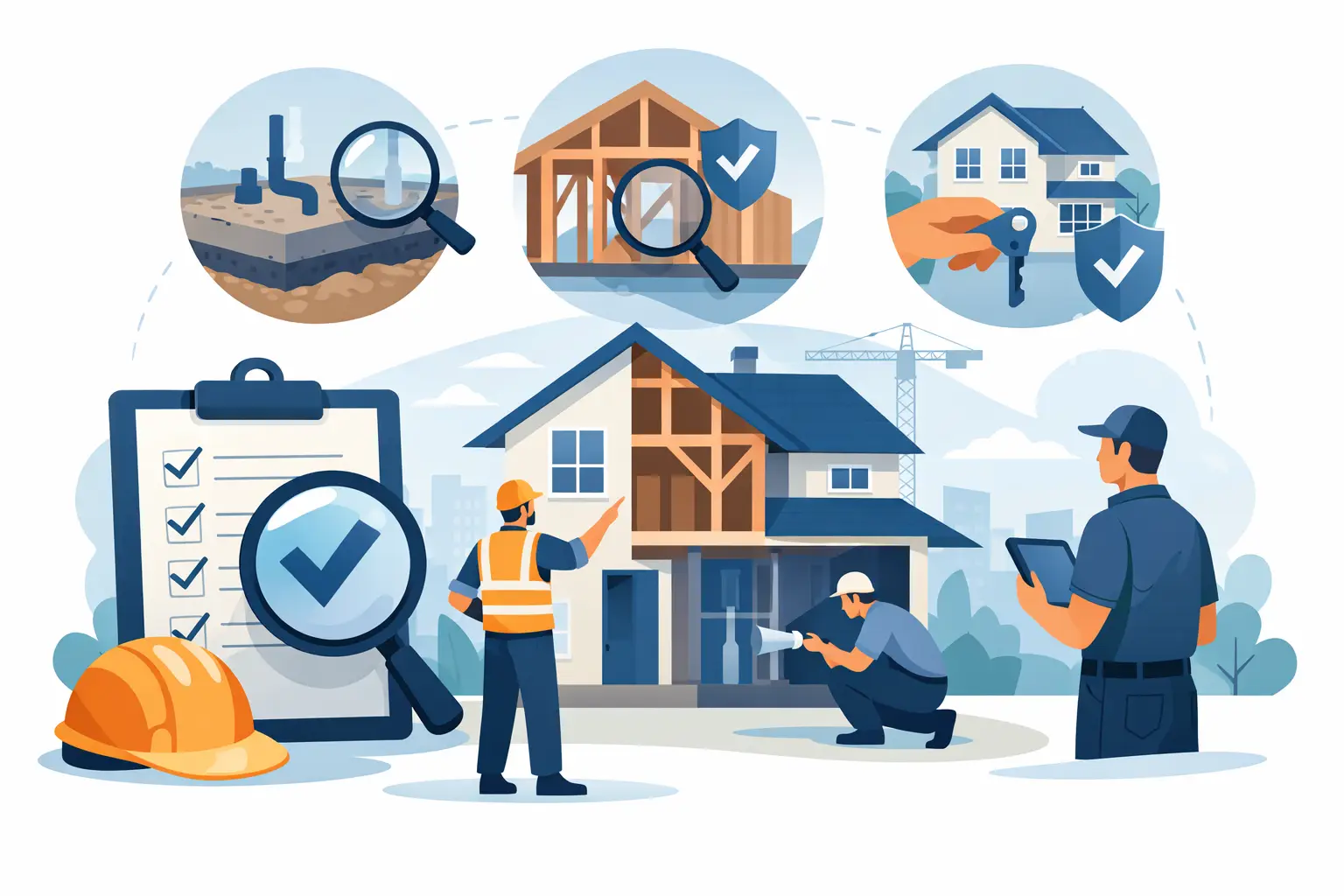
A new home can look flawless on closing day while critical components are still hidden behind concrete, insulation, drywall, and finished flooring. That is why new build inspection stages matter. A phased inspection strategy gives you an independent look at the work while corrections are still practical, documented, and often covered by the builder.
For Central Ohio buyers, a new construction inspection is not about assuming the builder did poor work. It is about protecting a major investment with a qualified, client-focused review at the moments when the most consequential defects can be identified. Municipal code inspections and builder quality-control checks serve important purposes, but they are not the same as a comprehensive inspection performed solely for you.
Why a Single Final Walk-Through Is Not Enough
By the final inspection, much of the home has been closed up. Framing is covered by drywall. Plumbing and electrical routes are concealed. Foundation walls may be backfilled, and grading may be difficult to judge after landscaping is installed. A final inspection can identify many concerns, but it cannot provide the same visibility as an inspection completed before those systems disappear.
The right schedule depends on the builder’s process and the home’s construction method. Some builders have defined access points for third-party inspectors, while others require advance notice and coordination. Ask early, preferably before signing or immediately after contract, whether outside inspectors may attend and what notice is required at each phase.
A phased approach usually includes a foundation inspection, a pre-drywall inspection, a final inspection, and an 11-month warranty inspection. Each stage answers a different question: Was the base of the home installed correctly? Are the hidden systems installed safely and logically? Does the finished home operate as expected? Has the home revealed warranty concerns after normal use and seasonal changes?
The Key New Build Inspection Stages
Foundation and pre-pour inspection
This inspection happens after excavation, formwork, reinforcing steel, and underground components are in place, but before concrete is poured. It may also be called a pre-pour or foundation inspection.
At this stage, the inspector can review visible footing forms, reinforcing placement, vapor barriers, drainage provisions, and penetrations for plumbing or utilities. The goal is not to redesign the engineer’s plan. It is to identify visible conditions that appear inconsistent with plans, sound construction practices, or the requirements of the installation.
Timing is critical. Once concrete is placed, most foundation details cannot be visually verified without destructive investigation. Not every project allows access at this point, and not every house needs the same scope. A slab-on-grade home, a crawlspace home, and a home with a full basement each present different considerations. Still, when the opportunity exists, this inspection provides valuable documentation of a stage that is otherwise permanent and inaccessible.
Pre-drywall inspection
The pre-drywall inspection is often the highest-value phase for new construction buyers. It occurs after framing, roofing, windows, plumbing, electrical, HVAC rough-ins, and much of the insulation work are complete, but before drywall conceals the walls and ceilings.
An inspector reviews framing connections and visible structural components, looking for concerns such as damaged or altered framing, missing blocking, improper notching or boring, and areas that may not appear adequately supported. They also assess visible roof and wall penetrations, flashing details where accessible, and the general condition of installed windows and exterior openings.
This phase also allows a close look at mechanical systems. Visible plumbing supply and drain lines can be evaluated for support, protection, and apparent leaks. Electrical boxes, wiring routes, panel components, and safety plates can be reviewed before walls are finished. HVAC ductwork, exhaust venting, condensate lines, and equipment placement can be checked for visible installation concerns.
Insulation deserves attention as well. Gaps, compression, misplaced insulation, or unsealed openings can contribute to uncomfortable rooms, higher energy costs, and moisture concerns. Thermal imaging is most useful once the house is conditioned and there is a temperature difference between indoors and outdoors, but the pre-drywall stage provides a direct visual review of areas that thermal imaging may later only suggest.
A pre-drywall inspection is not a substitute for municipal inspections. It is your opportunity to have a trained advocate assess the visible work through the lens of long-term ownership, not just minimum code compliance.
Final new construction inspection
The final inspection should take place when the home is substantially complete and all major systems are operational. Ideally, schedule it before your final walk-through and before closing, leaving enough time for the builder to respond to documented findings.
At this stage, the inspection covers the home as a functioning property. That includes the roof, exterior cladding, grading and drainage, foundation, attic, interior rooms, doors, windows, installed appliances, plumbing fixtures, electrical components, heating and cooling equipment, and visible insulation. The inspector looks for defects, incomplete work, safety concerns, and conditions that may require builder correction.
Final inspections commonly identify issues that are easy to overlook when buyers are focused on paint colors, cabinet hardware, and move-in logistics. Examples may include reversed hot and cold water at fixtures, inoperative outlets, loose toilets, missing caulk, damaged roof coverings, inadequate attic insulation, poorly draining exterior areas, improperly installed safety devices, or HVAC performance concerns.
Cosmetic items matter too, but they should not distract from larger concerns. A detailed report helps you separate minor punch-list issues from conditions that affect safety, function, water management, or long-term maintenance. Same-day reporting is especially valuable when closing dates are approaching and you need clear findings to share with the builder promptly.
The 11-month warranty inspection
The 11-month warranty inspection is one of the most overlooked protections available to new homeowners. Many builders provide a one-year workmanship warranty, but homeowners often wait too long to schedule an independent review. By then, the deadline has passed and repair responsibility may become harder to establish.
Schedule this inspection around month 10 or 11, not the final week of coverage. This gives you time to receive the report, submit warranty requests, and coordinate any follow-up with the builder.
Living in the home reveals conditions that may not have been apparent at closing. Doors can shift as materials settle. Cracks may develop in drywall or exterior finishes. Seasonal temperature changes can expose insulation gaps, HVAC balancing problems, condensation, or drainage issues. Plumbing leaks may appear only after regular use, and roofing concerns can become evident after heavy rain or snow.
This is also a useful time for advanced diagnostic tools. Thermal imaging can help identify potential temperature anomalies or moisture patterns when conditions allow. Gas leak detection and other ancillary services may be appropriate based on the home’s systems and any concerns you have noticed since moving in.
How to Coordinate Inspections With Your Builder
The smoothest projects begin with clear communication. Let the builder know that you intend to schedule independent inspections at appropriate milestones. Keep the conversation professional and factual. Most reputable builders are familiar with buyer inspections, and a thorough report can support an organized correction process rather than create conflict.
Before each visit, confirm that the home will be accessible, utilities will be active when required, and the work has reached the intended stage. A final inspection scheduled before water, electric, or HVAC service is operating cannot fully evaluate those systems. Likewise, a pre-drywall inspection scheduled after insulation and drywall have begun may limit visibility.
Keep your inspection reports, builder responses, repair records, photographs, and warranty submissions in one file. Documentation matters if a concern requires follow-up. It also gives you a practical maintenance record for the years ahead.
When reviewing findings, prioritize items involving water intrusion, structural performance, electrical safety, combustion appliances, drainage, roofing, and active leaks. Smaller finish items can be addressed on a punch list, but conditions affecting safety or durability should be clearly documented and corrected before they become more expensive.
What Buyers Should Not Assume
A new home is not automatically defect-free, and a passed municipal inspection is not a guarantee that every installed component performs perfectly. Construction is completed by multiple trades, often on tight schedules, and even well-managed projects can have missed details.
At the same time, an inspection report does not mean the house is a bad purchase or that the builder is unwilling to help. New construction reports frequently contain a mix of minor adjustments, incomplete items, and a smaller number of issues that deserve prompt attention. The value is in having a clear, independent record and addressing concerns while the builder’s responsibility is still active.
If you are building in Powell, Dublin, Columbus, or the surrounding Central Ohio area, reserve inspection dates as soon as your construction timeline is available. Flinn Inspection Group can help you evaluate the appropriate phases, inspect every accessible square foot, and deliver the clear information needed to protect your home before closing and throughout the warranty period.
Your home should not have to prove itself through an expensive surprise after move-in. Plan the inspections early, keep the warranty deadline on your calendar, and give yourself the confidence that comes from seeing the work at the stages when it matters most.