by Flinn Inspections
Share
by Flinn Inspections
Share
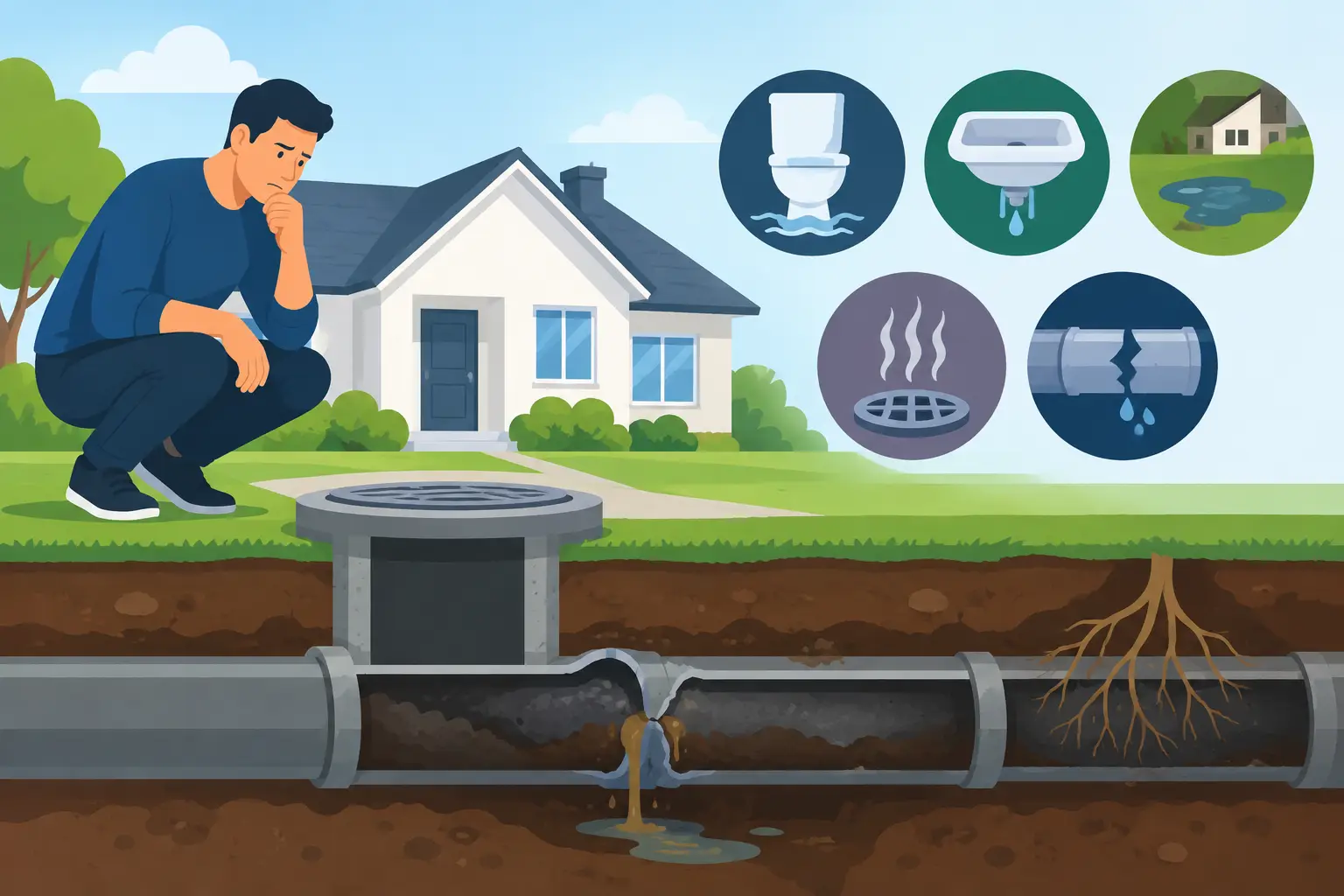
A sewer problem rarely announces itself with one clear, convenient warning. More often, it starts with a drain that slows down, an odor near the basement, or a patch of unusually healthy grass outside. Knowing the five signs of sewer damage can help you act before wastewater backs up into the home, a repair becomes more disruptive, or a real estate transaction reaches an unexpected delay.
Your sewer lateral is the private pipe that carries wastewater from the building to the public sewer connection or a septic system. Because much of that line is buried, visible plumbing fixtures only tell part of the story. A professional sewer camera scope provides a direct view of the line’s condition, including cracks, roots, separations, buildup, bellies, and obstructions that may not be visible during a standard plumbing check.
Five Signs of Sewer Damage to Watch For
1. Multiple drains are slow or backing up
One slow bathroom sink can be a local clog caused by hair, soap residue, or debris in that fixture’s drain. When several fixtures drain slowly at the same time, however, the concern is larger. A toilet that gurgles when the washing machine drains, water rising in a shower when a toilet is flushed, or slow drainage in bathrooms on different levels can indicate a restriction in the main sewer line.
Pay particular attention to the lowest fixtures in the building. In many homes, that means a basement floor drain, lower-level shower, or first-floor toilet. Wastewater often backs up there first because it is the lowest available exit point when the main line cannot carry flow away from the house.
Do not assume that a chemical drain cleaner will solve this type of problem. These products may not reach the actual blockage, and repeated use can be hard on certain plumbing materials. A plumber may be able to clear a temporary obstruction, but a sewer camera inspection is the practical next step when backups recur. It can show whether the cause is roots, a broken pipe, grease buildup, a shifted joint, or another condition that clearing alone will not correct.
2. Sewer odors inside or around the property
Sewer gas has a distinct odor, and it should not be ignored. A dry floor drain trap can sometimes allow odors into a basement or utility room, especially in a rarely used space. Running water into the drain may restore the water seal and resolve the issue. But persistent odors require more attention.
A cracked sewer pipe, loose connection, failed vent component, or compromised cleanout can allow odors to escape. Outside, you may notice the smell near the foundation, driveway, patio, or yard where the sewer line runs. The location matters because it can help narrow the possible source, but smell alone cannot identify the exact defect.
Odors can also be a transaction issue. A buyer may notice them during a showing, and a seller may not know whether the source is a dry trap or a costly underground problem. Getting clear documentation from a camera scope helps replace guesswork with a specific repair discussion.
3. Unusual wet spots, sinkholes, or extra-green grass
A leaking sewer line can release water and nutrients into the surrounding soil. That may create a wet area when the rest of the yard is dry, a persistently muddy section, or grass that appears greener and grows faster along a narrow path. While healthy grass may sound harmless, it can be a warning that wastewater is escaping below grade.
Depressions in the lawn, soft soil, or small sinkholes deserve prompt attention. Soil can wash into a damaged pipe through a crack or separated joint, gradually creating a void around the line. In Central Ohio, seasonal temperature changes and saturated soil can add stress to aging pipes and areas that have already settled.
Not every wet spot points to sewer damage. A leaking water service line, poor grading, roof drainage, or a broken irrigation line can produce similar conditions. The right investigation depends on the evidence. If the area aligns with the sewer route and other drain symptoms are present, a camera scope can be a highly efficient place to start.
4. Recurring clogs, even after the drains are cleared
A drain that clogs once may be routine maintenance. A drain that clogs every few months is a pattern. Repeated service calls often mean the line is being cleared without addressing why material is collecting in the same place.
Tree roots are a common culprit. Roots are drawn to moisture and can enter small openings at pipe joints, cracks, or deteriorated sections. Once inside, they catch paper and waste, creating a blockage that returns even after the roots are cut back. Older homes may also have clay tile, cast-iron, or other aging materials that are more susceptible to deterioration, scaling, and offset joints.
A camera can distinguish between a soft blockage and a structural concern. This distinction matters. If the line is intact and only has buildup, cleaning may be the appropriate remedy. If roots are entering through a broken joint or the pipe has collapsed, repeated clearing may only postpone a more substantial repair.
5. Cracks, settlement, or unexplained issues near the sewer route
Not every sewer defect begins with a plumbing backup. Sometimes the clues appear in the property itself. Cracks in a driveway, walkway, slab, or patio near the buried line may result from normal movement, but they can also be associated with soil loss around a leaking pipe. A new depression near the foundation or a section of pavement that settles unexpectedly deserves a closer look.
Inside the building, watch for persistent moisture concerns in a basement near where the sewer exits, unexplained staining, or a floor drain that frequently overflows. These signs do not prove that the sewer line is damaged, and they should never be treated as a diagnosis on their own. They do signal that the drainage system and surrounding conditions should be evaluated before a smaller concern becomes a disruptive repair.
When a Sewer Camera Scope Is Worth Scheduling
A sewer camera scope is especially valuable before purchasing an older home, when recurring drainage symptoms are present, or after a sewer line has required repeated cleaning. It is also a sensible due-diligence service for investors and commercial property stakeholders, where a hidden sewer defect can affect budgets, occupancy, and project timelines.
For buyers, a sewer scope can reveal conditions that may not be visible during a standard home inspection because the line is underground. For current owners, it can identify the cause of a problem before choosing between cleaning, spot repair, lining, or replacement. The appropriate solution depends on the pipe material, location and severity of the defect, local access conditions, and whether the issue is isolated or widespread.
During a scope, a camera is sent through an accessible cleanout or other suitable entry point to inspect the interior of the line. The inspection may identify root intrusion, cracks, standing water caused by a belly in the pipe, separated joints, corrosion, buildup, or a blockage. In some cases, the camera cannot pass a severe obstruction or collapsed section. That limitation is still meaningful evidence and may guide the next repair step.
A camera scope does not replace a licensed plumbing repair evaluation when a defect is found. It gives the property owner, buyer, and repair professional a more informed starting point. Clear findings can also help agents and clients keep negotiations focused on the actual condition rather than assumptions.
Protect the Property Before Damage Reaches the Interior
Sewer concerns tend to get more expensive after wastewater enters a finished basement, damages flooring, or interrupts daily use of the property. If you are noticing more than one warning sign, act before the next heavy use cycle turns a slow drain into a backup.
Flinn Inspection Group helps Central Ohio buyers, homeowners, and investors make informed decisions with thorough sewer camera scopes and clear inspection reporting. A timely inspection cannot prevent every repair, but it can give you the information to protect your property, your budget, and your next decision with confidence.