by Flinn Inspections
Share
by Flinn Inspections
Share
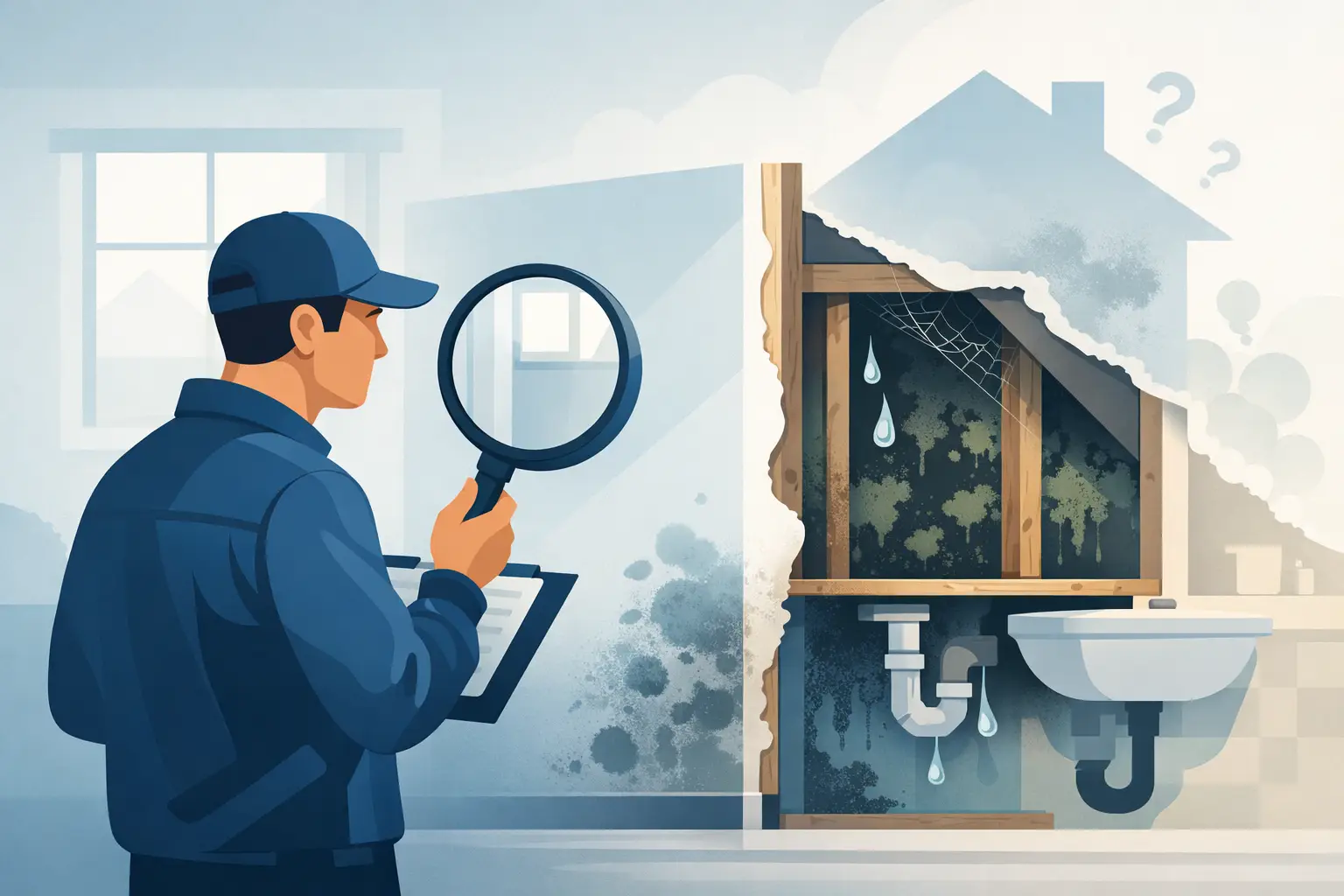
A finished basement can look clean, smell normal, and still have a moisture problem developing behind the walls. The same is true beneath a kitchen sink, around a slow roof leak, or inside an HVAC system. So, can inspections detect hidden mold? Often, yes – but a professional inspection identifies evidence and conditions that support mold growth rather than promising to see through every surface.
That distinction matters when you are buying, selling, managing, or maintaining a property. Mold needs moisture and a material to grow on. If an inspector can locate the moisture source, document suspicious staining or damage, and use the right diagnostic tools, hidden mold becomes far more likely to be found before it becomes a larger repair.
Can Inspections Detect Hidden Mold Behind Walls?
A standard property inspection is primarily visual and noninvasive. Inspectors assess accessible areas of the home or commercial building, including the roof system, exterior, foundation, attic, interior rooms, plumbing fixtures, HVAC components, and visible signs of water intrusion. They do not typically remove drywall, pull up flooring, or open finished wall cavities unless that work has been specifically authorized and arranged.
That does not make a standard inspection ineffective. It means the inspection is designed to recognize warning signs that deserve a closer look. Water stains, peeling paint, warped trim, soft drywall, deteriorated caulk, elevated moisture readings, condensation, musty odors, and active plumbing leaks can all point to concealed moisture or possible mold growth.
In Central Ohio, basements are a frequent concern. Foundation seepage, clogged gutters, poor grading, failed sump pumps, and high indoor humidity can introduce moisture where it is easy to overlook. A basement that was freshly painted before a listing may look reassuring, but fresh paint does not correct the source of water entry. An experienced inspector looks beyond appearance and evaluates the surrounding evidence.
The Tools That Help Find Concealed Moisture
Hidden mold cannot be confirmed simply because a room has an odor or a wall shows discoloration. Likewise, mold may be present without a visible stain. The strongest inspection approach combines a trained visual assessment with tools that help identify abnormal moisture patterns.
Moisture meters
A moisture meter can measure the moisture content of materials such as drywall, trim, flooring, and wood framing. Elevated readings near a shower surround, window, roof penetration, or plumbing line may indicate a current leak or moisture that has not fully dried. Readings must be interpreted carefully. A high reading helps identify where to investigate, but it does not identify the type of mold or prove that mold is present.
Thermal imaging
Thermal imaging can reveal temperature differences on a wall, ceiling, or floor surface. A cooler pattern may be consistent with damp material, while an unusual warm or cool area can also result from insulation gaps, air movement, or mechanical equipment. Thermal imaging is a valuable screening tool, especially when paired with a moisture meter, but it is not an X-ray and cannot diagnose mold on its own.
Air and surface testing
Mold and air quality testing can provide additional information when conditions warrant it. Air samples may compare the concentration and types of airborne particles inside the property with an exterior control sample. Surface samples can help evaluate visible suspect growth. These services can be useful when occupants report recurring odors or symptoms, when a moisture issue is suspected but not visible, or when documentation is needed before remediation.
Testing has limits. Air samples represent conditions at the time of collection, and mold levels can shift with weather, HVAC operation, cleaning, and occupant activity. A clear test result does not erase a known water problem. The first priority is always locating and correcting the moisture source.
Where Hidden Mold Is Most Likely to Develop
Concealed mold is usually a result of water that lingered too long, not a mysterious event. During an inspection, areas with a history or likelihood of moisture exposure deserve closer attention. These commonly include basement perimeter walls, crawl spaces, attic sheathing, roof valleys, around chimneys and skylights, plumbing supply and drain lines, tub and shower surrounds, laundry areas, window openings, and HVAC condensate components.
Appliances can create problems as well. A refrigerator water line may leak slowly behind cabinetry. A dishwasher connection can drip under a finished kitchen floor. A washing machine drain issue may affect a wall shared with a living area. Because these leaks are hidden by cabinets, finishes, or stored belongings, the damage may spread before anyone notices it.
Commercial properties have their own risk points, including flat-roof drainage, exterior wall penetrations, mechanical rooms, restrooms, and vacant tenant spaces. A building may not show obvious mold in a public area while moisture is collecting above a dropped ceiling or behind a recently renovated wall.
What an Inspection Can and Cannot Tell You
A thorough inspection can give you a clear, actionable picture of risk. It can identify visible fungal-like growth, active leaks, past water damage, improper drainage, ventilation deficiencies, and materials with elevated moisture. It can also help you determine whether specialized testing, remediation evaluation, or further invasive investigation is justified.
It cannot guarantee that no mold exists anywhere in a property. No inspector can inspect behind every wall, beneath every floor, or inside every inaccessible cavity without destructive testing. Closed-off rooms, heavy storage, finished basements, locked electrical panels, and inaccessible crawl spaces can limit what is evaluated.
This is not a reason to skip the inspection. It is a reason to choose an inspector who explains both the findings and the limitations plainly. A useful report does more than state that staining was observed. It identifies the affected location, describes the apparent cause when possible, explains the potential impact, and recommends an appropriate next step.
When to Request Mold Testing or Further Evaluation
Not every water stain requires mold testing, and not every musty room requires demolition. The right next step depends on whether moisture is active, how extensive the affected area appears to be, whether occupants have health concerns, and whether the building is part of a time-sensitive transaction.
Consider targeted mold or air quality testing when there is a persistent musty odor with no visible source, recurring moisture after a repair, visible suspect growth, unexplained staining, a history of flooding, or concern about a concealed leak. Testing can also support decisions when buyers, sellers, landlords, or commercial stakeholders need objective documentation.
If an active leak or clearly wet material is found, waiting for test results before stopping the water may be the wrong move. Repairing the source, drying affected materials promptly, and consulting a qualified remediation professional when needed can prevent a smaller issue from becoming a major project. Testing is a decision-making tool, not a substitute for moisture control.
How Buyers and Owners Can Prepare for a Better Inspection
Access makes a real difference. Before an inspection, clear stored items away from foundation walls, utility rooms, under-sink cabinets, and attic access points when possible. Make sure the inspector can reach the electrical panel, furnace, water heater, sump pump, and major plumbing fixtures. If the property has had prior leaks, repairs, flooding, or remediation, share that history. It helps focus attention on the areas most likely to need verification.
For homebuyers, do not dismiss a vague odor, a newly painted patch, or a dehumidifier running continuously in a basement. None of these items proves mold, but each can justify a closer evaluation. For current owners, address small leaks promptly and monitor humidity. Mold prevention is often less about expensive equipment and more about keeping water outside, venting moisture-producing spaces, and drying wet materials quickly.
Flinn Inspection Group uses a thorough, education-driven approach to help clients understand what is visible, what the evidence suggests, and where additional investigation may protect the property. The goal is not to create alarm. It is to replace uncertainty with a practical plan.
If something in a property feels off, trust that observation and have it evaluated while the issue is still manageable. A careful inspection can turn a hidden moisture concern into a clear next step – before it has time to affect more of the building.