by Flinn Inspections
Share
by Flinn Inspections
Share
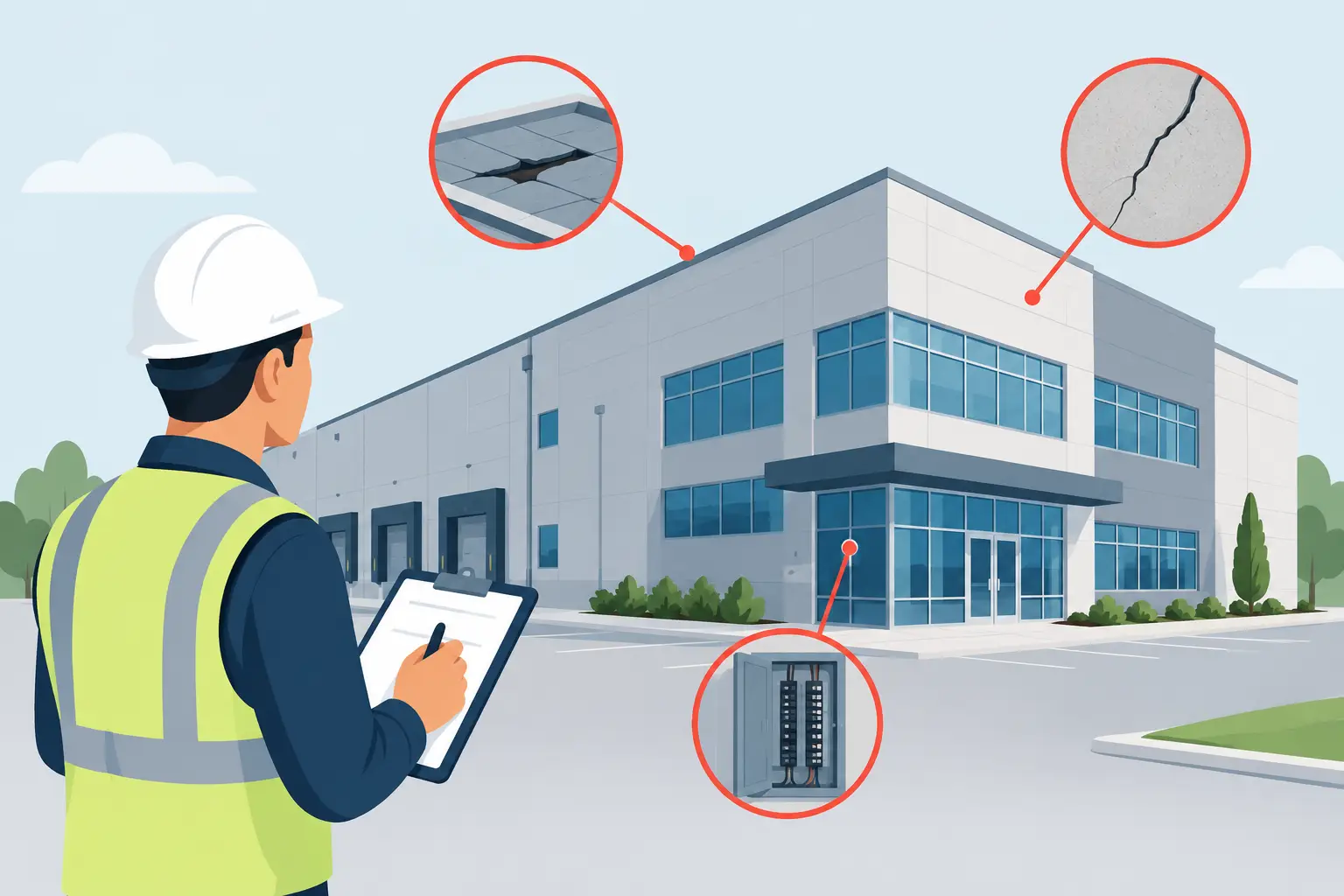
A commercial property can look ready for tenants, customers, or a new owner and still carry costly defects behind a locked electrical room door, above a suspended ceiling, or across a roof surface. When clients ask what fails a commercial inspection, the honest answer is that most inspection findings are not simple pass-or-fail judgments. They are conditions that affect safety, function, value, insurability, maintenance budgets, and the ability to move forward with confidence.
A thorough commercial inspection identifies material defects and deferred maintenance before they become someone else’s expensive surprise. For buyers, investors, owners, and property managers in Central Ohio, that information can shape negotiations, capital planning, repair timelines, and lease decisions.
What “Fail” Means in a Commercial Inspection
A property inspection is different from a municipal code inspection or a fire marshal inspection. A commercial property inspector evaluates the accessible, visible condition of major building systems and reports deficiencies, safety concerns, and components nearing the end of their useful life. The inspector does not generally issue an occupancy approval or certify that every element meets every current code requirement.
That distinction matters. A building may be operational but still have major inspection findings, such as an aging roof, deteriorated masonry, obsolete electrical equipment, or evidence of moisture intrusion. Conversely, a building may receive a clean-looking inspection report but still require permits, code upgrades, or fire authority approval before a change in use or occupancy.
The practical question is not simply whether the building “passes.” It is whether the findings create unacceptable risk for your intended purchase, operation, financing, insurance, or renovation plan.
The Issues That Most Often Fail a Commercial Inspection
Fire and life-safety deficiencies
Fire and life-safety issues are among the most serious commercial inspection findings because they directly affect occupants and may trigger immediate action. Common concerns include blocked or improperly marked exits, damaged exit doors, missing or expired fire extinguishers, nonfunctioning emergency lighting, exposed wiring near combustible materials, and penetrations in fire-rated walls or ceilings.
Fire alarm and sprinkler systems also deserve close attention. An inspection may identify missing inspection tags, visible damage, corrosion, inadequate clearance around sprinkler heads, or components that appear overdue for professional service. A property inspector can identify visible concerns, but specialized fire-protection contractors and the local authority having jurisdiction may need to determine compliance and repair requirements.
Roof leaks and drainage failures
Commercial roofs often fail quietly. Water may travel below membrane roofing, through insulation, and along framing before it appears as a ceiling stain inside the building. By the time interior damage is visible, the affected area may be much larger than expected.
Inspectors commonly report ponding water, open seams, cracked flashing, deteriorated sealant, exposed fasteners, damaged coping, clogged drains, and evidence of past or active leakage. Roof age matters, but condition matters more. A roof that has reached the end of its expected service life may not require immediate replacement if it is performing well. However, recurring repairs, widespread deterioration, or moisture-related interior damage should be budgeted as a major capital item.
Electrical hazards and outdated equipment
Commercial electrical systems must support the building’s current and planned use. A panel that was adequate for a small office may not be adequate for a restaurant, medical tenant, manufacturing operation, or retail space with significant equipment loads.
Findings that raise concern include double-tapped breakers, open panel knockouts, corrosion, missing panel covers, improper wiring methods, exposed conductors, overloaded circuits, and electrical equipment with signs of overheating. Older panels, fuse boxes, or equipment with limited replacement support can also affect insurance and future renovation costs.
Thermal imaging can add value when used as part of a professional inspection. It may identify unusual heat patterns at accessible electrical components or moisture patterns associated with leaks. It is a diagnostic tool, not a substitute for qualified electrical evaluation, but it can help direct attention where it is needed most.
Plumbing leaks, failed drains, and water damage
A commercial plumbing problem can damage finishes, interrupt operations, create sanitation concerns, and lead to mold growth. Inspectors look for active leaks, corroded supply piping, damaged fixtures, improper drainage, unsecured water heaters, and visible signs of prior water intrusion.
Drainage problems can be especially expensive because the source may be hidden below slabs, parking areas, or finished spaces. Slow drains, recurring backups, foul odors, stained ceilings, and unexplained moisture all deserve follow-up. A sewer camera scope may be appropriate when the age of the building, visible conditions, or the property’s maintenance history points to a potential underground drain issue.
Structural movement and exterior deterioration
Not every crack means structural failure. Concrete and masonry commonly develop minor cracking from settlement, shrinkage, temperature changes, and normal aging. The concern rises when cracks are wide, displaced, actively changing, or accompanied by sloping floors, sticking doors, water entry, deteriorated support members, or separated masonry.
Commercial inspection findings often include settlement cracking, spalled concrete, deteriorated mortar joints, rusting steel components, damaged retaining walls, and compromised exterior stairs or handrails. These conditions should not be dismissed as cosmetic without considering their location, extent, and effect on the building.
Water management is closely tied to structural durability. Improper grading, damaged gutters, disconnected downspouts, and poor site drainage can direct water toward the foundation and accelerate damage over time.
HVAC systems that cannot support the space
Heating, cooling, ventilation, and exhaust systems are critical to tenant comfort and daily operations. A commercial inspection may identify equipment that is inoperable, beyond its typical service life, poorly maintained, visibly damaged, or producing unusual noise or performance concerns.
The most expensive HVAC finding is not always a broken unit. It may be a system that operates but is undersized, poorly distributed, or unsuitable for the intended occupancy. A warehouse converted to office space, for example, can have very different heating and cooling demands. Restaurants, salons, medical offices, and fitness facilities may also require specialized ventilation or exhaust beyond what the existing system provides.
Unsafe site conditions and accessibility concerns
The property does not end at the exterior walls. Parking lots, sidewalks, curbs, retaining walls, loading areas, stairs, ramps, exterior lighting, and site drainage all affect safety and operating costs.
Trip hazards from uneven pavement, missing handrails, deteriorated stairs, damaged guardrails, and poor exterior lighting are common findings. Accessibility concerns may also be identified where visible conditions suggest entrances, routes, parking, restrooms, or public spaces may need further evaluation. Whether a condition requires modification depends on the building’s use, renovation scope, local requirements, and applicable accessibility standards. A commercial inspector can identify red flags, while an accessibility specialist or qualified contractor can define the corrective path.
Deferred Maintenance Can Be a Deal Breaker
Commercial properties rarely fail because of one loose outlet cover or a small ceiling stain. The greater risk is a pattern of deferred maintenance across multiple systems. A neglected roof, aging HVAC equipment, corroded plumbing, poor drainage, and outdated electrical components can turn a seemingly reasonable purchase price into a major capital expense shortly after closing.
This is why the inspection report should be read as a decision-making document, not merely a repair checklist. Ask which findings are immediate safety concerns, which items need specialist evaluation, which repairs are likely within the first year, and which systems require long-term replacement planning. The answers can support price negotiations, repair requests, reserve planning, and a more accurate assessment of the property’s true cost of ownership.
How to Prepare Before a Commercial Inspection
Owners and sellers can help create a more complete inspection by providing access to mechanical rooms, electrical panels, roof hatches, crawl spaces, vacant suites, and locked storage areas. Maintenance records, roof warranties, HVAC service documentation, fire-system inspection records, permits, and prior repair invoices also provide valuable context.
Do not conceal a known issue in hopes that it will not appear in the report. Unresolved water damage, electrical problems, or life-safety defects can surface later during specialist evaluations, financing reviews, insurance underwriting, or tenant build-out. Addressing the issue early is usually more controllable than explaining it after a buyer has lost confidence.
A commercial inspection should give you clarity, not false comfort. The right inspection partner helps you understand what is visible today, what needs expert follow-up, and where your investment may need protection next. Flinn Inspection Group approaches that responsibility with the thoroughness commercial property decisions demand, so you can act on facts before small concerns become expensive operational problems.