by Flinn Inspections
Share
by Flinn Inspections
Share

The showing went well. The offer was accepted. Then the pressure starts – timelines, paperwork, deposits, and one big question: what are you really buying? A strong home inspection guide for buyers starts there, because the inspection is not a formality. It is your best chance to understand the property before the transaction becomes final.
Buyers often assume the inspection is only about finding “deal breakers.” Sometimes it is. More often, it is about getting clear on condition, safety, age, function, and future cost. A home can look clean, updated, and move-in ready while still hiding drainage problems, unsafe wiring, HVAC issues, or moisture intrusion behind finished surfaces. The goal is not to scare you out of a purchase. The goal is to protect your investment with facts.
What a home inspection actually does
A home inspection is a visual, non-invasive evaluation of the home’s major components and readily accessible systems. That includes the roof, exterior, structure, foundation, attic, insulation, plumbing, electrical, HVAC, windows, doors, and interior components. The inspector is looking at how these systems perform, whether defects are present, and where conditions suggest repair, replacement, or closer evaluation may be needed.
That matters because buyers do not just inherit square footage. They inherit maintenance history, workmanship quality, aging systems, and every deferred repair the seller did not get to. A good inspection gives you a more complete picture of what ownership will demand in the first year, not just what the home looked like on showing day.
It also helps separate cosmetic concerns from material issues. Peeling paint and worn caulk matter, but not in the same way that a cracked heat exchanger, active leak, or panel wiring defect matters. Experienced inspectors know the difference, and buyers need that distinction.
Home inspection guide for buyers: what to expect before the appointment
The best inspections begin before the inspector arrives. Buyers should read the seller disclosures, review any known repairs or upgrades, and ask their agent whether there are neighborhood patterns worth paying attention to. In parts of Central Ohio, for example, that may include moisture in basements, radon risk, grading concerns, or older sewer lines. The inspection should always focus on the specific home, but local housing stock and regional conditions can shape what deserves a closer look.
If you can attend the inspection, do it. Photos and reports are valuable, but seeing conditions in person adds context that is hard to duplicate later. You can ask questions, understand where shutoffs and service panels are located, and get a realistic sense of which issues are routine and which ones deserve immediate action.
It also helps to go in with the right expectation. No home is perfect, including new construction. Even newer homes can have grading flaws, incomplete flashing, missing insulation, improper venting, or workmanship defects that become expensive later. The inspection is not a pass-fail event. It is a decision tool.
What inspectors check and why it matters
Buyers tend to focus first on the roof, foundation, furnace, and water heater, and that makes sense. Those systems are expensive and can affect the livability of the home quickly. But smaller components often tell an important story too. A GFCI outlet that does not trip, a bathroom fan venting into an attic, or a downspout dumping next to the foundation may sound minor on their own. Together, they can point to broader maintenance issues.
The exterior is one of the most important places to pay attention. Grading, drainage, siding gaps, deteriorated trim, cracked masonry, and failing sealant can all allow water to enter or collect where it should not. Water is one of the most destructive forces in a house. It damages materials slowly, often out of sight, and can lead to mold-like conditions, wood rot, and foundation concerns if ignored.
Inside, inspectors evaluate visible signs of settlement, moisture staining, unsafe electrical conditions, plumbing leaks, ventilation problems, appliance function, and HVAC performance. Attics and crawl spaces often reveal more than finished living areas. They can expose roof leaks, insulation defects, structural alterations, disconnected ducts, and signs of long-term moisture exposure.
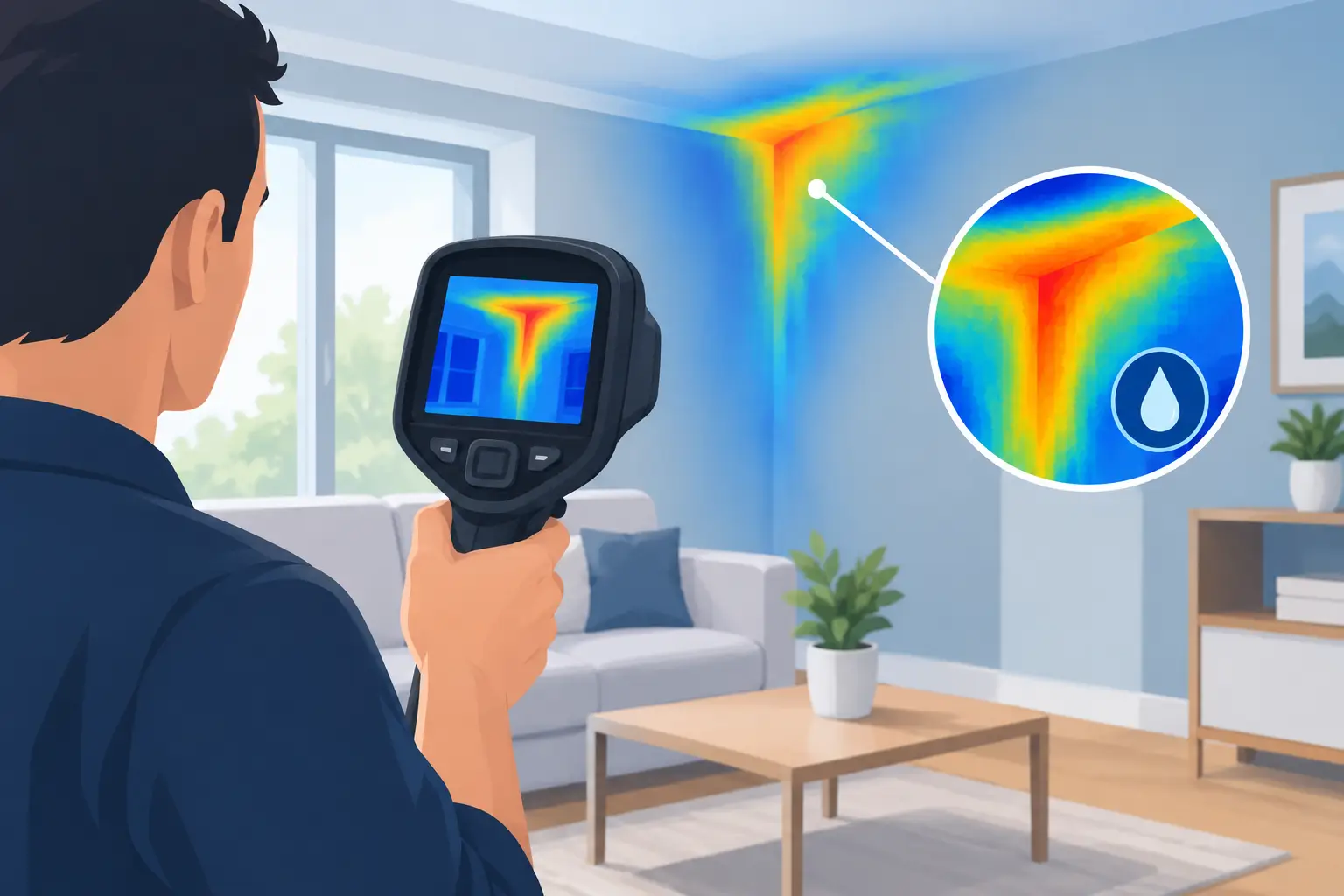
Advanced tools can make a difference here. Thermal imaging, moisture detection, and gas leak detection can help identify issues that are not obvious during a standard visual walk-through. They do not replace experience. They support it.
The red flags buyers should take seriously
Not every defect needs to become a negotiation battle. Some issues are maintenance items you should simply plan for. Others deserve a harder pause.
Active water intrusion is one of the biggest concerns because it rarely stays isolated. If a basement shows signs of repeated seepage or an attic has fresh staining, you need to understand the source and the scope. Electrical defects also deserve immediate attention, especially overloaded panels, improper wiring, double-tapped breakers where not permitted, missing safety devices, or evidence of amateur repairs.
Structural movement can be another major issue, but this is where nuance matters. Small cracks in concrete are common. Not every crack means failure. The concern rises when cracking is paired with displacement, bowing, repeated patching, sticking doors and windows, or signs that movement is ongoing.
Aging mechanical systems are not always a reason to walk away, either. A furnace near the end of its expected life may still be operating at the time of inspection. What matters is whether you are prepared for replacement costs soon after closing. Buyers get into trouble when they treat old but functional equipment as if it were new.
Add-on testing can change the picture
A standard inspection covers a lot, but sometimes it should not stand alone. Depending on the property, age, and location, additional testing may be the smarter move.
Radon testing is often worth considering because elevated levels are common in many Ohio homes and cannot be seen or smelled. Sewer camera scopes can reveal root intrusion, breaks, or offset lines that a standard inspection cannot confirm from above. Termite inspections matter when wood-destroying insect activity is a possibility. Water quality testing, mold and air quality testing, septic inspections, well evaluations, and fireplace inspections can also be appropriate depending on the property.
This is where an all-in-one inspection approach helps buyers move faster with fewer gaps. Instead of coordinating multiple vendors under tight contract deadlines, you can often get a more complete understanding of the property in one process.
How to read the report without overreacting
The report will likely be longer than you expect. That is normal. A thorough report documents conditions, limitations, maintenance needs, safety concerns, and defects across the house. Length alone does not mean the house is in bad shape.
Focus first on the findings that affect safety, water intrusion, structural performance, and major mechanical systems. Then look at items that may influence near-term budgeting, such as an aging roof covering, worn exterior materials, or a water heater at the end of service life. Cosmetic notes matter for planning, but they should not distract you from the issues that carry the highest cost or risk.
This is also the time to ask follow-up questions. A good inspector does not just hand over a report and disappear. Buyers should understand which issues are urgent, which are manageable, and where a licensed specialist may be appropriate for further evaluation or repair pricing.
Using the inspection in negotiations
The smartest inspection response is not always “ask for everything.” Sellers are more likely to respond constructively when requests are reasonable, supported by documented conditions, and focused on meaningful defects. If the report identifies unsafe electrical conditions, active leaks, or a failed HVAC system, those are legitimate concerns. If the report notes minor cosmetic wear in an older home, that is usually part of buying a lived-in property.
Sometimes the best move is to request repairs. Sometimes it is better to ask for a credit and control the work yourself after closing. It depends on the issue, the market, the seller’s position, and your timeline. In a competitive market, buyers may decide to accept some manageable repairs in exchange for keeping the deal together. In other situations, the findings may justify renegotiation or even walking away.
What matters is making that decision with clear eyes. That is where a thorough inspection earns its value.
Choosing the right inspector matters as much as the inspection
Not all inspection experiences are equal. Buyers need an inspector who is thorough, technically strong, and able to explain findings in plain language. Fast scheduling matters in real estate. Same-day reporting matters too. But speed should not come at the expense of depth.
Look for an inspection company that treats the process as protection, not just paperwork. Broad service capability can be a major advantage, especially when the same team can coordinate ancillary testing and help you avoid blind spots. For buyers in Central Ohio, that kind of responsiveness can make a real difference when contract deadlines are tight.
Flinn Inspection Group builds that process around thoroughness, advanced tools, and buyer education because major purchases deserve more than a checklist. They deserve clarity.
A home inspection will not tell you everything that could ever happen in a house. No inspection can. What it can do is give you a grounded, professional understanding of the property you are about to own – and that is often the difference between buying with confidence and inheriting surprises you never agreed to.