by Flinn Inspections
Share
by Flinn Inspections
Share
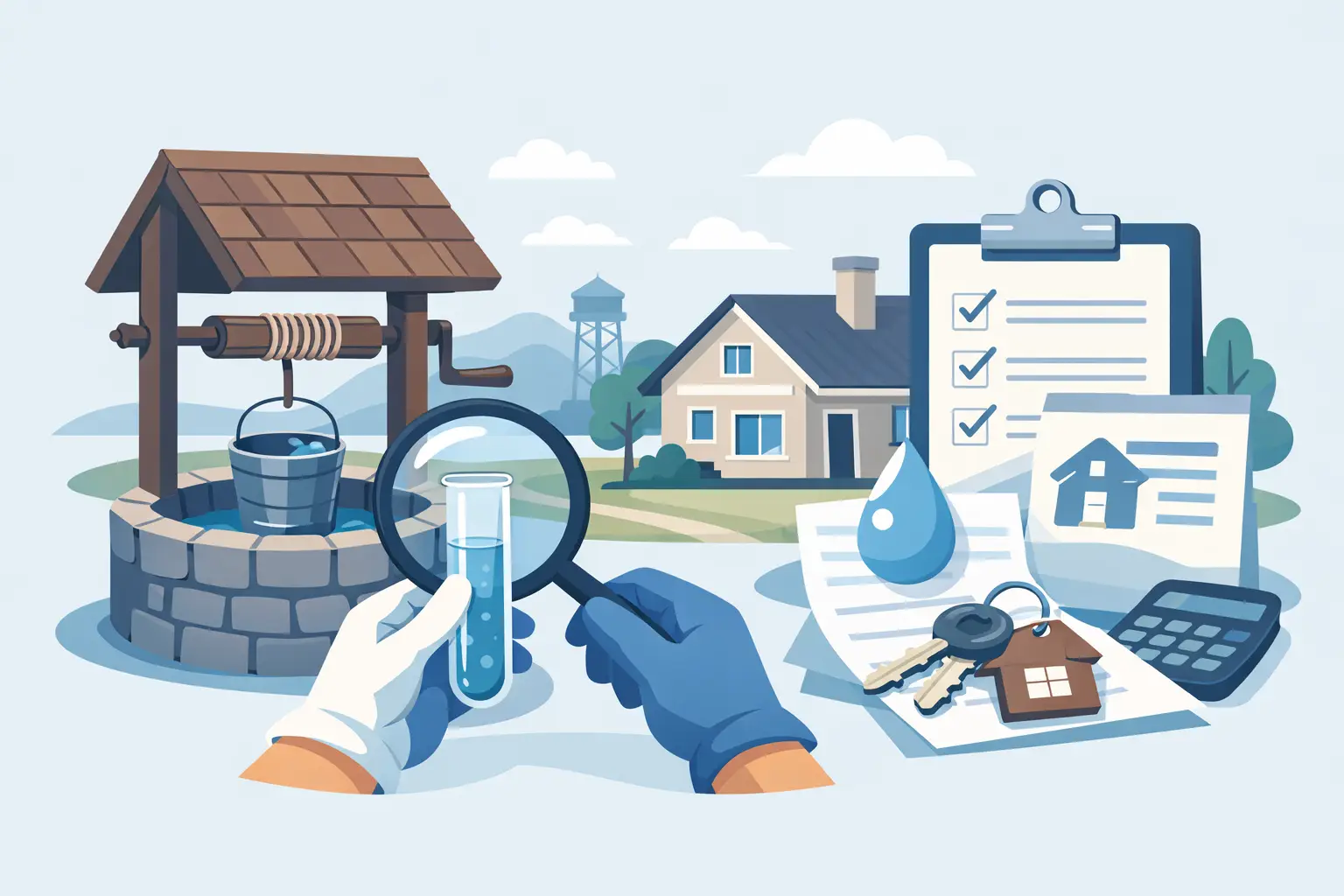
A home can look move-in ready and still hit a financing problem at the water source. When a property uses a private well, a well water inspection for FHA loan approval is often one of the details that can slow a deal down if no one plans for it early.
For buyers, sellers, and agents, the issue is not just whether the water runs. The real question is whether the water supply meets lender and local requirements well enough to keep the transaction on track. That is where a clear inspection process matters.
Why a well water inspection for FHA loan matters
FHA-backed loans are designed to make homeownership more accessible, but they still require the property to meet minimum standards for safety and livability. If the home has a private well, the water source becomes part of that conversation. A lender may want documentation showing the water is safe for household use and that the system is functioning as expected.
This is where many buyers get surprised. They assume the general home inspection covers everything tied to the property. In reality, water quality testing and well-related evaluations are often separate services. If they are not scheduled early, you can lose valuable days during an already tight contract timeline.
The exact requirements can vary by lender, underwriter, and local health guidance. That means there is no single national script for every FHA file. Still, private well properties usually deserve extra attention because water quality is not managed by a municipal utility. The responsibility sits with the property owner, and the lender wants confidence that the water supply is acceptable.
What gets checked during the process
A well water inspection for FHA loan purposes typically centers on water quality testing, but the broader picture can include more than a lab sample. Depending on the transaction, the inspection package may also look at the condition and operation of the well system components that affect safe water delivery.
Water quality testing
The most common starting point is sampling for contaminants that lenders or local authorities commonly care about. That often includes coliform bacteria and nitrates or nitrites. In some cases, additional testing may be requested based on local standards, the property history, or signs of a known issue.
This matters because clear water is not the same as safe water. Some of the most serious concerns cannot be seen, tasted, or smelled. A lab result gives the lender something objective to review instead of relying on appearance alone.
Well system observations
Some inspections also include visible review of accessible system components such as the pressure tank, controls, plumbing connections, and general site conditions around the wellhead. The goal is not always to perform a full well performance study, but to identify obvious red flags that could affect function or sanitation.
For example, a damaged well cap, poor grading, or conditions that allow surface water intrusion can raise concerns. Even if the water test passes on one day, visible defects around the well can still become part of the conversation.
Yield and reliability questions
In some transactions, questions come up about whether the well provides enough water for normal household use. That is not always handled the same way in every FHA-backed purchase, and it often depends on lender instructions and property specifics. If a home has a history of weak flow, storage concerns, or prior repairs, more documentation may be needed.
Who usually orders the inspection
In practice, the buyer often ends up coordinating the service, but that does not mean the buyer should wait to ask about it. The purchase contract, lender expectations, and local customs all affect who pays and who orders the testing.
Some sellers choose to handle testing in advance to reduce surprises and make the listing more marketable. That can help, but buyers should still confirm whether the lender will accept existing results. Timing rules, chain-of-custody requirements, and approved lab standards can all affect whether prior testing works for the loan file.
If you are an agent, this is one of those details worth confirming as soon as you see that the property is on a private well. Waiting until the appraisal or underwriting stage is how avoidable delays happen.
When to schedule it
The best time to schedule a well water inspection for FHA loan review is early in the due diligence period. That gives enough time for sample collection, lab processing, results review, and any retesting if a problem shows up.
This is especially important in active markets where everyone is trying to compress timelines. Water testing is not always instant. Lab turnaround can take several days, and if contamination is found, the next steps can extend beyond the original inspection window.
In Central Ohio, seasonal conditions can also affect logistics. Access issues, weather, and rural property conditions can all add small delays that become major problems if the closing date is already tight.
What can cause a failed or delayed result
A failed result does not always mean the property is a lost cause, but it does mean the transaction needs a plan. Bacteria, nitrates, damaged well components, poor sanitation around the wellhead, or outdated system conditions can all trigger concerns.
Sometimes the issue is the water itself. Other times, the issue is documentation. A lender may reject a test if it was collected outside the required time frame, performed by the wrong party, or processed without the proper reporting standards. That is one reason working with an inspection company familiar with FHA-related water testing can save time.
There is also a practical trade-off here. A quick, cheap test may sound appealing, but if it does not satisfy the lender, you have paid for speed without solving the financing problem. A coordinated inspection process is usually the better move.
What happens if the water test comes back with problems
If contaminants are found, the next step depends on the type and severity of the issue. The seller may choose to disinfect the system, repair well components, improve site drainage, or install treatment equipment. After corrective action, retesting is often needed.
This is where expectations matter. Some problems can be resolved quickly. Others point to a larger system issue that requires more time and expense. Buyers should avoid assuming every failed sample is a simple fix, and sellers should avoid assuming the lender will overlook it because the home is otherwise in good shape.
A strong inspection partner helps by identifying what is known, what still needs confirmation, and what needs to happen next to support the transaction.
How this differs from a standard home inspection
A standard home inspection gives a broad evaluation of the property’s visible and accessible systems. It is essential, but it is not the same as a water quality test. Home inspectors can identify signs of plumbing issues, pressure concerns, or visible well equipment defects, yet lab analysis is a separate step when water quality must be documented.
That distinction matters for first-time buyers. If the property has a private well, you should think in layers. The home inspection looks at the house and its systems. The well water testing addresses whether the water supply itself meets the standards needed for confidence and, in many FHA transactions, lender review.
How to avoid closing-day surprises
The safest approach is simple. Confirm the water source early, ask the lender what documentation is required, and schedule testing before the deadline pressure starts.
It also helps to keep communication tight between the buyer, agent, lender, and inspection company. If one party assumes someone else is handling the well water inspection, the file can stall fast. This is one of those services where clarity is worth more than speed alone.
For buyers in areas around Columbus, Dublin, and Powell where private well properties still appear in the market, it pays to work with an inspection team that can handle more than the basic home inspection. When one company can coordinate core inspection services with specialized testing, the process tends to move with fewer gaps and fewer last-minute questions.
Flinn Inspection Group approaches these situations the same way it approaches every major property decision – protect the client, inspect thoroughly, and deliver clear information fast enough to support the transaction.
If you are buying a home with a private well, do not treat the water test like a minor checkbox. Safe water and clean documentation can make the difference between a smooth closing and an avoidable delay.