by Flinn Inspections
Share
by Flinn Inspections
Share
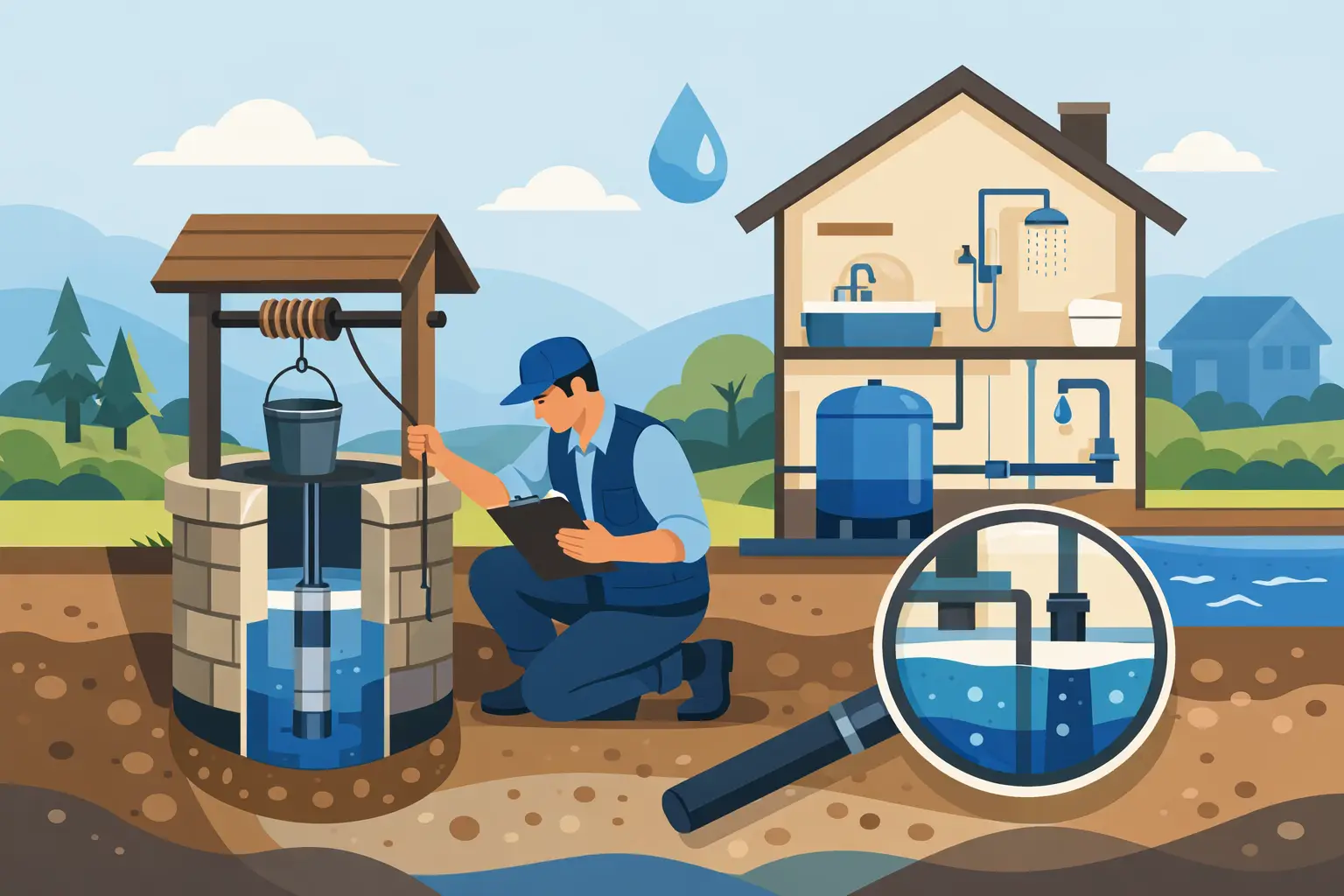
A private well can serve a home reliably for decades, but it is not a set-it-and-forget-it system. The water may look clear, the pump may run, and the faucets may have good pressure while a developing issue remains out of sight. Thorough well inspections help buyers, homeowners, and investors understand both the condition of the well system and the risks that could affect water availability, water quality, repair costs, or a real estate transaction.
For properties in Central Ohio, a well should be evaluated with the same care as the roof, foundation, electrical panel, and septic system. It is a primary utility. If it cannot deliver adequate, safe water, the property has a problem that deserves clear answers before closing or before a minor concern becomes an emergency.
When Should You Schedule a Well Inspection?
The most common time to schedule a well inspection is during a home purchase. A general home inspection may identify visible concerns around the pressure tank, plumbing connections, or pump controls, but a dedicated evaluation provides a closer look at the water system serving the property. This is especially valuable when the home has been vacant, the seller has limited maintenance records, or the well is shared with another property.
Current homeowners should also consider an inspection when water pressure changes, the pump cycles more often than usual, water becomes cloudy or develops an unusual odor, or utility costs rise without a clear explanation. Those symptoms do not automatically mean the well has failed. They can point to a pressure tank issue, filtration problem, plumbing leak, sediment buildup, electrical concern, or water-quality condition. Testing and inspection help separate a manageable repair from a larger system concern.
An inspection is also a practical step before listing a rural or semi-rural property. Finding a problem before a buyer discovers it gives the owner more control over timing, estimates, and repair decisions.
What Well Inspections Evaluate
A complete inspection begins with the components that can be safely accessed and observed. The goal is to document the condition of the system, identify visible defects, and determine whether additional evaluation by a licensed well or pump contractor is warranted.
The wellhead and casing are key starting points. The casing should be properly extended above grade, protected from surface runoff, and equipped with an appropriate cap. A damaged, loose, or poorly sealed cap can create an entry point for insects, debris, and contaminants. The area surrounding the well should also drain away from it. Standing water, poor grading, or landscaping that directs runoff toward the casing can raise contamination concerns.
The inspection should also examine visible electrical connections and controls, the pressure tank, pressure switch, gauges, piping, valves, and any filtration or treatment equipment present. Corrosion, leaks, improper wiring, missing covers, damaged fittings, and unusual pressure readings all matter. A pressure tank that is short-cycling, for example, can put unnecessary strain on the pump and may signal a bladder, pressure-setting, or control issue.
Where conditions allow, the inspector may observe pump operation and water flow at fixtures. This can reveal inconsistent pressure, delayed pump response, air in the lines, or other performance concerns. However, an inspector cannot see every component underground. The submersible pump, buried supply line, well screen, depth, yield, and internal casing condition may require specialized equipment or testing by a qualified well professional.
That distinction protects the client from false certainty. A quality inspection explains what was observed, what could not be confirmed, and what should happen next if a concern is found.
A Well Inspection Is Not the Same as Water Testing
A system can appear mechanically sound while the water fails a quality test. The reverse can also be true: water may test within the selected parameters while the pressure system has mechanical defects. Buyers need both conversations when appropriate.
Water testing analyzes a sample for specific contaminants or conditions, depending on the test requested. Common considerations include total coliform bacteria, E. coli, nitrates, nitrites, lead, arsenic, iron, manganese, pH, hardness, and other parameters required by a lender or recommended for the property. FHA and VA transactions may have defined water-testing requirements, and the timing of sample collection can affect whether results meet loan guidelines.
A water test is a snapshot of the sample collected on that date. It does not guarantee future water quality, particularly after heavy rainfall, flooding, changes to the surrounding land, a well repair, or extended vacancy. Still, it provides a critical baseline and can identify conditions that need treatment, disinfection, further testing, or professional evaluation.
Issues That Deserve Fast Attention
Not every issue is a deal breaker, but several conditions should move quickly from observation to action. These include a cracked casing, missing or damaged well cap, active leaks at the pressure tank or piping, exposed or unsafe electrical components, repeated loss of pressure, water that contains bacteria, and evidence that surface water may be reaching the wellhead.
Low yield is another significant concern, although it requires careful interpretation. A brief faucet test cannot determine the long-term production capacity of a well. Yield testing may be needed to understand how much water the well can sustainably provide. This matters for larger households, irrigation demands, livestock use, accessory dwellings, and properties with water-intensive features.
Treatment systems require nuance as well. A softener, iron filter, ultraviolet unit, or reverse osmosis system may be appropriate and effective, but its presence does not prove the underlying water is safe or that the equipment has been maintained. Ask for service records, filter-change history, and information about why the system was installed. An aging treatment unit can add future cost even when it is working at the time of inspection.
What Buyers Should Ask Before Closing
Documentation helps turn a well inspection into a stronger decision-making tool. Buyers should ask for available well logs, pump replacement records, water-treatment service history, prior water-test results, and details about any past repairs. If the property has a septic system, confirm the relative locations of the well and septic components. Proper separation and site conditions are central to protecting groundwater.
It is also wise to ask whether the well is private, shared, or subject to an agreement. Shared wells can work well, but responsibility for maintenance, electricity, repairs, access, and future replacement should be clearly documented. A buyer should understand those obligations before taking ownership, not after a pump failure prompts an unexpected bill.
For investors, the same due diligence protects timelines and budgets. A property with a functional well but no recent testing may still be a reasonable acquisition, provided the risk is understood and the cost of testing, treatment, or repair is built into the plan. The right choice depends on the property’s condition, intended use, lender requirements, and the buyer’s tolerance for future maintenance.
How Inspection Findings Support Better Decisions
The best inspection report does more than list defects. It gives the client a clear record of observed conditions, photographs where applicable, and practical recommendations for next steps. Some findings may call for routine maintenance, such as improving drainage around the wellhead or servicing a treatment system. Others may justify a specialist evaluation before closing, such as suspected pump failure, inadequate pressure performance, or unsatisfactory water-quality results.
Avoid treating every recommendation as an automatic request for replacement. Wells and pumps are expensive assets, and replacement decisions should be based on verified performance, condition, repair history, and professional diagnosis. At the same time, do not dismiss a concern because water is currently flowing. A failing pressure tank, contaminated wellhead, or declining pump can become much more disruptive after move-in.
Flinn Inspection Group helps Central Ohio clients coordinate the inspection services that matter to the property, including well water inspections, water-quality testing, septic inspections, and sewer camera scopes when conditions call for a broader view of the site’s water systems. Same-day reporting supports timely decisions without sacrificing the detail buyers and owners need.
A well should give you more than running water on inspection day. It should give you confidence that the system has been evaluated thoughtfully, the limitations are understood, and any next step is based on evidence rather than guesswork.