by Flinn Inspections
Share
by Flinn Inspections
Share
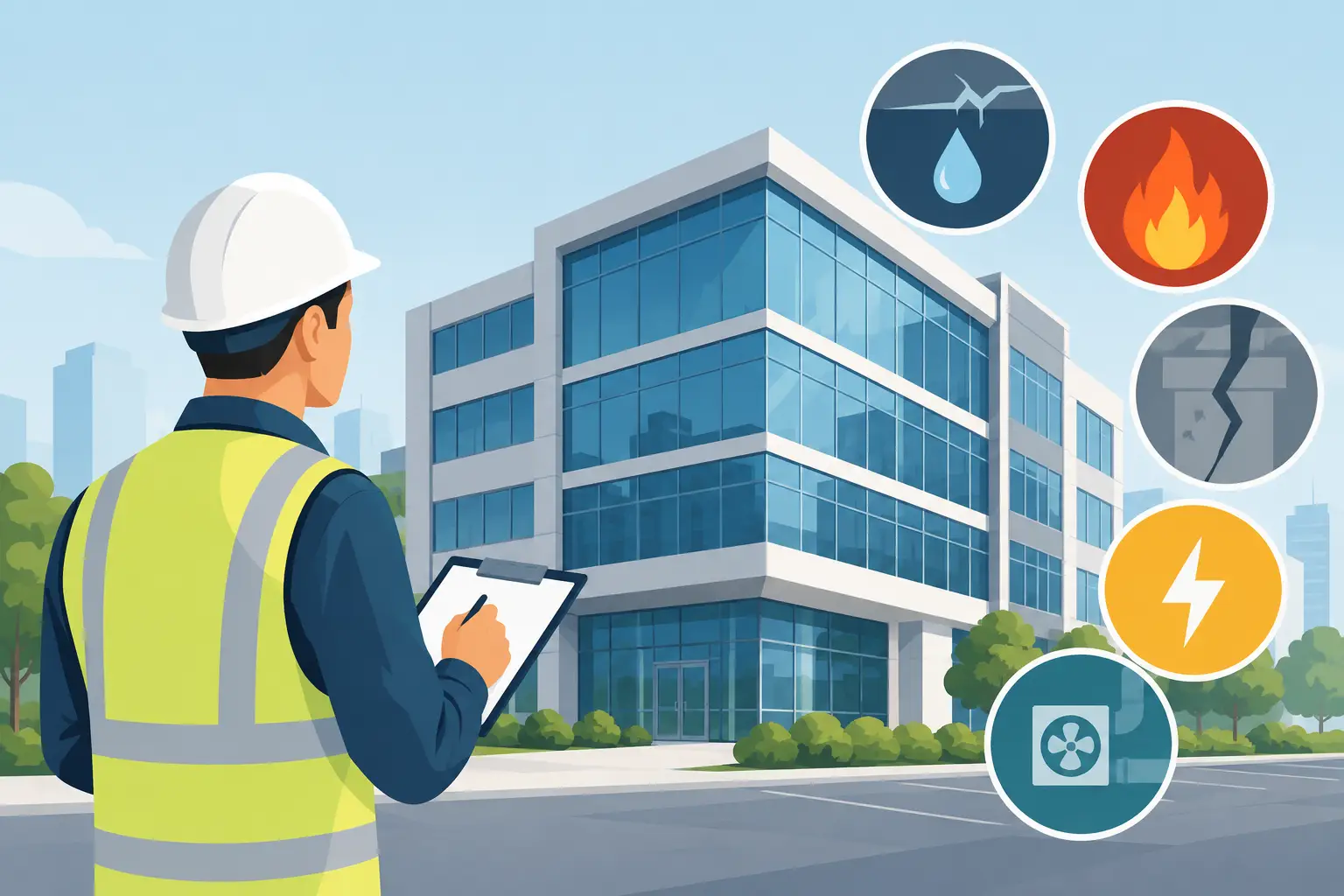
A commercial property can look occupied, maintained, and ready to perform while carrying expensive problems above the ceiling tiles, behind electrical panels, or below the slab. The top commercial building inspection risks are rarely limited to one visible defect. They are the conditions that can interrupt operations, create safety exposure, delay a transaction, or turn a planned capital expense into an immediate emergency.
For buyers, investors, owners, and tenants, the goal is not simply to produce an inspection report. It is to understand which conditions demand action now, which should be budgeted for later, and which need a specialist’s evaluation before the deal moves forward.
Why Commercial Inspection Risk Is Different
Commercial buildings are not inspected with a one-size-fits-all checklist. A small retail strip, medical office, warehouse, restaurant, and multi-tenant office building may share core systems, but their risk profiles are very different. A grease-laden exhaust system matters far more in a restaurant than in a professional office. Floor loading, dock conditions, and overhead doors can be central concerns in an industrial property.
Age, occupancy, renovation history, deferred maintenance, and local code requirements all affect the scope. An inspection is a visual, non-invasive assessment of accessible conditions, not a guarantee that every component is defect-free or a substitute for engineering, environmental, or code compliance reviews. Still, a thorough inspection gives decision-makers a clear starting point for due diligence and negotiations.
The Top Commercial Building Inspection Risks to Prioritize
Roof failure and building-envelope leaks
Roofing is one of the most consequential commercial building systems because failure can spread far beyond the roof deck. Water intrusion may damage insulation, framing, ceiling systems, electrical equipment, inventory, and finishes before a leak becomes obvious indoors.
Inspectors look for deteriorated membranes, open seams, ponding water, compromised flashing, worn penetrations, blocked drains, and evidence of patching. The remaining service life of a roof is also important. A roof that is not actively leaking may still be near the end of its useful life, changing the real cost of acquiring or holding the property.
The exterior envelope deserves the same attention. Cracked masonry, failed sealants, damaged siding, deteriorated window assemblies, and improperly flashed openings can allow moisture into wall cavities. In Central Ohio, repeated freeze-thaw cycles can accelerate these conditions and make small exterior defects more costly over time.
Foundation movement and structural distress
Not every foundation crack is a structural emergency, but commercial owners should never dismiss movement indicators without context. Cracks in masonry or concrete, uneven floors, displaced columns, sagging roof framing, separated joints, and doors that no longer operate properly may point to settlement, moisture-related movement, overload, or long-term deterioration.
The inspection should distinguish between cosmetic cracking and signs that warrant a structural engineer’s review. This distinction matters during a transaction. Overreacting to ordinary aging can waste time, while overlooking active movement can create major repair costs and liability.
Water management is often part of the story. Poor grading, downspouts discharging at the foundation, failing drains, and chronic standing water can contribute to moisture problems around the structure. The building and the site must be evaluated together.
Electrical deficiencies and outdated equipment
Electrical risk is not limited to whether lights turn on. Commercial systems may include aging panels, overloaded circuits, exposed conductors, improper grounding, missing panel covers, damaged receptacles, and equipment that no longer matches the building’s operational needs.
Older properties can contain obsolete or hard-to-service electrical components. Expansion or tenant improvements may have added equipment without a corresponding upgrade to service capacity. These conditions can create fire risk, downtime, and unexpected modernization costs.
An inspector can identify visible deficiencies and potential concerns, but electrical panels and distribution equipment may require further evaluation by a qualified electrician. That is especially true when inspection findings suggest overheating, improper installations, water intrusion, or inadequate capacity for intended use.
Fire and life-safety gaps
Life-safety systems protect people first, but deficiencies also expose owners to operational and financial consequences. Emergency lighting, exit signage, fire doors, extinguishers, alarm components, sprinkler systems, stairways, handrails, and accessible egress paths all deserve close attention.
A missing fire-door closer or blocked exit may seem minor during a walkthrough. In an emergency, it is not. A commercial inspection can flag visible conditions that should be corrected and identify areas where a licensed fire-protection professional or code authority should be consulted.
The key trade-off is scope. A property inspection can identify accessible concerns, while formal fire-system testing, certification, and code compliance determinations are separate services. Buyers should know which records, inspections, and specialist reports must be requested before closing.
HVAC performance, ventilation, and hidden moisture
Heating, cooling, and ventilation systems affect tenant comfort, energy costs, equipment reliability, and indoor air quality. A rooftop unit that still operates may have deferred maintenance, damaged components, condensate drainage issues, or an age that makes replacement planning urgent.
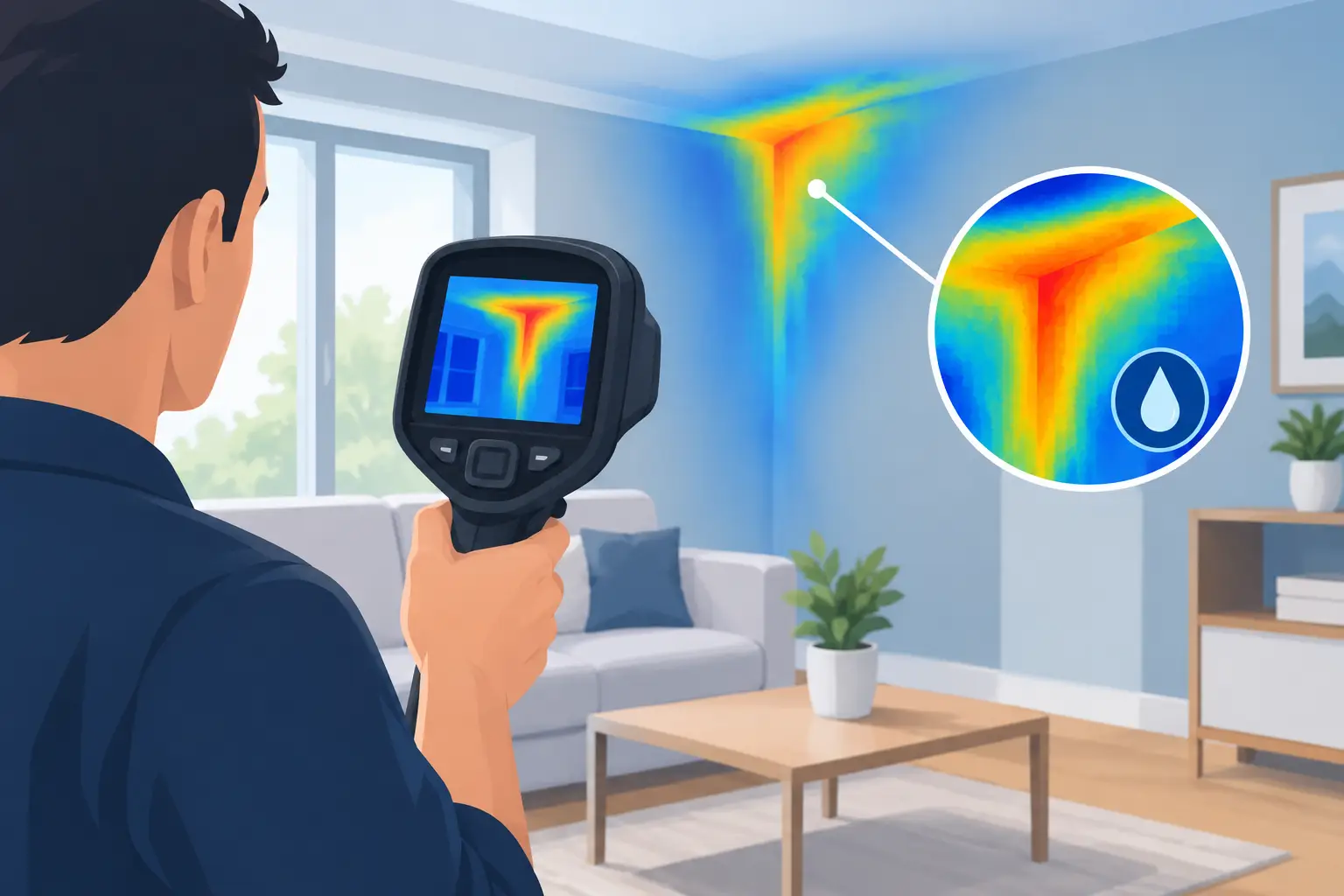
Inspectors assess visible equipment condition, accessible ductwork, distribution concerns, drainage, and signs of improper operation. Thermal imaging can help identify temperature anomalies and moisture patterns that are not apparent during a standard visual review. It does not replace HVAC diagnostics, but it can direct attention to areas that need further evaluation.
Poor ventilation and recurring moisture can also support mold growth. Where staining, musty odors, prior leaks, or occupant concerns are present, targeted mold or air-quality testing may be appropriate. The right next step depends on the building’s condition and use, not on a generic add-on package.
Plumbing, sewer, and water-intrusion concerns
Plumbing failures can disrupt tenants quickly and cause extensive damage. Leaking supply lines, corroded piping, failing water heaters, inactive fixtures, slow drains, damaged hose bibs, and improper drainage are all common concerns. In vacant or lightly used spaces, a system may appear fine until fixtures are operated under normal demand.
Sewer line conditions deserve special attention in older buildings and properties with mature trees, recurring backups, or recent renovations. A sewer camera scope can identify root intrusion, offsets, deterioration, or obstructions that a visual inspection cannot see. It is often a smart investment when the property’s age, use, or history raises questions.
Environmental hazards and hazardous materials
Commercial due diligence should account for risks that are not visible in a standard building inspection. Depending on the building’s age, construction, and former use, asbestos-containing materials, lead-based paint, mold, underground storage concerns, or other environmental issues may require specialized testing.
This is particularly important when renovation is planned. Materials that can remain undisturbed during ordinary occupancy may require proper identification and handling before demolition, repair, or tenant improvements. Environmental findings should be treated as planning information, not an automatic deal-breaker. The cost and complexity depend on the material, its condition, location, and planned work.
Site conditions, pavement, and drainage
The parking lot, sidewalks, curbs, retaining walls, exterior stairs, loading areas, and stormwater management features are part of the investment. Trip hazards, deteriorated asphalt, failed concrete, poor site drainage, and inaccessible routes can lead to repair costs and liability exposure.
Site drainage is especially easy to underestimate. Water that collects near entrances, foundations, loading docks, or parking areas can damage materials, create icy conditions, and contribute to long-term structural moisture concerns. A building may be well maintained inside while the exterior site quietly creates recurring problems.
Turning Findings Into a Smart Action Plan
The best commercial inspection report does more than identify defects. It helps you prioritize them. Conditions involving safety, active water intrusion, electrical hazards, structural movement, and major system failure should move to the front of the conversation. Items with a predictable remaining service life can often be budgeted through a capital plan.
Before you waive contingencies or finalize a lease or purchase, ask practical questions. What needs immediate repair? Which findings need a specialist? Is there maintenance documentation? Are replacement costs likely in the first year, or can they be planned over several years? These answers are often more valuable than a long list of minor defects.
For commercial clients in Columbus, Dublin, Powell, and surrounding Central Ohio communities, Flinn Inspection Group approaches the property as an investment that must support real operations. Thorough visual assessment, advanced tools where appropriate, and clear reporting help you move from uncertainty to informed action.
A commercial building does not need to be perfect to be a sound investment. It does need to be understood. Give the highest-risk systems the attention they deserve before the cost, disruption, or liability becomes yours.