by Flinn Inspections
Share
by Flinn Inspections
Share
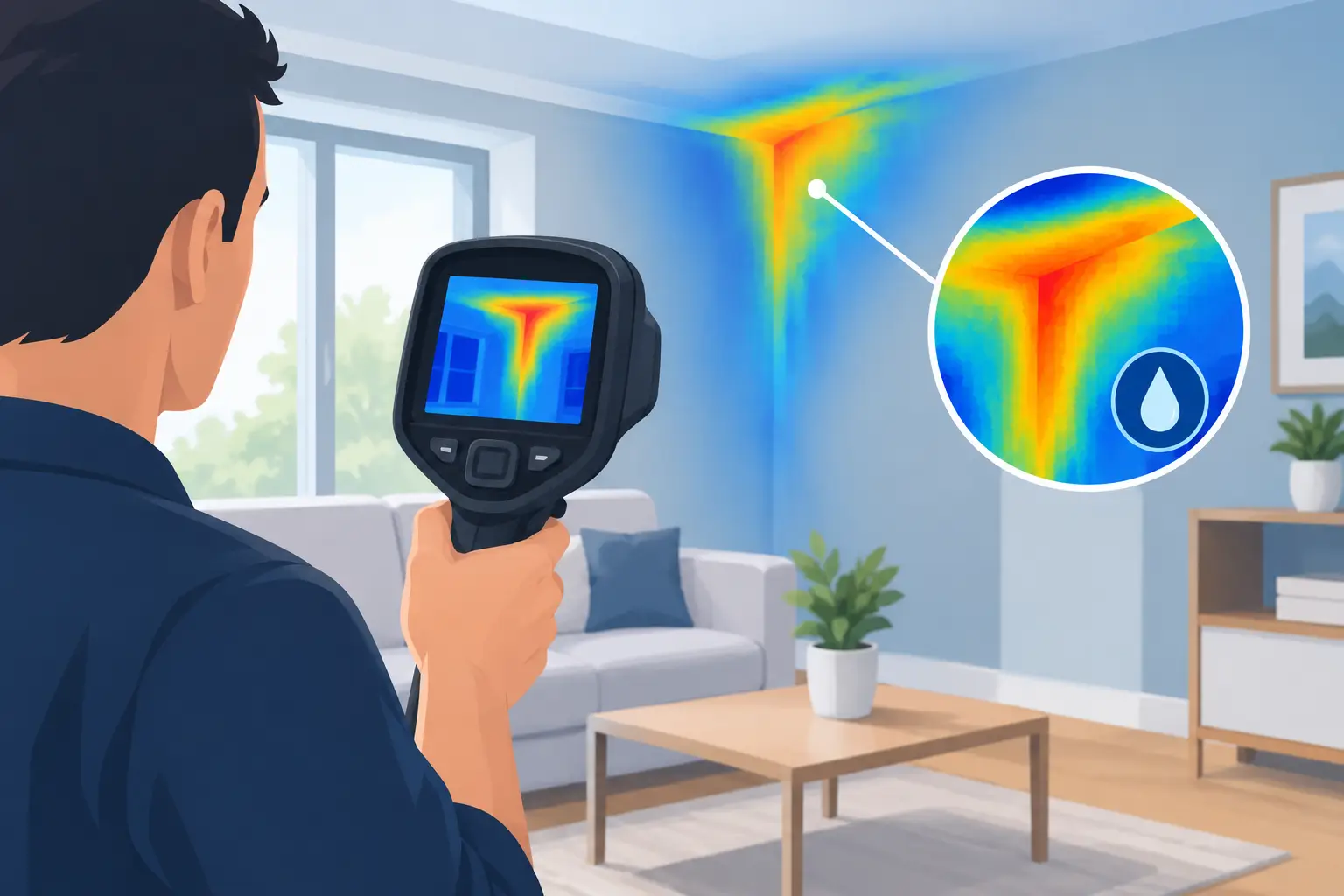
A dark spot beneath a finished ceiling can look harmless during a walkthrough. Behind that spot, there could be a slow plumbing leak, missing insulation, or simply a temperature difference caused by sunlight. A thermal imaging home inspection review helps buyers understand why infrared technology is valuable: it gives the inspector another way to identify conditions that deserve a closer look before closing.
For a major purchase, visual observations alone are not always enough. Thermal imaging can help reveal patterns hidden behind walls, ceilings, and finished surfaces without opening them. It is a diagnostic tool, not a crystal ball, but in the hands of a qualified inspector, it can bring clarity to issues that might otherwise remain unnoticed.
What a Thermal Imaging Home Inspection Review Should Tell You
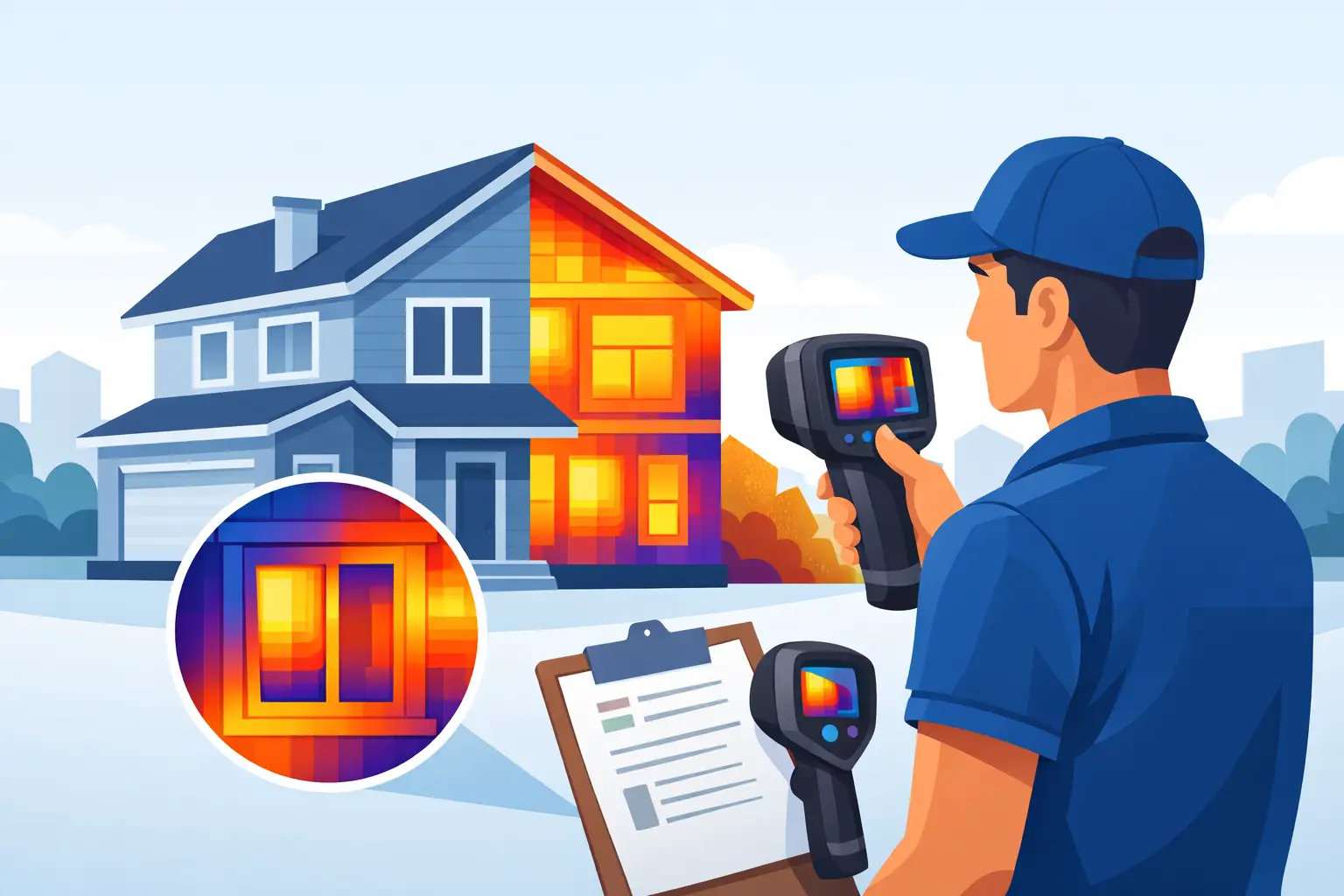
Thermal imaging cameras detect infrared energy, or heat, and display temperature differences as colors on a screen. A cooler area may appear blue or purple, while a warmer area may appear yellow, orange, or red. Those colors do not diagnose a problem by themselves. They show the inspector where to investigate further.
That distinction matters. A cold pattern on an exterior wall could suggest missing insulation, air leakage, or moisture evaporation. It could also reflect a recent change in outdoor conditions, a supply duct behind the wall, or an area that has been shaded from the sun. A professional inspection pairs the thermal image with visual evidence, moisture readings, system operation, and informed judgment.
A useful report should identify the location of the concern, explain what was observed, state the likely significance, and recommend an appropriate next step. For example, an inspector may document a cool anomaly below a second-floor bathroom, confirm elevated moisture with a meter, and recommend evaluation and repair by a qualified plumber. That is far more useful than receiving a colorful image without context.
What Infrared Scans Can Reveal
Thermal imaging is especially effective when there is a meaningful temperature difference between the affected area and surrounding materials. During a home inspection, that can help identify several common concerns.
Moisture Intrusion and Plumbing Leaks
Water often changes the temperature of building materials. A slow leak beneath a tub, around a shower enclosure, at a roof penetration, or under a kitchen sink may create a cooler thermal pattern before staining becomes obvious. In some cases, this early indication can help prevent a buyer from inheriting concealed damage, microbial growth conditions, or a repair that grows more expensive after move-in.
Thermal imaging does not prove that every cool area is wet. Confirming tools matter. A qualified inspector may use a moisture meter, inspect accessible plumbing, operate fixtures, and review the pattern’s location before making a recommendation.
Insulation Gaps and Air Leakage
Central Ohio homes experience cold winters, humid summers, and wide temperature swings. That makes insulation performance and unwanted air movement more than comfort issues. Gaps around attic access panels, recessed lights, exterior-wall penetrations, windows, and poorly insulated wall sections can contribute to uneven temperatures and higher utility costs.
An infrared scan may reveal a wall bay that is noticeably colder than adjacent areas or an attic hatch that is leaking conditioned air. These findings can give buyers a more realistic picture of efficiency upgrades they may need to plan for.
Electrical Hot Spots
Electrical components can generate excessive heat when a connection is loose, a circuit is overloaded, or a component is deteriorating. When conditions allow, thermal imaging may help identify an unusually warm breaker, disconnect, panel component, or receptacle area.
This is a high-value use of the technology because electrical defects are not always visible from the outside. Still, the camera cannot see through an electrical panel cover or evaluate every hidden connection. If an abnormal heat pattern is found, the right recommendation is evaluation by a licensed electrician, not a guess about the exact failure inside the system.
HVAC and Duct Performance
When heating or cooling equipment is operating, infrared imaging can help identify temperature differences around supply registers, accessible ductwork, and air-handling components. It may point to disconnected ducts, insulation deficiencies, air leakage, or rooms that are not receiving expected conditioned air.
This does not replace a full HVAC evaluation by a qualified contractor. It does, however, help an inspector identify concerns that warrant further review while the buyer still has the opportunity to negotiate repairs or budget accurately.
What Thermal Imaging Cannot Do
A camera is only as helpful as the conditions and the inspector using it. It cannot see through walls in the way many buyers imagine. It reads surface temperatures, not objects or defects hidden deep inside a structure.
It also cannot reliably identify every leak. A leak may be too small, too new, fully dried, insulated from the surface, or occurring when the inspection conditions do not create a detectable temperature difference. A scan cannot determine whether mold is present, measure air quality, certify a roof as leak-free, or replace specialized testing.
There are also situational limitations. Direct sunlight can heat exterior surfaces and distort readings. Recently operated appliances, fireplaces, showers, and HVAC systems can create temperature patterns that require careful interpretation. Furniture, rugs, stored belongings, and finished wall coverings may limit what can be observed.
That is why buyers should be cautious of inspection services that present thermal imaging as a stand-alone answer. The value comes from integrating it into a comprehensive inspection, where findings are verified whenever possible and explained in plain language.
When Is Thermal Imaging Worth Adding?
For many buyers, thermal imaging is most valuable when it is already included as part of a thorough inspection. It can be particularly useful for older homes with uncertain maintenance histories, properties with finished basements, homes that have been recently renovated, and homes where staining, odors, uneven room temperatures, or prior water concerns are present.
It can also be helpful in new construction. Fresh finishes can conceal incomplete insulation, air leakage, moisture around windows, or plumbing issues that have not yet produced visible damage. A pre-drywall inspection remains the best opportunity to view framing, wiring, plumbing, and insulation before finishes are installed, but infrared imaging can add useful evidence at later stages as well.
The decision depends on the property and the scope of the inspection. A well-maintained newer home may have fewer observable concerns, while a 1960s home with additions, multiple renovations, and a finished lower level may benefit significantly from infrared screening. Either way, buyers should ask whether the inspection includes thermal imaging, how anomalies are verified, and how findings will be documented in the report.
What to Look for in the Inspection Report
A strong report does not overwhelm you with images. It connects each image to a real decision. Look for clear labels, room locations, explanations of the observed pattern, and recommendations proportionate to the risk.
A minor insulation irregularity may be noted as a maintenance or efficiency item. Evidence of active moisture below a bathroom should receive more urgent attention. Potential electrical overheating should be treated as a safety concern. The report should help you distinguish between issues to monitor, repairs to request, and conditions that need immediate specialist evaluation.
Same-day reporting can be especially important during a fast-moving transaction. You need enough time to read the findings, ask questions, and make informed repair or negotiation decisions before inspection deadlines pass. Flinn Inspection Group uses advanced diagnostic tools as part of a thorough, education-focused inspection process because clients deserve more than a checklist when their investment is on the line.
The Bottom Line for Buyers
Thermal imaging earns its place in a home inspection when it is used with discipline. It can uncover clues that the eye cannot see, direct attention to concealed concerns, and support smarter next steps. It cannot promise that a home has no hidden defects, and no responsible inspector should suggest otherwise.
The best result is not a dramatic infrared photo. It is the confidence that your inspector looked beyond the obvious, verified concerns where possible, and gave you clear guidance for protecting the property you are about to call home.