by Flinn Inspections
Share
by Flinn Inspections
Share
A beautiful kitchen and a clean home inspection report can still hide one of the most expensive problems on the property – a failing septic system. That is why a septic inspection before buying house should never be treated as optional when a property is not connected to municipal sewer. If the system is damaged, undersized, poorly maintained, or near the end of its life, the cost and disruption become your problem the day you close.
For buyers, this is not just about checking a box in the due diligence period. It is about confirming that wastewater from the home is being handled safely, legally, and reliably. A septic issue can affect financing, insurance, occupancy, future resale, and your repair budget all at once. When you are already making a major investment, guessing is not a strategy.
Why a Septic Inspection Before Buying House Matters
A septic system works quietly until it does not. Unlike a roof leak or a cracked window, many septic defects stay out of sight until the symptoms become severe. Slow drains, sewage odors, soggy ground, backups, and contaminated soil often appear after the damage has been building for some time.
That is what makes a pre-purchase septic inspection so valuable. It gives buyers a clearer picture of system condition before they inherit someone else’s deferred maintenance. In practical terms, that can mean identifying a damaged tank, broken baffles, failing drain field, root intrusion, unsafe lids, improper installation, or signs the system has been overloaded.
It also helps answer a basic question many buyers overlook – is the system appropriate for the home as it exists today? Additions, finished basements, and extra bedrooms can create a mismatch between the house and the septic system capacity. If that mismatch exists, the problem may not show up on day one, but it can still become your liability.
What a Septic Inspection Usually Covers
A proper septic inspection goes beyond asking the seller if everything has been fine. A qualified inspector evaluates visible and accessible components of the system and looks for evidence of current failure, past neglect, and conditions that may shorten service life.
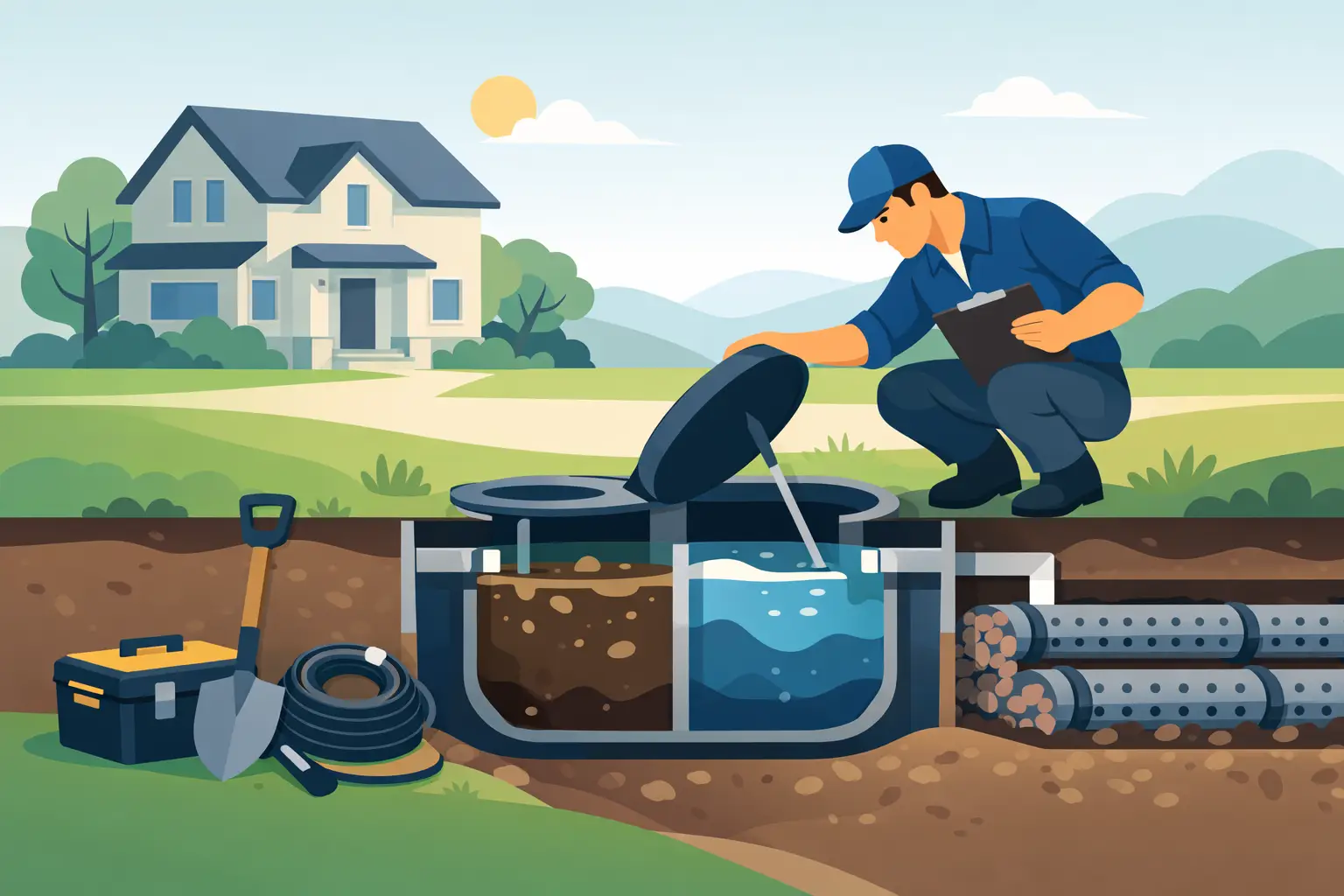
That often includes locating the tank, assessing access points and lids, checking for structural concerns, reviewing tank condition, measuring sludge and scum levels when applicable, and evaluating flow from the home into the system. The inspector may also assess the distribution box and drain field conditions if accessible, while watching for ponding water, sewage odors, or other signs of poor absorption.
Records matter too. Permit history, pumping records, repair documentation, and age of the system can all help frame the risk. A twenty-five-year-old system that has been consistently maintained is different from a ten-year-old system with no records and visible warning signs. Age alone does not decide the outcome, but it does shape the conversation.
Some inspections also involve more advanced diagnostics depending on the property and the concerns present. In many transactions, a broader inspection strategy makes sense, especially when buyers want a complete picture of site drainage, plumbing performance, water quality, or sewer line conditions.
Red Flags Buyers Should Take Seriously
The obvious warning signs matter, but the less obvious ones can be just as costly. Wet areas over the drain field, bright green grass in one isolated section, sewage odors near the tank, and drains that gurgle when fixtures are used all deserve attention. So do signs of recent patchwork, such as fresh soil cover over one area with no clear explanation.
Inside the home, repeated slow drainage can point to a septic issue, but it can also point to plumbing defects. That is why context matters. You do not want a seller to dismiss a system problem as a simple clog, and you do not want to assume a plumbing backup always means septic failure. The right inspection helps separate those possibilities.
Another major red flag is limited information. If the seller does not know where the system is located, cannot provide maintenance records, or is unsure when the tank was last pumped, that should not automatically kill the deal. It should, however, increase the value of a careful inspection. Unknowns create risk, and risk should be measured before closing, not after.
Septic Inspection Before Buying House: What Can Happen If You Skip It
Skipping a septic inspection can save a little time up front and cost a great deal later. Septic replacement is not a minor repair. Depending on the system type, soil conditions, lot limitations, and local requirements, replacement or major repair can run into the thousands or far beyond what a buyer expected to handle in the first year of ownership.
There is also the issue of use. A failing system is not just a financial headache. It can make daily life miserable. Showers back up. Toilets stop flushing properly. Laundry becomes a problem. Outdoor areas may become unusable or unsafe. In some cases, local health authorities may require corrective action before the home can be occupied normally.
For investors, the risk has another layer. If the plan is to renovate and resell or place a tenant quickly, an undiscovered septic defect can destroy the timeline. It can also affect project cost, permitting, and resale disclosure obligations. Fast deals still need thorough due diligence.
How Septic Findings Affect the Real Estate Deal
A septic inspection is not only about deciding whether to walk away. More often, it gives buyers leverage to make a smarter decision. If the system needs pumping, minor repair, further evaluation, or full replacement, those findings can shape negotiations.
Sometimes the seller agrees to correct specific issues before closing. In other cases, the buyer negotiates a credit, price reduction, or escrow arrangement. The right path depends on the severity of the defect, the transaction timeline, and lender requirements. What matters most is that the buyer has credible information to work from.
This is also where timing matters. Septic concerns discovered late in the transaction create pressure. Buyers may feel forced to choose between accepting risk or delaying closing. Scheduling inspections early gives you more options and more room to respond with confidence.
It Depends on the Property – and That Matters
Not every septic system presents the same level of risk. Older rural homes may have aging components but plenty of usable land for future repair. A newer home on a constrained lot may have fewer visible concerns but less flexibility if something goes wrong later. Soil conditions, water table, topography, household size, and maintenance history all influence performance.
In parts of Central Ohio, this can be especially important because property conditions vary significantly from one area to the next. What is acceptable on one site may not translate cleanly to another. That is why a one-size-fits-all answer is not enough. Buyers need property-specific information, not broad assumptions.
Pairing Septic With a Broader Inspection Strategy
A septic inspection works best when it is part of a coordinated evaluation of the property. If a home relies on a private septic system, buyers should also think carefully about well water, drainage patterns, plumbing behavior, and any evidence of moisture or settlement that could affect system performance or site conditions.
That broader approach is where an experienced inspection company adds real value. Flinn Inspection Group helps buyers protect the full investment by looking at how major systems interact, not just how each one performs in isolation. When decisions need to happen quickly, having one trusted inspection partner can reduce delays and improve clarity.
What Buyers Should Do Next
If the house has a septic system, ask early. Find out the age of the system, when it was last pumped, whether repairs have been made, and whether any records are available. Then schedule the inspection while you still have time to act on the findings.
Do not assume a clean-looking property means a healthy septic system. Do not rely on seller memory. And do not wait until final walkthrough to think about wastewater disposal. A septic system may be underground, but the financial consequences are not.
Buying a home is a major commitment. The smartest buyers protect that commitment by paying close attention to the systems they cannot see, especially the ones that can turn into a major expense without much warning.