by Flinn Inspections
Share
by Flinn Inspections
Share
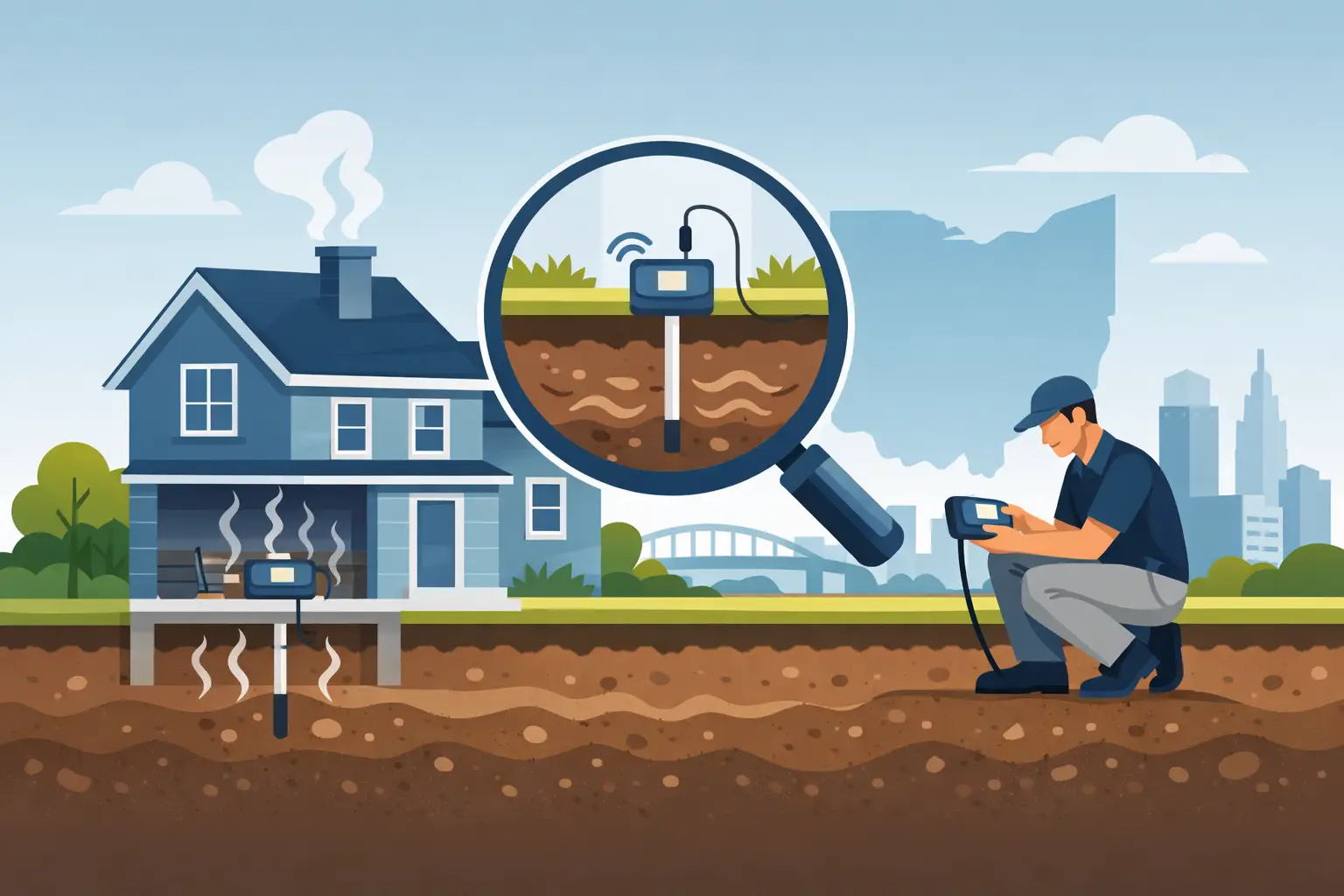
A home can look solid, clean, and move-in ready – and still have a radon problem. That is why radon testing services matter so much during a purchase, before listing, and as part of responsible property ownership. Radon has no smell, no color, and no immediate warning signs, which means the only reliable way to know whether a property has elevated levels is to test it.
In Central Ohio, that matters even more. Radon is common across Ohio, and it does not limit itself to older homes, finished basements, or neglected properties. New construction can have it. Well-maintained homes can have it. Commercial buildings can have it. If people live, work, or spend time in the structure, testing is a smart step.
What radon testing services actually do
At the most basic level, radon testing services measure the concentration of radon gas inside a building. But a quality service does more than place a device and send a number. It follows testing protocols, accounts for building conditions, documents the process clearly, and delivers results in a way that helps clients make decisions.
That matters because real estate timelines are tight, and environmental concerns can quickly become transaction issues. Buyers need clarity before closing. Sellers want to avoid surprises late in the deal. Homeowners need to know whether mitigation should be part of their maintenance planning. Investors and commercial property stakeholders need fast, reliable information that supports risk management.
Professional testing also reduces avoidable mistakes. Open windows, improper device placement, or poor timing can affect results. A trained inspector understands where to place monitors, how to maintain proper test conditions, and how to explain what the numbers mean without guesswork.
Why Ohio properties need radon testing services
Ohio is one of the states where radon testing should never be treated as optional. Soil conditions can allow radon gas to move up through the ground and enter structures through cracks, sump pits, utility penetrations, and other openings. Once inside, it can build up, especially in lower levels.
The challenge is that one house can test low while the house next door tests high. Even homes in the same neighborhood, built by the same builder, can produce different results. That is why assumptions are risky. You cannot judge radon exposure by age, appearance, price point, or zip code alone.
This is especially relevant for buyers in areas like Powell, Columbus, and Dublin, where basements are common and real estate decisions often move quickly. When time is limited, professional testing gives you dependable information without slowing the process more than necessary.
When to schedule radon testing services
The most common time to schedule testing is during a real estate transaction, but that is not the only time it makes sense. If you are buying a home, a radon test can reveal a hidden health concern before you commit. If you are selling, testing before listing can help you address the issue on your terms instead of reacting under deadline pressure.
For current homeowners, testing is worth considering if you have never done it before, if you recently finished a basement, if you made changes to ventilation or HVAC systems, or if it has been several years since the last test. Radon levels can change over time. A previous low result does not guarantee that conditions remain the same forever.
Investors should view radon testing as part of due diligence, especially when evaluating properties with below-grade living areas or tenant occupancy. Commercial owners and managers may also need testing depending on building use, occupancy patterns, and risk tolerance. The right timing depends on the property, but delaying simply because there is no visible symptom is rarely a strong reason.
What to expect during the test
Most radon testing services for real estate use short-term testing equipment under controlled conditions. The monitor is placed in the lowest livable area of the home or building, following established placement standards. Doors and windows usually need to remain closed except for normal entry and exit during the testing period.
This part matters more than many people realize. A radon test is not just about the device itself. It is about whether the building conditions allow that device to capture a valid reading. If proper conditions are not maintained, the result may not be reliable enough to support a major decision.
After the testing period, the results are reviewed and documented. If levels are elevated, the next conversation usually turns to mitigation. Elevated results do not automatically mean the deal is dead or the property is unsafe to purchase. In many cases, they mean the issue needs to be addressed properly, with the cost and timeline accounted for in the negotiation.
Understanding the results without overreacting
This is where professional guidance matters. Radon results are not helpful if they create confusion. Clients need clear interpretation, not alarm.
A high result means the property should be evaluated for mitigation. It does not mean the structure is defective in every other respect. In many cases, radon mitigation systems are effective and straightforward to install. On the other hand, a low result is good news, but it should still be viewed in context. Testing reflects conditions during a specific period. Long-term exposure risk is the bigger issue, which is why some owners choose follow-up testing over time.
There is also a practical side to this. Buyers often ask whether they should walk away from a home with elevated radon. Usually, that depends on the overall property, the willingness of the seller to address the issue, and the buyer’s comfort level. Radon is serious, but it is also manageable in many cases. The smart move is to base the decision on verified data and a realistic correction plan.
Why bundled inspection and radon testing services make sense
When radon testing is coordinated with a broader property inspection, the process becomes simpler and more useful. You are already evaluating the structure, systems, and major components of the property. Adding radon testing gives you a more complete understanding of the investment without juggling multiple vendors and schedules.
That all-in-one approach is especially valuable in time-sensitive transactions. Buyers, agents, and investors often need answers quickly. A coordinated inspection process reduces friction, keeps communication cleaner, and helps decision-makers work from one organized set of findings.
This is one reason many Central Ohio clients prefer a company that can handle both core inspections and environmental concerns in one place. Flinn Inspection Group serves that need by combining thorough property inspections with ancillary services that support faster, better-informed decisions.
Choosing the right radon testing services
Not all testing is equal. The provider should understand proper protocols, communicate clearly, and produce reporting that can actually support a transaction or ownership decision. Speed matters, but accuracy matters more. A fast answer is only useful if the process behind it is sound.
You should also look for a company that understands the broader context of the property. If the test is being performed during a purchase, the results need to fit into the larger inspection picture. If it is for a homeowner, the guidance should be practical and calm. If it is for an investor or commercial client, the reporting should support efficient decision-making.
The best service feels less like a one-off test and more like risk management. You are not paying for a gadget to sit in a basement. You are paying for a professional process that protects your health, your timeline, and your investment.
Radon testing services and peace of mind
A lot of property decisions come down to what you can see – roof wear, foundation cracks, aging HVAC equipment, drainage concerns. Radon is different because it stays hidden unless you test for it. That makes it easy to ignore, especially when everything else about the property looks right.
But hidden risks are exactly where a good inspection strategy proves its value. Radon testing gives buyers leverage, homeowners direction, and investors a clearer understanding of exposure before money changes hands or occupancy continues. It replaces uncertainty with facts.
If a property matters enough to inspect, it matters enough to test for the risks you cannot see. That is how you protect people, preserve negotiating power, and make decisions with confidence instead of assumptions.