by Flinn Inspections
Share
by Flinn Inspections
Share
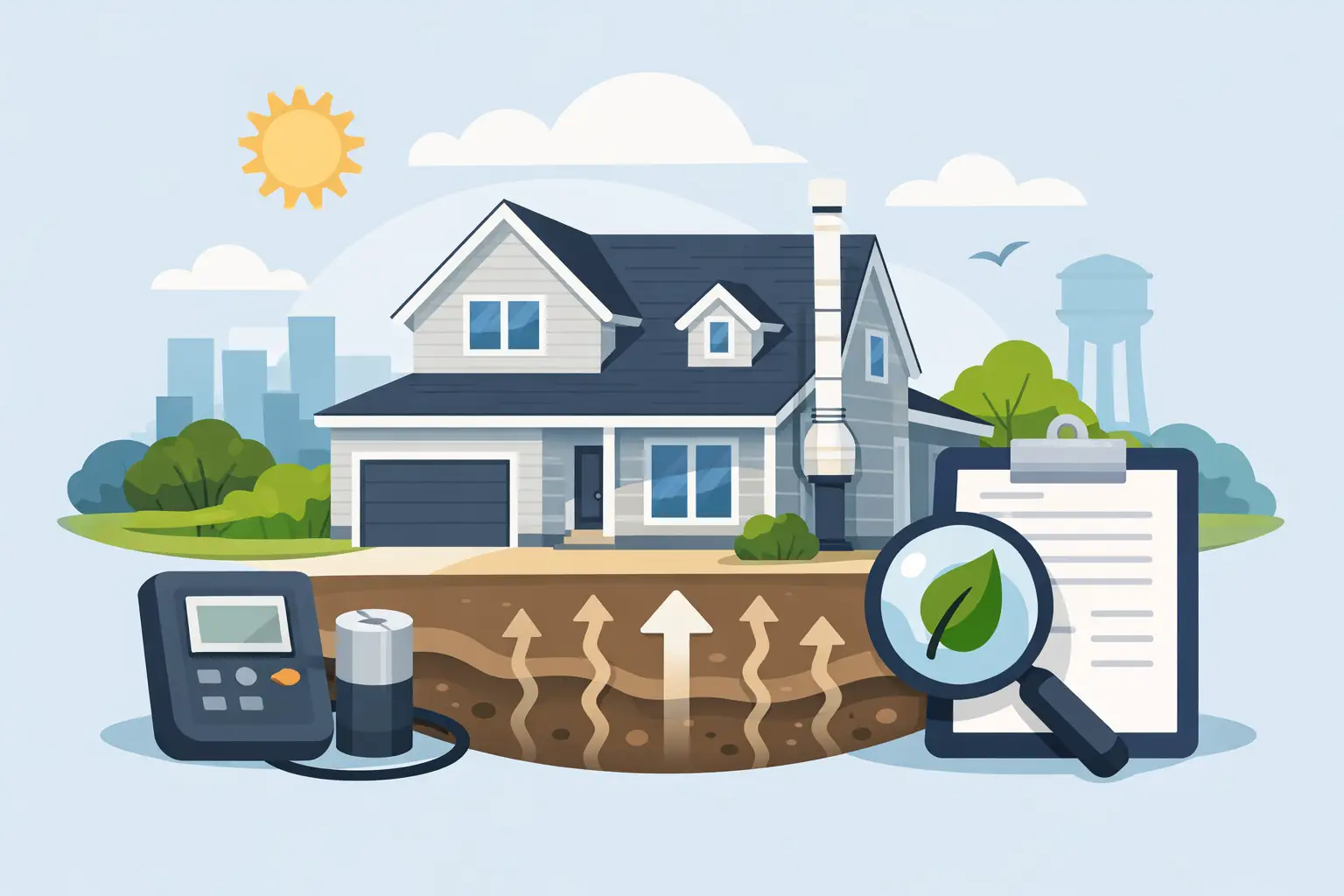
A home can look spotless, have a strong roof, and still hide a serious air quality issue in the lowest level of the property. That is why radon testing Dublin Ohio buyers, homeowners, and investors schedule should never be treated as a minor add-on. Radon is invisible, odorless, and naturally occurring, but long-term exposure can create a real health risk inside a home or commercial building.
In Dublin, that matters more than many people realize. Central Ohio homes often have basements, slab areas, crawl spaces, and soil conditions that can allow radon gas to enter through cracks, joints, penetrations, sump pits, and other openings. You cannot see it during a walkthrough, and you cannot rule it out because a house feels dry, clean, or well maintained. The only reliable answer comes from testing.
Why radon testing matters in Dublin, Ohio
Radon forms naturally as uranium breaks down in soil and rock. From there, the gas can move upward and enter a structure through the lowest contact point with the ground. Once inside, it can become concentrated, especially in tightly built or seasonally closed homes.
Dublin properties are not exempt because they are newer, larger, or well updated. In fact, newer construction can sometimes hold radon more effectively because better air sealing reduces natural air exchange. Older homes have their own vulnerabilities, including foundation settling, floor cracks, and utility penetrations that create entry points.
That is the core issue with radon. It does not care whether a property is old or new, expensive or modest, occupied or vacant. A beautiful finished basement can still test high. So can a home that passed every visual impression during a showing.
When radon testing Dublin Ohio buyers should schedule
For many buyers, the smartest time to test is during the inspection period. That gives you usable information while decisions can still be made, whether that means negotiating mitigation, planning next steps, or simply moving forward with more confidence.
Homeowners should also consider testing outside of a sale. If you have never tested the property, if you recently finished a basement, if you changed HVAC equipment, or if you plan to spend more time in lower-level living areas, a fresh radon test is a practical step. The same is true if a neighboring home has reported elevated levels. Radon can vary from one property to the next, even on the same street.
For investors, timing often depends on the strategy. A long-term rental with basement living space deserves a clear radon assessment before tenants move in. A resale property may need testing before improvements are finalized, especially if lower-level square footage will be marketed as functional living area.
Commercial properties can also benefit from testing, particularly when the building includes below-grade occupied space. It depends on use, layout, and risk tolerance, but testing is often a smart part of due diligence.
What a radon test actually tells you
A professional radon test measures the concentration of radon gas in the air, typically in the lowest level of the home that could be regularly occupied. That detail matters. A basement used for storage only is different from a basement with a bedroom, office, gym, or family room.
Results are reported in picocuries per liter, or pCi/L. The Environmental Protection Agency action level is 4.0 pCi/L, which means mitigation is recommended at or above that point. Even so, lower readings are not automatically meaningless. Some clients choose to reduce radon at levels below 4.0 for added protection, especially if young children, older adults, or long-term occupancy are factors.
This is where experience matters. Testing is not just about placing a device and waiting. The location, timing, house conditions, and interpretation all affect whether the result is useful. A rushed or poorly handled test can create confusion at exactly the wrong time.
Why professional testing beats guessing
There are DIY radon kits on the market, and in some situations they can offer a basic snapshot. But in a real estate transaction, or anytime you need dependable results, professional testing is the safer choice.
A professionally administered test follows established protocols. That includes proper device placement, closed-house conditions when required, and a documented process designed to support accurate reporting. If a result is elevated, you need confidence that the number is legitimate before making a repair decision or negotiating with a seller.
Professional testing also reduces the chance of common mistakes. Testing too close to a window, near a draft, in the wrong room, or under inconsistent occupancy conditions can affect results. When the goal is protecting your health and your investment, close enough is not good enough.
What happens if radon levels are high
An elevated radon result is serious, but it is not a reason to panic or walk away from every property automatically. In many cases, radon can be reduced effectively with a mitigation system.
The most common solution is a sub-slab depressurization system, which helps vent radon gas from beneath the home before it accumulates indoors. The exact design depends on the structure, foundation type, and how the home was built. Some homes are straightforward. Others require a more customized approach.
That is one reason testing should be viewed as decision-making data, not deal-killing drama. A high radon reading tells you action is needed. It does not necessarily mean the property is a bad purchase. It means the risk needs to be addressed properly and verified afterward.
Post-mitigation testing is also important. Installing a system is one step. Confirming that it is working is the next one.
The factors that make one home different from another
One of the biggest misconceptions about radon is that nearby results guarantee your own. They do not. Your neighbor can test low while your home tests high, or the reverse.
That difference can come from foundation cracks, soil composition, sump configurations, construction style, ventilation patterns, and how the lower level is used. Weather can also influence short-term readings. This is why broad assumptions are risky.
It also means previous testing does not always close the book forever. If a test was done years ago, before remodeling, before occupancy changes, or under unknown conditions, it may be time for a new one. A home changes over time. So does how people live in it.
Radon testing as part of a smarter inspection strategy
Radon testing works best when it is treated as part of a larger property evaluation, not as an isolated checkbox. Buyers often learn more when environmental concerns, structural conditions, and major systems are considered together.
For example, basement moisture, foundation movement, HVAC performance, and air handling can all shape how a lower level functions and feels. They are not the same issue as radon, but they can influence how a buyer understands the total condition of the home. That broader perspective is especially valuable when timelines are tight and decisions carry real financial weight.
This is where an all-in-one inspection approach can save time and reduce stress. Instead of coordinating multiple vendors and piecing together partial answers, clients can move through the process with more clarity and fewer delays. For buyers, that helps keep the transaction moving. For homeowners, it creates a cleaner path to maintenance planning. For investors, it supports faster, more informed decisions.
Choosing the right time and the right partner
The best radon test is the one done before assumptions become expensive. For buyers, that usually means during due diligence. For homeowners, it means before finishing a basement, after major changes, or simply when the home has never been tested. For landlords and commercial stakeholders, it means looking at occupancy and liability with a clear eye.
If you are scheduling radon testing in Dublin, look for an inspection company that values accuracy, explains results clearly, and understands how the test fits into the bigger picture of property risk. Fast scheduling matters. Clear reporting matters. Experience matters even more when the result may influence a negotiation, a repair plan, or a long-term health decision.
Flinn Inspection Group serves Central Ohio clients who need thorough, education-driven inspections and practical answers they can act on quickly. That matters when you are protecting a purchase, maintaining a home, or evaluating a property for investment.
A radon test is a small step compared to the cost of getting it wrong, and peace of mind is always easier to build before a problem has years to settle in.