by Flinn Inspections
Share
by Flinn Inspections
Share
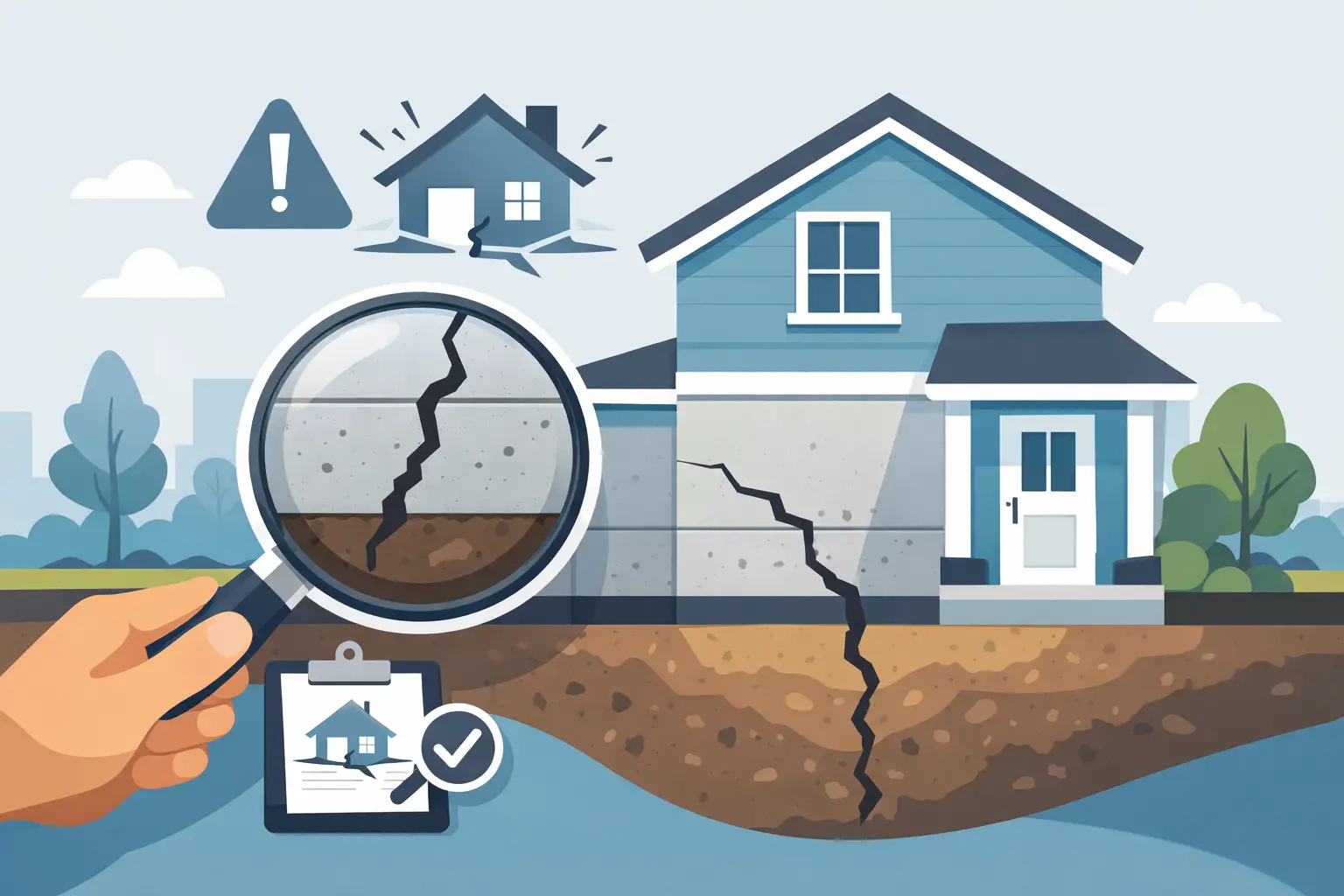
A hairline crack in a basement wall can look harmless until it starts widening, leaking, or showing up alongside sticking doors and sloping floors. If you want to know how to spot foundation cracks before they turn into a larger repair issue, the goal is not panic. The goal is knowing what you are seeing, what it may mean, and when it is time to bring in a qualified inspector.
Foundation cracks are common, but they are not all equal. Some happen as concrete cures and settles. Others point to water pressure, soil movement, frost, drainage problems, or structural stress. The difference matters because the right next step depends on the crack pattern, the crack size, and what else is happening in the home.
How to spot foundation cracks in the right places
Start where foundation problems usually reveal themselves first. In many homes, that means the basement, crawl space, garage, and exterior foundation walls. Walk slowly and look at poured concrete walls, block walls, slab edges, support columns, and the corners around windows and doors.
Inside the home, pay attention to more than the foundation itself. Drywall cracks, uneven floors, doors that rub, windows that suddenly stop opening smoothly, and trim pulling away from the wall can all support what you are seeing below. One isolated crack may be minor. A crack plus movement symptoms throughout the home deserves a closer look.
If the property has finished basement walls, foundation issues can be harder to spot. In that case, watch for clues such as staining, musty odors, warped baseboards, or fresh patching in one area. Those signs do not confirm structural damage on their own, but they can suggest hidden moisture or previous repairs.
What different foundation cracks can mean
Not every crack signals the same level of concern. Pattern and direction tell you a lot.
Vertical cracks
Vertical cracks are often the least serious, especially if they are thin and fairly uniform. In poured concrete foundations, small vertical cracks can result from normal shrinkage as the concrete cures. That said, a vertical crack that is actively widening, leaking water, or offset from one side to the other should not be brushed off.
Diagonal cracks
Diagonal cracks often suggest differential settlement, which means one part of the foundation is moving differently than another. You may see these near corners of windows, doors, or wall openings. In Central Ohio, changing moisture levels in soil can contribute to this kind of movement over time.
Horizontal cracks
Horizontal cracks are more concerning because they can indicate lateral pressure against the wall. That pressure often comes from saturated soil outside the foundation. If a basement wall is bowing inward along with a horizontal crack, that is a stronger warning sign and should be evaluated promptly.
Stair-step cracks
On block or brick foundation walls, stair-step cracks follow the mortar joints in a stepped pattern. These can point to settlement or movement, and their severity depends on width, displacement, and whether they continue to grow.
Size matters, but context matters more
A common question is how wide a crack has to be before it becomes serious. Hairline cracks are often cosmetic or related to shrinkage. Cracks wider than about 1/8 inch deserve closer attention, especially if they are growing, recurring after repair, or accompanied by water intrusion.
Still, width alone does not tell the whole story. A thin horizontal crack with bowing is usually more concerning than a slightly wider vertical shrinkage crack. A crack that shows displacement, where one side sits forward from the other, is more important than a crack that is narrow but flat and stable. This is why a professional assessment matters. Structural risk comes from the full picture, not a single measurement.
Warning signs that a crack may be more than cosmetic
Homeowners often focus on the crack and miss the related evidence. If you are trying to decide whether a foundation crack needs quick attention, look for patterns of movement or moisture throughout the property.
Doors that used to latch easily but now stick can point to frame distortion. Windows that become difficult to open may do the same. Floors that feel uneven, cracks above interior doorways, gaps between walls and ceiling trim, and water seepage after rain all add context.
Outside, inspect the grading around the home. If the soil slopes toward the house, downspouts discharge near the foundation, or water ponds next to the wall, the crack may be tied to drainage pressure rather than just age. That distinction matters because repair may involve both the wall and the water management around it.
How to document what you find
If you spot a crack, take clear photos and note the date. Measure the width at its widest point and mark where the crack begins and ends. If it is safe to do so, monitor it over time. A crack that stays unchanged may be very different from one that expands over one season.
You can also note whether the crack leaks during rain, whether there is white chalky residue on the wall, and whether nearby finishes show staining or deterioration. Efflorescence, that white mineral deposit left behind by moisture, does not prove structural failure, but it does show that water is moving through the material.
Good documentation helps if you decide to schedule an inspection, and it can be especially useful during real estate transactions, warranty timelines, or pre-listing decisions.
When to call an inspector instead of guessing
Knowing how to spot foundation cracks is useful. Diagnosing their cause from a quick visual check is harder. If the crack is horizontal, stair-step, widening, leaking, displaced, or paired with movement elsewhere in the home, it is time for a professional opinion.
This is also true if you are buying a home and notice patched cracks, freshly painted basement walls, or signs of previous moisture control work. Repairs may have been appropriate, or they may be hiding an unresolved issue. A thorough inspection helps you understand the condition of the structure before you commit to a major investment.
For homeowners, a professional inspection can prevent two expensive mistakes. The first is ignoring a problem that is getting worse. The second is paying for a repair solution that does not address the actual cause. A drainage problem, settlement issue, and wall pressure problem do not get solved the same way.
Foundation crack issues we often see after water problems
Many foundation concerns begin with moisture. Poor grading, short downspout extensions, clogged gutters, and heavy roof runoff can all dump water next to the foundation. Over time, that increases soil pressure and can exploit weak points in concrete or masonry.
In parts of Ohio, freeze-thaw cycles can add to the stress. Soil expands when moisture levels rise and can contract during drier periods. That movement does not affect every property equally. The age of the home, the type of foundation, previous repairs, and even landscaping can influence what you see.
That is why broad advice online only goes so far. Two homes can have similar-looking cracks with very different causes.
What not to do when you find a crack
Do not assume every crack is structural, but do not dismiss it because someone told you all concrete cracks. Both extremes can cost you.
It is also wise not to seal over a crack before documenting it, especially during a purchase or warranty period. Cosmetic patching can make later evaluation harder. And while store-bought fillers may help with minor non-structural cracks, they are not a substitute for identifying active movement, water intrusion, or wall deflection.
If you are seeing active leaking, musty odors, or signs of mold in the same area, the issue may extend beyond the foundation wall itself. Moisture problems can affect air quality, finishes, and long-term durability.
A practical standard for homeowners and buyers
A good rule is simple. If the crack is thin, vertical, dry, and stable, monitor it. If it is horizontal, diagonal, stair-step, widening, displaced, bowing, or tied to water and movement symptoms, get it evaluated.
For buyers, this matters even more because foundation concerns can affect financing, repair negotiations, insurance questions, and your confidence in the property. For current owners, early detection usually means more options and less disruption.
At Flinn Inspection Group, we see every stage of this process, from first-time buyers trying to make sense of basement wall cracks to homeowners tracking changes before an 11-month warranty inspection. The right inspection brings clarity fast, which is what people need when the home is one of their largest investments.
The best time to act is when a crack first raises a question, not after it becomes a bigger one.