by
Share
by
Share
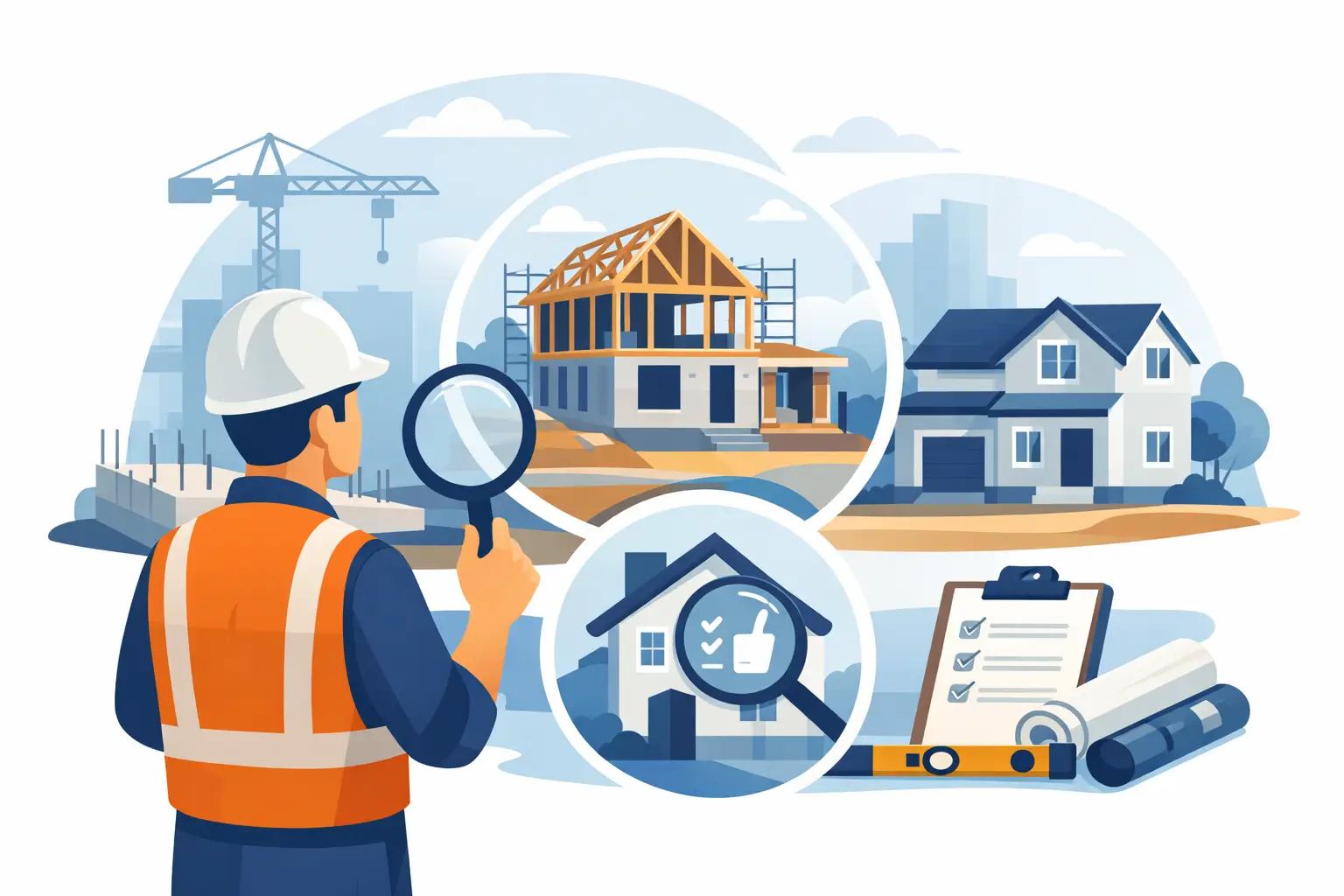
A house can look flawless on closing day and still carry expensive problems behind the walls, under the roofline, or beneath the slab. That is why new construction phase inspections matter. They give buyers a chance to verify quality at key milestones, when defects are still visible and far easier to correct.
Many buyers assume a municipal code inspection and a builder walkthrough are enough. They are not the same as an independent inspection focused on protecting your investment. Code inspections are limited in scope, and builder quality-control processes can vary widely from one superintendent, crew, and subcontractor to the next.
If you are buying a newly built home, phase inspections give you leverage at the right time. Instead of discovering a framing issue after drywall, or grading problems after the first heavy rain, you get objective information while corrections are still practical.
What new construction phase inspections actually cover
New construction phase inspections are independent evaluations performed at specific points during the build. Rather than waiting until the home is complete, the inspection process follows the project as major systems and structural components come together.
The exact timing can vary by builder and jobsite progress, but most buyers benefit from three critical checkpoints. The first is before the foundation is concealed by later work. The second is before insulation and drywall cover the framing, electrical, plumbing, and HVAC rough-ins. The third is at or near final completion, when the home is close to move-in condition.
Each phase tells a different part of the story. A home can pass a final cosmetic walkthrough and still have missed defects from earlier construction stages. Once surfaces are finished, many of those conditions become harder to confirm without invasive work.
Why phase inspections catch problems a final inspection can miss
A final inspection has value, but it has limits. By that point, much of the home is hidden. Structural connections, plumbing penetrations, roof decking details, fire blocking, flashing methods, and duct installation may already be behind finishes.
That is where phased inspections make a real difference. At the pre-drywall stage, for example, an inspector can see whether framing appears properly installed, whether plumbing lines are adequately supported, whether electrical runs show damage, and whether ductwork is laid out in a way that supports performance. After drywall goes up, that visibility is gone.
The same logic applies to grading and drainage. Early signs of poor slope away from the home, downspout termination concerns, or water management risks can be easier to identify before landscaping and final touch-ups make everything appear complete. A polished appearance is not the same as sound construction.
The three phases buyers should know
Foundation phase inspection
This inspection typically happens after the foundation work is in place but before too much of the structure advances. Depending on the build, that may involve footings, foundation walls, slab preparation, anchor bolts, drainage provisions, and early structural details.
At this stage, the goal is not to interfere with construction. It is to identify visible concerns that could affect stability, moisture control, or later performance. Cracking, improper curing conditions, missing components, drainage issues, or questionable workmanship can become more expensive once framing and finishes are added.
Not every issue discovered at this phase means the build is failing. Sometimes it means a correction is needed before the project moves on. That is exactly why timing matters.
Pre-drywall inspection
This is often the most valuable phase for buyers. Before insulation and drywall cover the walls and ceilings, the home is still open enough to evaluate framing, roof structure visibility, rough plumbing, electrical rough-in, and HVAC installation.
This is where inspectors often see conditions that would otherwise remain hidden for years. Examples can include cut or over-notched framing members, missing fasteners or connectors, plumbing leaks at rough connections, unsupported lines, improper duct routing, or installation details that raise concerns about future comfort and efficiency.
It is also a good stage for identifying patterns. One isolated workmanship issue may be minor. Multiple repeated defects across framing, plumbing, and mechanical work suggest a broader quality-control problem. That kind of pattern matters to buyers because it affects confidence in the overall build.
Final phase inspection
The final phase happens when the home is substantially complete. At this point, the inspection focuses on installed systems, visible finishes, functional operation, safety concerns, and signs that earlier issues were or were not properly addressed.
This inspection may include the roof, exterior, grading, doors, windows, outlets, fixtures, appliances, attic areas, HVAC performance, plumbing fixtures, and visible structural components. Advanced tools like thermal imaging can also help identify temperature anomalies that point to missing insulation, moisture concerns, or HVAC performance issues. Gas leak detection can add another layer of protection where fuel-gas systems are present.
A final inspection is not just a punch-list exercise. Cosmetic items matter, but so do bigger concerns like drainage, ventilation, safety devices, improper installations, and system operation.
Who benefits most from new construction phase inspections
First-time buyers often benefit because a new home can create a false sense of security. New does not automatically mean defect-free. In fact, fast build schedules and stacked subcontractor timelines can increase the chance of missed details.
Experienced homeowners benefit too, especially if they are building a higher-end home with complex rooflines, large mechanical systems, finished basements, or custom upgrades. The more complexity a house has, the more opportunity there is for something to be installed incorrectly.
Investors and owners of rental properties also have strong reasons to inspect in phases. Catching deficiencies before turnover can protect budgets, preserve timelines, and reduce post-closing repair disputes. If your strategy depends on predictable costs, hidden defects work against you.
In active markets like Central Ohio, where buyers may feel pressure to keep construction moving, an independent inspection provides clarity without slowing the process unnecessarily. The point is not conflict with the builder. The point is verification.
What buyers should expect from the process
Good phase inspections are clear, timely, and practical. You should receive findings that explain what was observed, why it matters, and what should be reviewed or corrected. In a time-sensitive transaction, speed matters. Same-day reporting can help buyers communicate with builders while the project is still on schedule.
You should also expect a balanced approach. Not every item is a major defect, and not every concern requires alarm. Some findings are workmanship issues, some are maintenance-related, and some may need evaluation by the appropriate trade. A reliable inspector helps you understand the difference.
It also helps when one company can handle more than the core phase inspection. If radon testing, sewer scoping, mold concerns, termite inspections, or water quality questions become relevant, having one coordinated inspection partner can simplify decision-making and keep the process moving.
Common misconceptions about phase inspections
One common misconception is that phase inspections are only for custom luxury homes. That is not true. Production homes can benefit just as much, and sometimes more, because build volume and tight schedules can increase variation in workmanship.
Another misconception is that an inspection means the builder cannot be trusted. That is the wrong frame. Independent verification protects everyone by documenting conditions clearly. Many builders welcome precise, professional communication because it allows issues to be corrected before they grow.
Some buyers also worry that raising concerns will damage the relationship with the builder. Usually, the outcome depends on how concerns are presented. A factual report with documented observations supports productive conversations better than vague complaints after move-in.
Choosing an inspector for a phased new build
Not every inspection company approaches new construction with the same depth. You want an inspector who understands how homes are assembled, not just how they look at the end. That means experience with structural components, mechanical systems, moisture management, and evolving site conditions.
It also means using the right tools and documenting findings well. Thermal imaging, gas leak detection, and thorough photo-based reporting can add value when used appropriately. Just as important, the inspector should explain findings in plain language so buyers, agents, and builders can act on them quickly.
For buyers in Powell, Columbus, Dublin, and surrounding Central Ohio communities, that local experience matters. Regional soil conditions, drainage patterns, weather exposure, and common construction practices all affect what deserves closer attention.
Flinn Inspection Group approaches phase inspections with that standard in mind – protecting the investment, documenting what matters, and giving clients the confidence to move forward with facts.
A new home should not come with preventable surprises hiding behind fresh paint and clean floors. When the right things are inspected at the right time, you give yourself a better chance of taking ownership with confidence instead of questions.