by
Share
by
Share
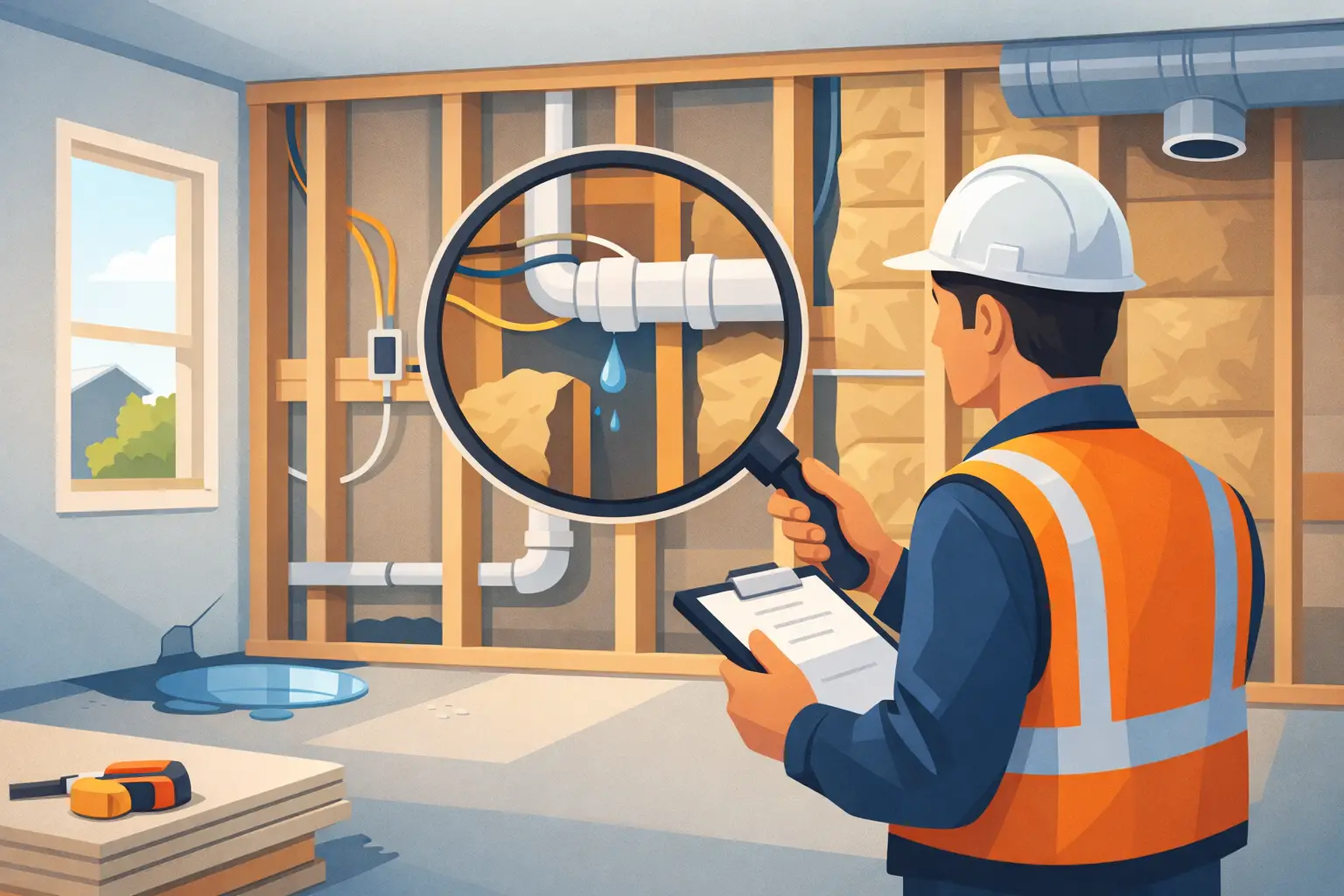
Once drywall goes up, a large part of the house disappears from view. Studs, wiring runs, plumbing lines, duct connections, and many of the details that determine long-term performance are suddenly hidden behind finished walls and ceilings. That is exactly why a pre drywall inspection matters. It gives buyers and property owners a chance to verify the work while the structure is still open and corrections are still practical.
For new construction, this is one of the most valuable checkpoints in the entire build process. It is not about slowing the job down or looking for minor cosmetic issues. It is about protecting your investment before the house moves into the expensive phase where everything gets covered, painted, and handed off as complete.
What a pre drywall inspection is really for
A pre drywall inspection takes place after the major structural, mechanical, electrical, and plumbing rough-ins are installed, but before insulation and drywall conceal them. At this stage, an inspector can evaluate the visible components of the home and identify installation concerns, safety issues, and workmanship problems that may be difficult or impossible to confirm later without destructive access.
This inspection is especially useful because many serious defects do not look dramatic at first glance. A missing fastener, a damaged truss member, an improperly drilled framing member, or a poorly supported plumbing line may not create an immediate failure. The problem often shows up months or years later as cracking, leaks, airflow issues, settlement symptoms, or costly repairs behind finished surfaces.
For buyers, it also adds a layer of independent oversight. Municipal code inspections serve an important role, but they are limited in scope and time. A private inspection is focused on your specific property and your interests.
What inspectors look for during a pre drywall inspection
The exact scope depends on the house, the stage of construction, and site access, but the inspection typically centers on the systems that will soon be hidden.
Framing and structural components
Framing is one of the biggest areas of concern at this stage. Inspectors look at wall framing, floor systems, roof framing, and load paths. They may identify damaged or altered framing members, missing connectors, improper notching or boring, unsupported openings, or signs that components were installed outside manufacturer requirements.
Not every irregularity means the house is unsafe. Some conditions are acceptable if they have been engineered or corrected properly. That is where experience matters. The goal is to separate normal construction variation from issues that deserve builder attention before the next phase begins.
Electrical rough-in
With the walls open, electrical wiring is visible in a way it never will be again. A pre drywall inspection can reveal loose runs, improper securing, missing protective plates, over-drilled framing near cable paths, questionable panel organization, or unsafe routing near sharp edges and framing penetrations.
This stage is also useful for verifying outlet and switch planning. If a room layout raises concerns about practicality, this is the time to address them. After drywall, even simple changes can become much more disruptive and expensive.
Plumbing rough-in
Plumbing defects behind walls can turn into some of the most frustrating problems a homeowner faces. During a pre drywall inspection, visible supply lines, drain lines, venting components, and support methods can be reviewed for obvious installation concerns. Improper slopes, unsupported piping, vulnerable line placement, missing protection at framing penetrations, and signs of damage are all worth catching early.
Leaks are not the only issue. Poor layout and weak support can create noise, drainage problems, and future maintenance headaches.
HVAC and ductwork
Comfort problems often begin long before move-in day. If ducts are poorly supported, sharply kinked, loosely connected, or routed in a way that restricts airflow, those defects can affect heating and cooling performance from day one. A pre drywall inspection helps identify visible HVAC rough-in concerns before they are buried above ceilings and inside chases.
This stage can also reveal gaps in sealing, insulation concerns, or duct routing that may reduce efficiency. In a climate like Central Ohio, where homes have to handle both summer humidity and winter cold, those details matter.
Windows, doors, and building envelope details
Before the interior is closed, there may be visible clues about moisture management and opening installation. Flashing details, weather-resistive barriers, fastener patterns, and opening preparation can all affect long-term durability. Water intrusion is rarely caused by one dramatic mistake. More often, it comes from a chain of small installation failures that were easy to correct when the house was still open.
Why timing matters so much
The value of a pre drywall inspection depends heavily on when it happens. If you schedule too early, key systems may not be installed. If you schedule too late, insulation or partial wall covering may already block important areas. The best window is usually after rough framing, electrical, plumbing, and HVAC work are substantially complete, but before insulation and drywall begin.
That timing gives the inspector a full view of the work and gives the builder a realistic chance to make corrections without tearing completed finishes back out. On fast-moving job sites, this window can be short. Buyers who wait until the last minute often miss it.
If you are building a home, ask about construction milestones early in the process. A builder may not automatically pause to suggest an outside inspection, so it helps to plan ahead.
What a pre drywall inspection can and cannot do
A strong inspection provides valuable visibility, but it is not a guarantee that every hidden issue will be found. Some areas may be obstructed by stored materials, installed components, or limited access. Some systems are incomplete at the time of inspection. And some defects do not become apparent until equipment is fully operational.
That said, this is still one of the most efficient opportunities to identify meaningful concerns. It is much easier to document visible deficiencies in framing, rough-in installation, and layout before the home looks finished and polished.
This is also why phased inspections work so well together. A pre drywall inspection is a checkpoint, not a substitute for a final inspection or an 11-month warranty inspection. Each one catches different categories of issues at a different point in the property lifecycle.
Common issues a pre drywall inspection may reveal
The specific findings vary by property, but certain patterns appear again and again in new construction. Improperly cut framing, missing joist hangers, displaced anchor hardware, damaged trusses, over-notched studs, loosely secured electrical wiring, plumbing lines set too close to nailing surfaces, disconnected duct sections, and inadequate support for mechanical runs are all examples of issues that can surface at this phase.
Some are simple corrections. Others require a closer review by the builder or a licensed trade. The point is not to create conflict. The point is to make sure concerns are addressed while access is easy and the repair path is clear.
Why buyers and investors benefit from independent oversight
New homes can create a false sense of security. Because everything is clean, unused, and built to current standards, buyers sometimes assume the work must be flawless. In reality, new construction still depends on people, schedules, subcontractor coordination, material handling, and jobsite conditions. Mistakes happen.
An independent inspection brings accountability to that process. It gives buyers, homeowners, and investors a clearer picture of what is being covered up before the next stage begins. For clients making major financial decisions in markets like Columbus, Powell, and Dublin, that information can be the difference between a manageable punch item and a costly surprise.
At Flinn Inspection Group, that same principle drives every service we provide: inspect thoroughly, communicate clearly, and protect the client’s investment with practical information they can act on quickly.
How to prepare for a pre drywall inspection
The most important step is coordination. Confirm with the builder that the home is at the right stage and that all major rough-ins are in place. Make sure the inspector can access the property safely and that the site is reasonably open for viewing key components.
It also helps to bring your plans or a feature list if you have specific concerns about room layouts, fixture locations, or system placement. Not every preference becomes an inspection issue, but this is the right time to ask questions while changes are still possible.
A thorough report should clearly identify concerns, document visible conditions, and help you have a focused conversation with the builder. Same-day reporting can be especially valuable when the construction schedule is moving quickly.
Is a pre drywall inspection worth it?
For most new construction buyers, yes. The cost of the inspection is small compared with the cost of opening finished walls to correct hidden defects later. More importantly, it gives you a better chance to start ownership with confidence instead of questions.
There is always some variation from house to house, and not every inspection uncovers major problems. But the purpose is not to hope for bad news. It is to verify that critical systems and structural components look right before they disappear.
If you get only one chance to see inside the walls, make it count. A well-timed pre drywall inspection gives you that chance and helps you move forward knowing more, not assuming more.