by
Share
by
Share
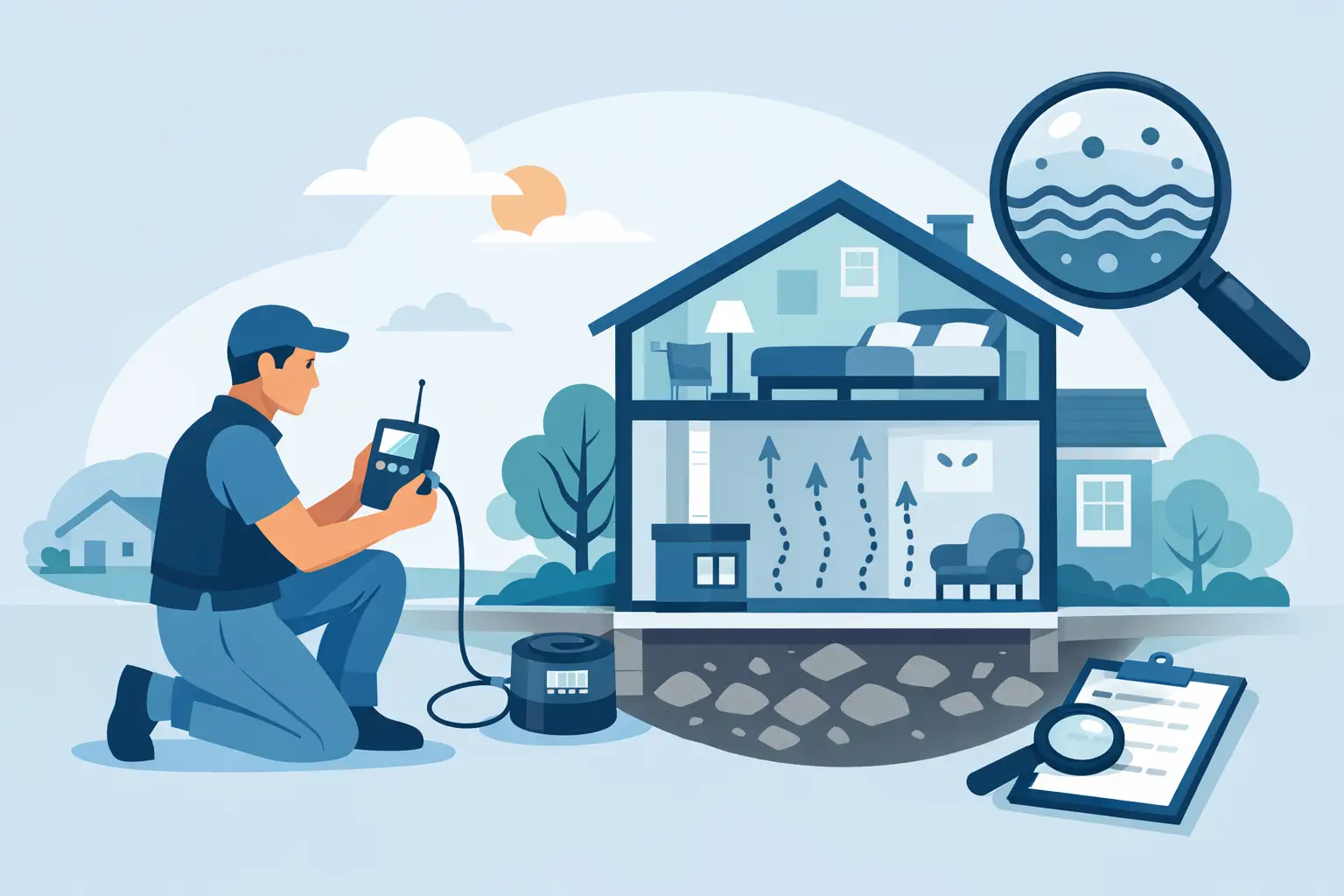
A home can look solid from the roofline to the foundation and still have an invisible air-quality problem in the lowest level. That is why radon testing during home inspection deserves serious attention, especially when you are making a major purchase and need clear answers fast. Radon cannot be seen or smelled, and the only way to know whether it is present at unsafe levels is to test for it.
For buyers, sellers, and homeowners, radon is not a minor side issue. It is a health and liability concern that can affect negotiations, future mitigation costs, and how confident you feel about the property. In Central Ohio, where many homes have basements and slab-on-grade construction, testing is often a smart step rather than an optional extra.
Why radon testing matters during a home inspection
Radon is a naturally occurring radioactive gas that forms as uranium in soil breaks down. It can move through the ground and enter a home through cracks in the foundation, gaps around pipes, sump pits, and other openings. Once inside, it can build up to levels that create long-term health risk.
The reason buyers often add radon testing to a home inspection is simple: timing matters. During the inspection period, you still have an opportunity to gather facts, ask for repairs or credits, and make a fully informed decision. If elevated radon is found after closing, the solution is usually manageable, but the leverage is gone and the cost becomes yours alone.
This is also where a coordinated inspection process helps. When radon testing is scheduled alongside the general inspection, you get a clearer picture of the home at one decision point instead of piecing together separate services later. That efficiency matters in competitive markets where deadlines are tight.
How radon testing during home inspection works
In most transactions, radon is measured with a short-term test device placed in the lowest livable area of the home. That might be a basement, lower level family room, or first floor if there is no basement. The device remains in place for a set testing period, often at least 48 hours, to collect readings under closed-house conditions.
Closed-house conditions mean windows stay shut, exterior doors are used only for normal entry and exit, and fans or systems that intentionally bring in outside air are generally avoided unless they are part of the home’s normal operation. These rules matter because open windows and unusual ventilation can distort the results.
A qualified inspector will choose placement carefully. The device should not sit in a kitchen, bathroom, laundry room, crawl space, or directly next to drafts, humidity sources, or exterior walls in ways that could skew the measurement. Good testing is not just about dropping a monitor in the basement. It depends on following protocol, documenting conditions, and using the right equipment.
In many cases, the inspection report and the radon results are delivered quickly so the client can respond within contract timelines. That speed is valuable for buyers, investors, and agents who need facts without delay.
What radon test results actually mean
The number most people hear is 4.0 picocuries per liter, which is the EPA action level. If the result is 4.0 pCi/L or higher, mitigation is generally recommended. That does not mean lower levels are risk-free. It means 4.0 is the point where action is strongly advised.
Results below 4.0 can still lead to discussion, especially if the reading is close to the threshold. Some buyers choose to request mitigation or a credit at lower levels, while others are comfortable monitoring over time. This is one of those situations where context matters. A reading of 3.8 is different from 0.7, even though both fall below the action level.
Short-term test results are a strong tool during a transaction, but they represent conditions during the testing window. Radon levels can vary by season, weather, HVAC operation, and how the home is used. That does not make the test unreliable. It means the result should be interpreted by someone who understands what the test captures and what it does not.
When a radon test should be added
For most home purchases, adding a radon test makes sense when the home has any contact with the ground. That includes houses with basements, crawl spaces, slab foundations, lower-level finished living areas, and many split-level layouts. Newer homes are not exempt. Tight construction can sometimes trap gases more effectively than older, draftier homes.
Testing is also wise when a home has never been tested, when prior results are unavailable or outdated, or when previous mitigation records are incomplete. If the home already has a radon mitigation system, testing is still important. You want to confirm the system is doing its job rather than assuming it is.
For current homeowners, radon testing can be a smart move after major renovations, after finishing a basement, after changing HVAC systems, or simply as periodic due diligence. Conditions can change over time.
Radon, negotiations, and real-world decisions
A radon result does not need to derail a deal. In many transactions, it becomes a straightforward repair conversation. The typical solution is a mitigation system designed to vent radon gas from beneath the home to the exterior before it accumulates indoors. These systems are common, effective, and often less disruptive than buyers expect.
The negotiation question is usually not whether elevated radon is fixable. It is who will handle the cost and when. Some sellers install a mitigation system before closing. Others offer a credit. In a fast market, some buyers absorb the cost in exchange for stronger overall terms. There is no single correct strategy. It depends on the result, the property, and the larger contract picture.
That is another reason accurate testing matters. If the data is solid, everyone can negotiate from facts instead of assumptions.
Why professional testing is worth it
There are consumer radon kits on the market, and they can be useful in some situations. But during a real estate transaction, professional testing offers clearer chain of custody, better documentation, more reliable placement, and a process designed to hold up under scrutiny.
That matters when buyers, sellers, agents, and lenders all need confidence in the result. A poorly placed device or broken testing protocol can create disputes, delays, or the need for retesting. None of that helps when deadlines are already tight.
Professional inspectors also understand how radon fits into the bigger picture of the property. If the home has moisture issues, foundation openings, unusual ventilation patterns, or a previously installed mitigation fan, those details can influence how the result is interpreted and what next steps make sense.
Radon testing in Ohio homes
Ohio homeowners are often surprised by how common radon concerns can be. Soil conditions vary from one area to another, and even homes on the same street can produce very different readings. One house may test low while the neighbor next door tests high. That is why radon risk should never be judged by zip code, neighborhood reputation, or whether someone else nearby had a clean result.
In markets like Columbus, Dublin, and Powell, where basements are common and buyers want fast, reliable information, bundling radon testing with the inspection can save time and reduce uncertainty. It keeps the process focused on facts instead of guesswork.
Flinn Inspection Group approaches radon testing the same way it approaches the rest of the inspection process – thoroughly, clearly, and with the client’s investment in mind. That matters when you are making decisions that affect both health and property value.
What to ask before scheduling radon testing during home inspection
Before you schedule, ask how the test will be performed, how long the device will remain in place, whether the company follows accepted testing protocols, and how quickly results will be delivered. You should also ask what happens if the home does not meet closed-house conditions or if the test needs to be repeated.
Those questions are not about being difficult. They are about making sure you receive data you can trust. A good inspection company should be able to answer them directly and explain the process without vague language or hedging.
The best time to find out a home has elevated radon is before your options narrow. When the testing is done correctly, you are not left guessing about the air in the lowest level of the home. You are making a decision with facts, and that is exactly how a major investment should be protected.